Questões de Concurso
Comentadas sobre passado simples | simple past em inglês
Foram encontradas 265 questões


Ano: 2019
Banca:
IDHTEC
Órgão:
Prefeitura de Vertentes - PE
Prova:
IDHTEC - 2019 - Prefeitura de Vertentes - PE - Professor de Inglês |
Q1738375
Inglês
Yesterday, Julian __________ to school by car.
Ano: 2019
Banca:
IDHTEC
Órgão:
Prefeitura de Vertentes - PE
Prova:
IDHTEC - 2019 - Prefeitura de Vertentes - PE - Professor de Inglês |
Q1738373
Inglês
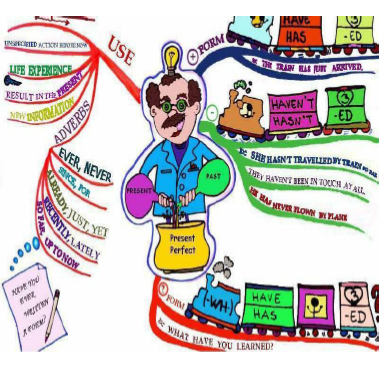
This is a mind map about:
Ano: 2019
Banca:
IESES
Órgão:
Prefeitura de Palhoça - SC
Prova:
IESES - 2019 - Prefeitura de Palhoça - SC - Professor de Anos Finais - Inglês |
Q1732455
Inglês
What is the simple past of the verb to shut?
Ano: 2019
Banca:
IESES
Órgão:
Prefeitura de Palhoça - SC
Prova:
IESES - 2019 - Prefeitura de Palhoça - SC - Professor de Anos Finais - Inglês |
Q1732453
Inglês
Complete the sentences and questions with the correct form of there to be and choose the correct alternative:
_____________ anybody in Room 307 at the moment? _____________ a man waiting for me outside the school.
How many CDs _________ in your box?
Ano: 2019
Banca:
Aprender - SC
Órgão:
Prefeitura de Tangará - SC
Prova:
Aprender - SC - 2019 - Prefeitura de Tangará - SC - Professor Educação Básica III - Inglês |
Q1732289
Inglês
Observe the following fragment.
They came for the scheduled meeting of a bikers' rights
group, topics such as road safety ____ on the agenda.
Identify the best alternative that completes the context.
Ano: 2019
Banca:
AMEOSC
Órgão:
Prefeitura de Princesa - SC
Prova:
AMEOSC - 2019 - Prefeitura de Princesa - SC - Professor de Inglês |
Q1729074
Inglês
The design of the plates _____________ supposed to be a joke about portion control.
Identify the best alternative that completes the context.
Ano: 2019
Banca:
IESES
Órgão:
Prefeitura de Gaspar - SC
Prova:
IESES - 2019 - Prefeitura de Gaspar - SC - Professor de Inglês |
Q1726384
Inglês
What is the simple past of the verb to draw?
Ano: 2019
Banca:
IESES
Órgão:
Prefeitura de Gaspar - SC
Prova:
IESES - 2019 - Prefeitura de Gaspar - SC - Professor de Inglês |
Q1726382
Inglês
Complete the sentences and questions with the correct
form of there to be and choose the correct alternative:
How many boys _____________ at your party last week? _____________ an accident in your street yesterday. My neighborhood is great _____________ a nice lake nearby.
How many boys _____________ at your party last week? _____________ an accident in your street yesterday. My neighborhood is great _____________ a nice lake nearby.
Ano: 2019
Banca:
AMEOSC
Órgão:
Prefeitura de Santa Helena - SC
Prova:
AMEOSC - 2019 - Prefeitura de Santa Helena - SC - Professor com Licenciatura em Língua Portuguesa e Estrangeira - Inglês |
Q1725579
Inglês
Read the sentence below.
Electric overhead signs urged people to avoid ____________________ bicycles and other large items.
Choose the correct alternative that completes the context.
Electric overhead signs urged people to avoid ____________________ bicycles and other large items.
Choose the correct alternative that completes the context.
Ano: 2019
Banca:
AMEOSC
Órgão:
Prefeitura de Paraíso - SC
Prova:
AMEOSC - 2019 - Prefeitura de Paraíso - SC - Professor de Inglês |
Q1725017
Inglês
Considere the sentence below:
“Our classes begin at nine.”
The verb tense is:
Ano: 2019
Banca:
Crescer Concursos
Órgão:
Prefeitura de Brejo de Areia - MA
Prova:
Crescer Consultorias - 2019 - Prefeitura de Brejo de Areia - MA - Professor Nível II - Inglês |
Q1724869
Inglês
Complete the sentence below with the correct verbs.
Choose the CORRECT answer.
“When Peter _______ at the meeting, it _______ already _______ .”
“When Peter _______ at the meeting, it _______ already _______ .”
Ano: 2019
Banca:
Crescer Concursos
Órgão:
Prefeitura de Brejo de Areia - MA
Prova:
Crescer Consultorias - 2019 - Prefeitura de Brejo de Areia - MA - Professor Nível II - Inglês |
Q1724854
Inglês
Complete the sentence below with the correct verb.
Choose the CORRECT answer.
‘‘At the train station - A: What is your train number? B: I ________ for the 8814.’’
‘‘At the train station - A: What is your train number? B: I ________ for the 8814.’’
Ano: 2019
Banca:
Crescer Concursos
Órgão:
Prefeitura de Brejo de Areia - MA
Prova:
Crescer Consultorias - 2019 - Prefeitura de Brejo de Areia - MA - Professor Nível II - Inglês |
Q1724853
Inglês
Complete the sentence below with the correct verb.
Choose the CORRECT answer.
‘‘Two years ago, I ________ Physics to my pupils.’’
‘‘Two years ago, I ________ Physics to my pupils.’’
Ano: 2019
Banca:
AMEOSC
Órgão:
Prefeitura de Iporã do Oeste - SC
Prova:
AMEOSC - 2019 - Prefeitura de Iporã do Oeste - SC - Professor de Inglês |
Q1723844
Inglês
Consider the following sentence:
“Peter __________ in his studio every day.”
The alternative that best completes the sentences above is:
Ano: 2019
Banca:
CONTEMAX
Órgão:
Prefeitura de Orobó - PE
Prova:
CONTEMAX - 2019 - Prefeitura de Orobó - PE - Professor de Inglês |
Q1708866
Inglês
Based on the English Grammar, we use the
simple past tense to talk about:
Q1646461
Inglês
Analyse the current sentences and choose
the option that describes their verb tense:
I - My brother has been teasing me since this morning. II - I am reading an excellent book. III - I have been to England twice. IV - My husband works everyday.
I - My brother has been teasing me since this morning. II - I am reading an excellent book. III - I have been to England twice. IV - My husband works everyday.
Ano: 2019
Banca:
ADM&TEC
Órgão:
Prefeitura de Joaquim Gomes - AL
Prova:
ADM&TEC - 2019 - Prefeitura de Joaquim Gomes - AL - Professor de Inglês |
Q1644433
Inglês
Leia as afirmativas a seguir:
I. Ocorre verbo na frase: the stone travelled the air. II. Está correta a grafia do trecho a seguir, em inglês: the lykees off (gente como).
Marque a alternativa CORRETA:
I. Ocorre verbo na frase: the stone travelled the air. II. Está correta a grafia do trecho a seguir, em inglês: the lykees off (gente como).
Marque a alternativa CORRETA:
Ano: 2019
Banca:
GUALIMP
Órgão:
Prefeitura de Areal - RJ
Prova:
GUALIMP - 2019 - Prefeitura de Areal - RJ - Professor Ensino Fundamental 6º a 9º Ano - Língua Inglesa |
Q1621171
Inglês
Complete the sentence below with the correct verbs. Choose the CORRECT answer.
“I _________ a ring to my girlfriend before I _________ to her.”
“I _________ a ring to my girlfriend before I _________ to her.”
Ano: 2019
Banca:
GUALIMP
Órgão:
Prefeitura de Areal - RJ
Prova:
GUALIMP - 2019 - Prefeitura de Areal - RJ - Professor Ensino Fundamental 6º a 9º Ano - Língua Inglesa |
Q1621161
Inglês
Texto associado
How we turned around literacy instruction and student outreach
“A few years ago, leaders from Flagler Schools realized that students from across our district (a)
struggling. Literacy scores were (b) target for elementary and middle school students, and high school
graduation rates were not meeting expectations. We took a whole-district approach and developed four
key initiatives to better align K-8 assessment and instruction and improve high school graduation rates.
Recognizing that literacy is tied to our students’ overall success across all educational subjects and
grade levels, we took a two-step approach to remediation, aimed primarily at elementary and middle
school students. In addition to our focus on literacy, we (c) narrowed our student outreach efforts at the
high school level to focus on acceleration and graduation.”
“A helicopter ______ to provide assistance if the weather had improved.”
Indicate the best alternative that completes the context above:
Indicate the best alternative that completes the context above:
Ano: 2019
Banca:
GUALIMP
Órgão:
Prefeitura de Areal - RJ
Prova:
GUALIMP - 2019 - Prefeitura de Areal - RJ - Professor Ensino Fundamental 6º a 9º Ano - Língua Inglesa |
Q1621158
Inglês
Texto associado
How we turned around literacy instruction and student outreach
“A few years ago, leaders from Flagler Schools realized that students from across our district (a)
struggling. Literacy scores were (b) target for elementary and middle school students, and high school
graduation rates were not meeting expectations. We took a whole-district approach and developed four
key initiatives to better align K-8 assessment and instruction and improve high school graduation rates.
Recognizing that literacy is tied to our students’ overall success across all educational subjects and
grade levels, we took a two-step approach to remediation, aimed primarily at elementary and middle
school students. In addition to our focus on literacy, we (c) narrowed our student outreach efforts at the
high school level to focus on acceleration and graduation.”
Indicate the best alternative that completes the context in (a):

 Conheça nossos planos