Questões de Concurso
Comentadas sobre os advérbios (grau, a finalidade, contraste ...) | adverbs (degree, purpose, contrast...) em inglês
Foram encontradas 63 questões


Text CB1A2-I
Although an oft-cited poll showed that 85% of Americans approve of organ donation, less than half had made a decision about donating, and fewer still (28%) had granted permission by signing a donor card, a pattern also observed in Germany, Spain, and Sweden. Given the shortage of donors, the gap between approval and action is a matter of life and death.
What drives the decision to become a potential donor? Within the European Union, donation rates vary by nearly an order of magnitude across countries and these differences are stable from year to year. Even when controlling for variables such as transplant infrastructure, economic and educational status, and religion, large differences in donation rates persist. Why?
Most public policy choices have a no-action default, that is, a condition is imposed when an individual fails to make a decision. In the case of organ donation, European countries have one of two default policies. In presumed-consent states, people are organ donors unless they register not to be, and in explicitconsent countries, nobody is an organ donor without registering to be one.
We examined the rate of agreement to become a donor across European countries with explicit and presumed consent laws. If preferences concerning organ donation are strong, we would expect defaults to have little or no effect. However, defaults appear to make a large difference: the four opt-in countries (Denmark, Netherlands, United Kingdom, Germany) had lower rates than the six opt-out countries (Austria, Belgium, France, Hungary, Poland, Portugal, Sweden). The two distributions have no overlap, and nearly 60 percentage points separate the two groups
Our data suggest changes in defaults could increase donations in the United States of additional thousands of donors a year. Because each donor can donate for about three transplants, the consequences are substantial in lives saved. Our results stand in contrast with the suggestion that defaults do not matter. Policy-makers performing analysis in this and other domains should consider that defaults make a difference.
Eric J. Johnson; Daniel Goldstein. Do Defaults Save Lives?
Internet: <www.dangoldstein.com> (adapted).
1. Our high turnover rate has been a growing _______ for us. 2. A rose in full bloom had been allowed to grow _______ one of the walls. 3. The company is growing _______ all the time. 4. Opposition to the latest proposals is growing _______ . 5. The Catholic community in Edinburgh began to grow _______ in the mid-19th Century.
( ) considerably ( ) steadily ( ) concern ( ) bigger ( ) unchecked up
Julgue o item subsequente.
Leia o texto para responder a questão.
English as a Lingua Franca
A number of researchers have studied conversations in English as a Lingua Franca and have noted a number of somewhat surprising characteristics, including:
• Non-use of third person present simple tense -s (She look very sad).
• Interchangeable use of the relative pronouns who and which (a book who, a boy which).
• Omission of articles where they are mandatory in native-speaker English.
• Increasing of redundancy by adding “inexistent” prepositions (We have to study about…, The article treats of…).
• Pluralisation of nouns which are considered uncountable in native-speaker English (informations, staffs).
The evidence suggests that non-native speakers are not conforming to a native English standard. Indeed they seem to get along perfectly well despite the fact that they miss things out and put things in which they ‘should not do’. Not only this, but they are actually better at ‘accommodating’ - that is, negotiating shared meaning through helping each other in a more cooperative way - than, it is suggested, native speakers are when talking to second language speakers (Jenkins 2004). In other words, non-native speakers seem to be better at ELF communication than native speakers are.
(Jeremy Harmer, The practice of English language teaching. Adaptado)
I. She past the test, because she study a lot.
II. After you arrive here, we'll go out with our friends.
III. Although he is handsome, he isn't a good person.
Sobre Adverb Clauses, assinale a alternativa correta:
Leia o texto 1 para responder a questão que se segue.
I. explicativo, pois constata onde ele nasceu. II. argumentativo, pois discute o lugar de nascimento dele. III. temporal, pois marca o tempo cronológico em que ele nasceu.
Read the following text and answer question.
Introduction to global food loss and food waste
Food losses and food waste are quickly becoming a top global issue, because while there are millions of families with children starving, others are living in abundance, with many others carelessly throwing food away. Many of us have wasted food in one way or the other, but the real food losses and waste matter is ______ than just consumer food waste.
From farming fields and storage places, through transportation, processing, market places, down to
consumption places such as homes, schools, restaurants and workplaces, more than half of all food
produced globally go to waste. This is a tragedy!
In developing countries, it takes a lot of man-power to produce food. In more advanced countries, machines and technology are used, but the drain on energy, destruction of vegetative lands, the use of chemicals and ______ impact on the environment are phenomenal. Putting all that together, it is clear that a major problem has emerged and we are all in a position to help in one way or the other.
(Adapted from: https://goo.gl/ySEn3F. Access: 01/23/2018)
The words such as in “ such as homes, schools, restaurants and workplaces…” indicates
Answers the question according to the text below.
Organ Donation and Transplant
1._____boys formed the group to the game. 2._____people in the ship had chances to survive. 3.She has _____ time to catch the train.
The correct order is:
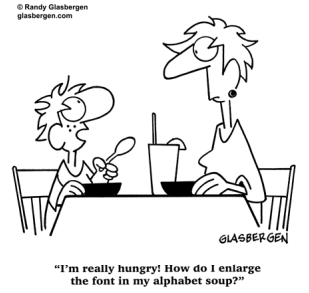
Leia os quadrinhos para responder à questão.

(www.magoosh.com)
Nice to meet you
One of the things you learn when studying English is how to present yourself and most people learn phrases such as “How do you do?” or “Hi, my name is…”. However, one thing that language teachers don’t explain is that British people very rarely use these expressions. British people are not very good at introductions in informal situations. They are not sure what to say or what do with their hands. Whereas Brazilians or Americans will confidently extend their hands to people they meet at parties or social situations, English people prefer just to smile.
Expressions like “Hello, I’m John Smith”, “Hi, my name is…” are only used when we have to identify ourselves; for example when we go to an appointment at the dentist’s or the hairdresser’s, or if we’re telephoning someone to ask for information about ourselves.
Dialogues in school books where English teenagers present themselves to each other on the first day of school are pure fantasy. In informal social situations, British people prefer to stay chatting about something neutral like the weather, or else they use humour to break the ice. When the conversation has progressed, or even just before leaving, you can say, “I’m Ann, by the way.”, or “I didn’t catch your name”. If you meet the person again you can say, “Hello again” or, more colloquially, “Hi ya”, which stands for “Hello, nice to see you again”.
In the case of formal meetings or business situations, many language courses teach the expression “How do you do?” – to which you should answer “How do you do?”. This phrase is also recommended by the website ediplomat.com and Drett’, the famous specialist publisher that has a range of guides on British etiquette. I have said “How do you do” in my entire life and no one has never said that to me! In today’s Britain this expression is best reserved for extremely formal situations. It is, however, something that people over 60 might say, so if your elderly boss or professor uses this expression with you, then it’s polite to answer in the same way
Choose the best option to complete the following dialog:
A: My car is __________ yours. Even though, it is __________ comfortable.
B: I don’t; agree. Your car is __________ mine.
Text III
Here are some of the conclusions of a study conducted by The British Council to examine the policy, perceptions and influencing factors of English in Brazil:
[…] Brazil does not have a policy that focuses solely on teaching and learning English. The National Education Guidelines identify English as one of many foreign languages offered to students in primary and secondary education. Various English language learning initiatives have emerged at the federal, state and municipal levels however many English initiatives have limited success due to unbalanced curriculums, limited class time, teachers lacking the linguistic and pedagogical knowledge to effectively guide students, and minimal resources.[…]
Those working in internationalised industries, especially in management roles, do need English for employment though they may use it sparingly. As FDI ("Foreign Direct Investment") and interaction with other countries grow, especially in localised sectors, the demand for English as a medium of communication will increase. Currently, Brazil‘s average level of education and lack of English are perceived by some as detrimental to its economic growth and investment.[…]
Perceptions of English language use are changing. Younger generations are more open to English and link it less to a political agenda and more with personal growth and opportunity. Although there seem to be deeply-rooted ideological barriers at a national level to prioritise English over other languages, at an individual level, the language is gaining increased value and influence.
(Source: British Council Education Intelligence. (2015). English in Brazil: An examination of policy, perceptions and
influencing factors. Retrieved and adapted from https://ei.britishcouncil.org/sites/default/files/latin-americaresearch/English%20in%20Brazil.pdf.)

 Conheça nossos planos