Questões de Concurso
Comentadas sobre interpretação de texto | reading comprehension em inglês
Foram encontradas 8.877 questões


Ano: 2013
Banca:
CESGRANRIO
Órgão:
IBGE
Provas:
CESGRANRIO - 2013 - IBGE - Todos os Cargos - Conhecimentos Básicos - Analista
|
CESGRANRIO - 2013 - IBGE - Analista - Arquivologia |
CESGRANRIO - 2013 - IBGE - Analista - Suporte Operacional |
CESGRANRIO - 2013 - IBGE - Analista - Recursos Humanos - Desenvolvimento de Pessoas |
CESGRANRIO - 2013 - IBGE - Analista - Recursos Materiais e Logística |
CESGRANRIO - 2013 - IBGE - Analista - Recursos Humanos - Administração de Pessoal |
CESGRANRIO - 2013 - IBGE - Analista - Designer Institucional |
CESGRANRIO - 2013 - IBGE - Analista - Orçamento e Finanças |
CESGRANRIO - 2013 - IBGE - Analista - Planejamento e Gestão |
CESGRANRIO - 2013 - IBGE - Analista - Suporte à Comunicação e Rede |
CESGRANRIO - 2013 - IBGE - Analista - Ciências Contábeis |
CESGRANRIO - 2013 - IBGE - Analista - Administração Escolar |
Q437119
Inglês


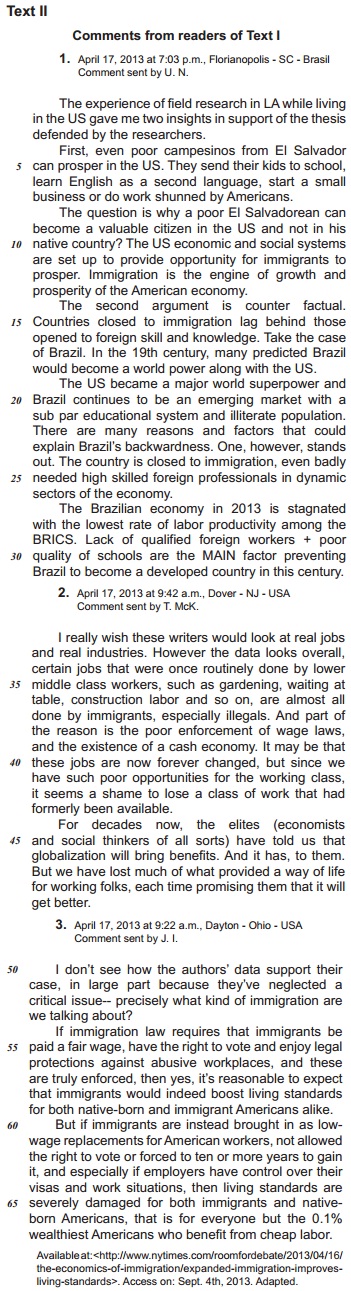
In Texts I and II, in terms of reference, one notices that
Ano: 2013
Banca:
CESGRANRIO
Órgão:
IBGE
Provas:
CESGRANRIO - 2013 - IBGE - Todos os Cargos - Conhecimentos Básicos - Analista
|
CESGRANRIO - 2013 - IBGE - Todos os Cargos - Conhecimentos Básicos - Tecnologista |
CESGRANRIO - 2013 - IBGE - Analista - Arquivologia |
CESGRANRIO - 2013 - IBGE - Tecnologista - Estatística |
CESGRANRIO - 2013 - IBGE - Analista - Análise e Desenvolvimento de Aplicações |
CESGRANRIO - 2013 - IBGE - Analista - Suporte Operacional |
CESGRANRIO - 2013 - IBGE - Analista - Recursos Humanos - Desenvolvimento de Pessoas |
CESGRANRIO - 2013 - IBGE - Analista - Recursos Materiais e Logística |
CESGRANRIO - 2013 - IBGE - Analista - Recursos Humanos - Administração de Pessoal |
CESGRANRIO - 2013 - IBGE - Analista - Designer Institucional |
CESGRANRIO - 2013 - IBGE - Analista - Orçamento e Finanças |
CESGRANRIO - 2013 - IBGE - Analista - Planejamento e Gestão |
CESGRANRIO - 2013 - IBGE - Analista - Suporte à Comunicação e Rede |
CESGRANRIO - 2013 - IBGE - Analista - Ciências Contábeis |
CESGRANRIO - 2013 - IBGE - Analista - Administração Escolar |
CESGRANRIO - 2013 - IBGE - Tecnologista - Análise Agrícola |
CESGRANRIO - 2013 - IBGE - Tecnologista - Análise Pecuária |
CESGRANRIO - 2013 - IBGE - Tecnologista - Análise Socioeconômica |
CESGRANRIO - 2013 - IBGE - Tecnologista - Cartografia |
CESGRANRIO - 2013 - IBGE - Tecnologista - Edição de Vídeo |
CESGRANRIO - 2013 - IBGE - Tecnologista - Geografia |
CESGRANRIO - 2013 - IBGE - Tecnologista - Geoprocessamento |
Q437117
Inglês
According to Text I, studies have NOT proved that
Ano: 2013
Banca:
CESGRANRIO
Órgão:
IBGE
Provas:
CESGRANRIO - 2013 - IBGE - Todos os Cargos - Conhecimentos Básicos - Analista
|
CESGRANRIO - 2013 - IBGE - Todos os Cargos - Conhecimentos Básicos - Tecnologista |
CESGRANRIO - 2013 - IBGE - Analista - Arquivologia |
CESGRANRIO - 2013 - IBGE - Tecnologista - Estatística |
CESGRANRIO - 2013 - IBGE - Analista - Análise e Desenvolvimento de Aplicações |
CESGRANRIO - 2013 - IBGE - Analista - Suporte Operacional |
CESGRANRIO - 2013 - IBGE - Analista - Recursos Humanos - Desenvolvimento de Pessoas |
CESGRANRIO - 2013 - IBGE - Analista - Recursos Materiais e Logística |
CESGRANRIO - 2013 - IBGE - Analista - Recursos Humanos - Administração de Pessoal |
CESGRANRIO - 2013 - IBGE - Analista - Designer Institucional |
CESGRANRIO - 2013 - IBGE - Analista - Orçamento e Finanças |
CESGRANRIO - 2013 - IBGE - Analista - Planejamento e Gestão |
CESGRANRIO - 2013 - IBGE - Analista - Suporte à Comunicação e Rede |
CESGRANRIO - 2013 - IBGE - Analista - Ciências Contábeis |
CESGRANRIO - 2013 - IBGE - Analista - Administração Escolar |
CESGRANRIO - 2013 - IBGE - Tecnologista - Análise Agrícola |
CESGRANRIO - 2013 - IBGE - Tecnologista - Análise Pecuária |
CESGRANRIO - 2013 - IBGE - Tecnologista - Análise Socioeconômica |
CESGRANRIO - 2013 - IBGE - Tecnologista - Cartografia |
CESGRANRIO - 2013 - IBGE - Tecnologista - Edição de Vídeo |
CESGRANRIO - 2013 - IBGE - Tecnologista - Geografia |
CESGRANRIO - 2013 - IBGE - Tecnologista - Geoprocessamento |
Q437116
Inglês
The author’s main claim in Text I is that
Ano: 2013
Banca:
CESPE / CEBRASPE
Órgão:
ANCINE
Prova:
CESPE - 2013 - ANCINE - Todos os Cargos - Especialista em Regulação da Atividade Cinematográfica e Audiovisual Área III |
Q428380
Inglês
Texto associado
The Butler
The long White House service of an African-American butler
Cecil Ganes (Forest Whitaker) is used as a prism through
which we view the development of the civil-rights movement.
As the liveried Cecil, silent and dignified, serves sandwiches
and coffee and exchanges courtesies with a variety of chief
executives, Cecil’s son, Louis (David Oyelowo), becomes a
militant and manages to hit every highlight, including the
Freedom Rides in 1961, and Martin Luther King’s motel room
on the day that he’s shot. The movie’s right-mindedness is
relieved now and then by scenes at Cecil’s house, where his
wife, Gloria (Oprah Winfrey), grows restive and resentful,
drinks and dallies with a neighbor.
Elysium
The title of Neil Blomkamp’s new film, set in the year 2154,
refers to a space station: a haven for the wealthy, spinning just
beyond the limits of our polluted planet. Our hero is Max (Matt
Damon), who, like the majority of humans, toils and sweats on
Earth, where the cops are intemperate robots. After an accident
at work, he takes on a reckless task, assailing an evil billionaire
(William Fichtner) and winding up on a shuttle to Elysium,
hell-bent on reaching this artificial heaven and obtaining
justice. Rather than viewing a future world from a distance and
admiring its digital enhancements, we feel thrust into the thick
of it with such immediacy and sensory impact that, like most of
its inhabitants, we can only dream of escape.
Enough Said
This mild romantic comedy has an up-front twist that’s beside
the point. Eva (Julia Louis-Dreyfus), a California divorcée who
works as a masseuse, goes to a party and meets Marianne
(Catherine Keener), a poet who becomes a client and a friend,
and Albert (James Gandolfini), a TV historian, who soon
becomes Eva’s boyfriend – and who turns out to be Marianne’s
ex-husband. Much else is beside the point, too, such as Eva’s
trivial conflicts with her daughter, Ellen (Tracey Fairaway),
who’s about to leave home for college, as is Albert and
Marianne’s daughter, Tess (Eve Hewson).
The New Yorker. September 23, 2013, p. 22 (adapted).
The long White House service of an African-American butler
Cecil Ganes (Forest Whitaker) is used as a prism through
which we view the development of the civil-rights movement.
As the liveried Cecil, silent and dignified, serves sandwiches
and coffee and exchanges courtesies with a variety of chief
executives, Cecil’s son, Louis (David Oyelowo), becomes a
militant and manages to hit every highlight, including the
Freedom Rides in 1961, and Martin Luther King’s motel room
on the day that he’s shot. The movie’s right-mindedness is
relieved now and then by scenes at Cecil’s house, where his
wife, Gloria (Oprah Winfrey), grows restive and resentful,
drinks and dallies with a neighbor.
Elysium
The title of Neil Blomkamp’s new film, set in the year 2154,
refers to a space station: a haven for the wealthy, spinning just
beyond the limits of our polluted planet. Our hero is Max (Matt
Damon), who, like the majority of humans, toils and sweats on
Earth, where the cops are intemperate robots. After an accident
at work, he takes on a reckless task, assailing an evil billionaire
(William Fichtner) and winding up on a shuttle to Elysium,
hell-bent on reaching this artificial heaven and obtaining
justice. Rather than viewing a future world from a distance and
admiring its digital enhancements, we feel thrust into the thick
of it with such immediacy and sensory impact that, like most of
its inhabitants, we can only dream of escape.
Enough Said
This mild romantic comedy has an up-front twist that’s beside
the point. Eva (Julia Louis-Dreyfus), a California divorcée who
works as a masseuse, goes to a party and meets Marianne
(Catherine Keener), a poet who becomes a client and a friend,
and Albert (James Gandolfini), a TV historian, who soon
becomes Eva’s boyfriend – and who turns out to be Marianne’s
ex-husband. Much else is beside the point, too, such as Eva’s
trivial conflicts with her daughter, Ellen (Tracey Fairaway),
who’s about to leave home for college, as is Albert and
Marianne’s daughter, Tess (Eve Hewson).
The New Yorker. September 23, 2013, p. 22 (adapted).
Based on the three film summaries presented above, judge the following items.
In The Butler, Oprah Winfrey plays the role of the main character’s drunk and unfaithful wife.
In The Butler, Oprah Winfrey plays the role of the main character’s drunk and unfaithful wife.
Ano: 2013
Banca:
CESPE / CEBRASPE
Órgão:
ANCINE
Prova:
CESPE - 2013 - ANCINE - Todos os Cargos - Especialista em Regulação da Atividade Cinematográfica e Audiovisual Área III |
Q428378
Inglês
Texto associado
The Butler
The long White House service of an African-American butler
Cecil Ganes (Forest Whitaker) is used as a prism through
which we view the development of the civil-rights movement.
As the liveried Cecil, silent and dignified, serves sandwiches
and coffee and exchanges courtesies with a variety of chief
executives, Cecil’s son, Louis (David Oyelowo), becomes a
militant and manages to hit every highlight, including the
Freedom Rides in 1961, and Martin Luther King’s motel room
on the day that he’s shot. The movie’s right-mindedness is
relieved now and then by scenes at Cecil’s house, where his
wife, Gloria (Oprah Winfrey), grows restive and resentful,
drinks and dallies with a neighbor.
Elysium
The title of Neil Blomkamp’s new film, set in the year 2154,
refers to a space station: a haven for the wealthy, spinning just
beyond the limits of our polluted planet. Our hero is Max (Matt
Damon), who, like the majority of humans, toils and sweats on
Earth, where the cops are intemperate robots. After an accident
at work, he takes on a reckless task, assailing an evil billionaire
(William Fichtner) and winding up on a shuttle to Elysium,
hell-bent on reaching this artificial heaven and obtaining
justice. Rather than viewing a future world from a distance and
admiring its digital enhancements, we feel thrust into the thick
of it with such immediacy and sensory impact that, like most of
its inhabitants, we can only dream of escape.
Enough Said
This mild romantic comedy has an up-front twist that’s beside
the point. Eva (Julia Louis-Dreyfus), a California divorcée who
works as a masseuse, goes to a party and meets Marianne
(Catherine Keener), a poet who becomes a client and a friend,
and Albert (James Gandolfini), a TV historian, who soon
becomes Eva’s boyfriend – and who turns out to be Marianne’s
ex-husband. Much else is beside the point, too, such as Eva’s
trivial conflicts with her daughter, Ellen (Tracey Fairaway),
who’s about to leave home for college, as is Albert and
Marianne’s daughter, Tess (Eve Hewson).
The New Yorker. September 23, 2013, p. 22 (adapted).
The long White House service of an African-American butler
Cecil Ganes (Forest Whitaker) is used as a prism through
which we view the development of the civil-rights movement.
As the liveried Cecil, silent and dignified, serves sandwiches
and coffee and exchanges courtesies with a variety of chief
executives, Cecil’s son, Louis (David Oyelowo), becomes a
militant and manages to hit every highlight, including the
Freedom Rides in 1961, and Martin Luther King’s motel room
on the day that he’s shot. The movie’s right-mindedness is
relieved now and then by scenes at Cecil’s house, where his
wife, Gloria (Oprah Winfrey), grows restive and resentful,
drinks and dallies with a neighbor.
Elysium
The title of Neil Blomkamp’s new film, set in the year 2154,
refers to a space station: a haven for the wealthy, spinning just
beyond the limits of our polluted planet. Our hero is Max (Matt
Damon), who, like the majority of humans, toils and sweats on
Earth, where the cops are intemperate robots. After an accident
at work, he takes on a reckless task, assailing an evil billionaire
(William Fichtner) and winding up on a shuttle to Elysium,
hell-bent on reaching this artificial heaven and obtaining
justice. Rather than viewing a future world from a distance and
admiring its digital enhancements, we feel thrust into the thick
of it with such immediacy and sensory impact that, like most of
its inhabitants, we can only dream of escape.
Enough Said
This mild romantic comedy has an up-front twist that’s beside
the point. Eva (Julia Louis-Dreyfus), a California divorcée who
works as a masseuse, goes to a party and meets Marianne
(Catherine Keener), a poet who becomes a client and a friend,
and Albert (James Gandolfini), a TV historian, who soon
becomes Eva’s boyfriend – and who turns out to be Marianne’s
ex-husband. Much else is beside the point, too, such as Eva’s
trivial conflicts with her daughter, Ellen (Tracey Fairaway),
who’s about to leave home for college, as is Albert and
Marianne’s daughter, Tess (Eve Hewson).
The New Yorker. September 23, 2013, p. 22 (adapted).
Based on the three film summaries presented above, judge the following items.
In one of the films, the main theme is a man/woman relationship.
In one of the films, the main theme is a man/woman relationship.
Q424791
Inglês
Texto associado
Complications of Replacement Therapy
Complications of replacement therapy include:
- Developing antibodies (proteins) that attack the clotting factor
- Developing viral infections from human clotting factors
- Damage to joints, muscles, or other parts of the body resulting from delays in treatment
Antibodies to the clotting factor.
Antibodies can destroy the clotting factor before it has a chance to work. This is a very serious problem. It prevents the main treatment for hemophilia (replacement therapy) from working. These antibodies, also called inhibitors, develop in about 20-30 percent of people who have severe hemophilia A. Inhibitors develop in 2-5 percent of people who have hemophilia B
When antibodies develop, doctors may use larger doses of clotting factor or try different clotting factor sources. Sometimes the antibodies go away. Researchers are studying new ways to deal with antibodies to clotting factors.
Viruses from human clotting factors.
Clotting factors made from human blood can carry the viruses that cause HIV/AIDS and hepatitis. ....I.... , the risk of getting an infectious disease from human clotting factors is very small due to:
- Careful screening of blood donors
- Testing of donated blood products
- Treating donated blood products with a detergent and heat to destroy viruses - Vaccinating people who have hemophilia for hepatitis A and B
Damage to joints, muscles, and other parts of the body.
Delays in treatment can cause damage such as:
- Bleeding into a joint. If this happens many times, it can lead to changes in the shape of the joint and impair the joint's function.
- Swelling of the membrane around a joint. - Pain, swelling, and redness of a joint.
- Pressure on a joint from swelling, which can destroy the joint.
(Adapted from http://www.nhlbi.nih.gov/health/health-topics/ topics/hemophilia/treatment.html)
Complications of replacement therapy include:
- Developing antibodies (proteins) that attack the clotting factor
- Developing viral infections from human clotting factors
- Damage to joints, muscles, or other parts of the body resulting from delays in treatment
Antibodies to the clotting factor.
Antibodies can destroy the clotting factor before it has a chance to work. This is a very serious problem. It prevents the main treatment for hemophilia (replacement therapy) from working. These antibodies, also called inhibitors, develop in about 20-30 percent of people who have severe hemophilia A. Inhibitors develop in 2-5 percent of people who have hemophilia B
When antibodies develop, doctors may use larger doses of clotting factor or try different clotting factor sources. Sometimes the antibodies go away. Researchers are studying new ways to deal with antibodies to clotting factors.
Viruses from human clotting factors.
Clotting factors made from human blood can carry the viruses that cause HIV/AIDS and hepatitis. ....I.... , the risk of getting an infectious disease from human clotting factors is very small due to:
- Careful screening of blood donors
- Testing of donated blood products
- Treating donated blood products with a detergent and heat to destroy viruses - Vaccinating people who have hemophilia for hepatitis A and B
Damage to joints, muscles, and other parts of the body.
Delays in treatment can cause damage such as:
- Bleeding into a joint. If this happens many times, it can lead to changes in the shape of the joint and impair the joint's function.
- Swelling of the membrane around a joint. - Pain, swelling, and redness of a joint.
- Pressure on a joint from swelling, which can destroy the joint.
(Adapted from http://www.nhlbi.nih.gov/health/health-topics/ topics/hemophilia/treatment.html)
De acordo com o texto,
Ano: 2013
Banca:
VUNESP
Órgão:
CETESB
Prova:
VUNESP - 2013 - CETESB - Analista Administrativo - Recursos Humanos |
Q390448
Inglês
Texto associado
The US Department of Energy is giving $120m (£75m) to set up a new research centre charged with developing new methods of rare earth production.
Rare earths are 17 chemically similar elements crucial to making many hi-tech products, such as phones and PCs. The Critical Materials Institute will be located in Ames, Iowa.
The US wants to reduce its dependency on China, which produces more than 95% of the world’s rare earth elements, and address local shortages. According to the US Geological Survey, there may be deposits of rare earths in 14 US states. Besides being used for hi-tech gadgets, the elements are also crucial for manufacturing low-carbon resources such as wind turbines, solar panels and electric cars, said David Danielson, the US assistant secretary for renewable energy.
Rare earth elements are also used for military applications, such as advanced optics technologies, radar and radiation detection equipment, and advanced communications systems, according to a 2011 research report by the US Government Accountability Office. From the 1960s until the 1980s, the Mountain Pass mine in California made the US the world leader in rare earth production, but it was later closed, largely due to competition with the elements imported from China.
At the moment, the regulations surrounding rare earths mining in the US are very strict, an expert on the materials from Chalmers University of Technology in Sweden told the BBC. “The Mountain Pass mine was [also] closed down for environmental reasons,” said Prof Ekberg.
Rare earths are 17 chemically similar elements crucial to making many hi-tech products, such as phones and PCs. The Critical Materials Institute will be located in Ames, Iowa.
The US wants to reduce its dependency on China, which produces more than 95% of the world’s rare earth elements, and address local shortages. According to the US Geological Survey, there may be deposits of rare earths in 14 US states. Besides being used for hi-tech gadgets, the elements are also crucial for manufacturing low-carbon resources such as wind turbines, solar panels and electric cars, said David Danielson, the US assistant secretary for renewable energy.
Rare earth elements are also used for military applications, such as advanced optics technologies, radar and radiation detection equipment, and advanced communications systems, according to a 2011 research report by the US Government Accountability Office. From the 1960s until the 1980s, the Mountain Pass mine in California made the US the world leader in rare earth production, but it was later closed, largely due to competition with the elements imported from China.
At the moment, the regulations surrounding rare earths mining in the US are very strict, an expert on the materials from Chalmers University of Technology in Sweden told the BBC. “The Mountain Pass mine was [also] closed down for environmental reasons,” said Prof Ekberg.
A expressão due to em – … largely due to competition with the elements imported from China. – é substituída, sem alterar o sentido do trecho, por
Ano: 2013
Banca:
VUNESP
Órgão:
CETESB
Prova:
VUNESP - 2013 - CETESB - Analista Administrativo - Recursos Humanos |
Q390447
Inglês
Texto associado
The US Department of Energy is giving $120m (£75m) to set up a new research centre charged with developing new methods of rare earth production.
Rare earths are 17 chemically similar elements crucial to making many hi-tech products, such as phones and PCs. The Critical Materials Institute will be located in Ames, Iowa.
The US wants to reduce its dependency on China, which produces more than 95% of the world’s rare earth elements, and address local shortages. According to the US Geological Survey, there may be deposits of rare earths in 14 US states. Besides being used for hi-tech gadgets, the elements are also crucial for manufacturing low-carbon resources such as wind turbines, solar panels and electric cars, said David Danielson, the US assistant secretary for renewable energy.
Rare earth elements are also used for military applications, such as advanced optics technologies, radar and radiation detection equipment, and advanced communications systems, according to a 2011 research report by the US Government Accountability Office. From the 1960s until the 1980s, the Mountain Pass mine in California made the US the world leader in rare earth production, but it was later closed, largely due to competition with the elements imported from China.
At the moment, the regulations surrounding rare earths mining in the US are very strict, an expert on the materials from Chalmers University of Technology in Sweden told the BBC. “The Mountain Pass mine was [also] closed down for environmental reasons,” said Prof Ekberg.
Rare earths are 17 chemically similar elements crucial to making many hi-tech products, such as phones and PCs. The Critical Materials Institute will be located in Ames, Iowa.
The US wants to reduce its dependency on China, which produces more than 95% of the world’s rare earth elements, and address local shortages. According to the US Geological Survey, there may be deposits of rare earths in 14 US states. Besides being used for hi-tech gadgets, the elements are also crucial for manufacturing low-carbon resources such as wind turbines, solar panels and electric cars, said David Danielson, the US assistant secretary for renewable energy.
Rare earth elements are also used for military applications, such as advanced optics technologies, radar and radiation detection equipment, and advanced communications systems, according to a 2011 research report by the US Government Accountability Office. From the 1960s until the 1980s, the Mountain Pass mine in California made the US the world leader in rare earth production, but it was later closed, largely due to competition with the elements imported from China.
At the moment, the regulations surrounding rare earths mining in the US are very strict, an expert on the materials from Chalmers University of Technology in Sweden told the BBC. “The Mountain Pass mine was [also] closed down for environmental reasons,” said Prof Ekberg.
O termo besides em – Besides being used for hi-tech gadgets, the elements are also crucial for manufacturing low-carbon resources such as wind turbines… – implica
Q385729
Inglês

The title anticipates the main theme of the text and also de?nes its target audience.
The audience aimed at by the author consists of:
The audience aimed at by the author consists of:
Q381140
Inglês
Texto associado
Brazil’s Average Unemployment Rate Falls to Record Low in 2012
By Dow Jones Business News
January 31, 2013
Brazil’s unemployment rate for 2012 fell to 5.5%, down from the previous record low of 6.0% recorded last year, the Brazilian Institute of Geography and Statistics, or IBGE, said Thursday. In December, unemployment fell to 4.6% compared with 4.9% in November, besting the previous record monthly low of 4.7% registered in December 2011, the IBGE said
The 2012 average unemployment rate was in line with the 5.5% median estimate of economists polled by the local Estado news agency. Analysts had also pegged December’s unemployment rate at 4.4%.
Brazil’s unemployment rate remains at historically low levels despite sluggish economic activity. Salaries have also been on the upswing in an ominous sign for inflation - a key area of concern for the Brazilian Central Bank after a series of interest rate cuts brought local interest rates to record lows last year. Inflation ended 2012 at 5.84%.
The average monthly Brazilian salary retreated slightly to 1,805.00 Brazilian reais ($908.45) in December, down from the record high BRL1,809.60 registered in November, the IBGE said. Wages trended higher in 2012 as employee groups called on Brazilian companies and the government to increase wages and benefits to counter higher local prices. Companies were also forced to pay more to hire and retain workers because of the country’s low unemployment.
The IBGE measures unemployment in six of Brazil’s largest metropolitan areas, including São Paulo, Rio de Janeiro, Salvador, Belo Horizonte, Recife and Porto Alegre. Brazil’s unemployment rate, however, is not fully comparable to jobless rates in developed countries as a large portion of the population is either underemployed or works informally without paying taxes. In addition, workers not actively seeking a job in the month before the survey don’t count as unemployed under the IBGE’s methodology. The survey also doesn’t take into account farm workers.
(www.nasdaq.com. Adaptado)
By Dow Jones Business News
January 31, 2013
Brazil’s unemployment rate for 2012 fell to 5.5%, down from the previous record low of 6.0% recorded last year, the Brazilian Institute of Geography and Statistics, or IBGE, said Thursday. In December, unemployment fell to 4.6% compared with 4.9% in November, besting the previous record monthly low of 4.7% registered in December 2011, the IBGE said
The 2012 average unemployment rate was in line with the 5.5% median estimate of economists polled by the local Estado news agency. Analysts had also pegged December’s unemployment rate at 4.4%.
Brazil’s unemployment rate remains at historically low levels despite sluggish economic activity. Salaries have also been on the upswing in an ominous sign for inflation - a key area of concern for the Brazilian Central Bank after a series of interest rate cuts brought local interest rates to record lows last year. Inflation ended 2012 at 5.84%.
The average monthly Brazilian salary retreated slightly to 1,805.00 Brazilian reais ($908.45) in December, down from the record high BRL1,809.60 registered in November, the IBGE said. Wages trended higher in 2012 as employee groups called on Brazilian companies and the government to increase wages and benefits to counter higher local prices. Companies were also forced to pay more to hire and retain workers because of the country’s low unemployment.
The IBGE measures unemployment in six of Brazil’s largest metropolitan areas, including São Paulo, Rio de Janeiro, Salvador, Belo Horizonte, Recife and Porto Alegre. Brazil’s unemployment rate, however, is not fully comparable to jobless rates in developed countries as a large portion of the population is either underemployed or works informally without paying taxes. In addition, workers not actively seeking a job in the month before the survey don’t count as unemployed under the IBGE’s methodology. The survey also doesn’t take into account farm workers.
(www.nasdaq.com. Adaptado)
No trecho do ultimo parágrafo – In addition, workers not actively seeking a job – a expressão in addition pode ser substituída, sem alteração de sentido, por
Q381138
Inglês
Texto associado
Brazil’s Average Unemployment Rate Falls to Record Low in 2012
By Dow Jones Business News
January 31, 2013
Brazil’s unemployment rate for 2012 fell to 5.5%, down from the previous record low of 6.0% recorded last year, the Brazilian Institute of Geography and Statistics, or IBGE, said Thursday. In December, unemployment fell to 4.6% compared with 4.9% in November, besting the previous record monthly low of 4.7% registered in December 2011, the IBGE said
The 2012 average unemployment rate was in line with the 5.5% median estimate of economists polled by the local Estado news agency. Analysts had also pegged December’s unemployment rate at 4.4%.
Brazil’s unemployment rate remains at historically low levels despite sluggish economic activity. Salaries have also been on the upswing in an ominous sign for inflation - a key area of concern for the Brazilian Central Bank after a series of interest rate cuts brought local interest rates to record lows last year. Inflation ended 2012 at 5.84%.
The average monthly Brazilian salary retreated slightly to 1,805.00 Brazilian reais ($908.45) in December, down from the record high BRL1,809.60 registered in November, the IBGE said. Wages trended higher in 2012 as employee groups called on Brazilian companies and the government to increase wages and benefits to counter higher local prices. Companies were also forced to pay more to hire and retain workers because of the country’s low unemployment.
The IBGE measures unemployment in six of Brazil’s largest metropolitan areas, including São Paulo, Rio de Janeiro, Salvador, Belo Horizonte, Recife and Porto Alegre. Brazil’s unemployment rate, however, is not fully comparable to jobless rates in developed countries as a large portion of the population is either underemployed or works informally without paying taxes. In addition, workers not actively seeking a job in the month before the survey don’t count as unemployed under the IBGE’s methodology. The survey also doesn’t take into account farm workers.
(www.nasdaq.com. Adaptado)
By Dow Jones Business News
January 31, 2013
Brazil’s unemployment rate for 2012 fell to 5.5%, down from the previous record low of 6.0% recorded last year, the Brazilian Institute of Geography and Statistics, or IBGE, said Thursday. In December, unemployment fell to 4.6% compared with 4.9% in November, besting the previous record monthly low of 4.7% registered in December 2011, the IBGE said
The 2012 average unemployment rate was in line with the 5.5% median estimate of economists polled by the local Estado news agency. Analysts had also pegged December’s unemployment rate at 4.4%.
Brazil’s unemployment rate remains at historically low levels despite sluggish economic activity. Salaries have also been on the upswing in an ominous sign for inflation - a key area of concern for the Brazilian Central Bank after a series of interest rate cuts brought local interest rates to record lows last year. Inflation ended 2012 at 5.84%.
The average monthly Brazilian salary retreated slightly to 1,805.00 Brazilian reais ($908.45) in December, down from the record high BRL1,809.60 registered in November, the IBGE said. Wages trended higher in 2012 as employee groups called on Brazilian companies and the government to increase wages and benefits to counter higher local prices. Companies were also forced to pay more to hire and retain workers because of the country’s low unemployment.
The IBGE measures unemployment in six of Brazil’s largest metropolitan areas, including São Paulo, Rio de Janeiro, Salvador, Belo Horizonte, Recife and Porto Alegre. Brazil’s unemployment rate, however, is not fully comparable to jobless rates in developed countries as a large portion of the population is either underemployed or works informally without paying taxes. In addition, workers not actively seeking a job in the month before the survey don’t count as unemployed under the IBGE’s methodology. The survey also doesn’t take into account farm workers.
(www.nasdaq.com. Adaptado)
No trecho do quinto parágrafo – Brazil’s unemployment rate, however, is not fully comparable to jobless rates in developed countries as a large portion of the population is either underemployed or works informally – a palavra as pode ser substituída, sem alteração de sentido, por
Ano: 2013
Banca:
CESPE / CEBRASPE
Órgão:
STF
Prova:
CESPE - 2013 - STF - Todos os Cargos - Conhecimentos Básicos - Cargos 2 e 9 |
Q373827
Inglês
Texto associado
The aging process affects us all at different rates. Some people of fifty-three, like the esteemed author, look a mere thirty-five, with sparkling brown eyes, a handsome gait and the virility of a steam train. Others, like the author’s friend Colin, look like little middle-aged men at twenty-one with middle-aged outlooks of set ways and planned futures. In women the former condition is common but women rarely suffer from the latter, being fired with the insatiable drive of ambition for either an independent and distinguished career in a still male-dominated world, or a home and seven children by the time they are thirty followed by an independent and distinguished career as a Cheltenham councillor or a public relations agent for Jonathan Cape, in later life.
No such luck for Charles Charlesworth, who was born on the 14th of March, 1829, in Stafford. At the age of four Charles had a beard and was sexually active.
In the final three years of his life his skin wrinkled, he developed varicose veins, shortness of breath, grey hair, senile dementia and incontinence. Some time in his seventh year he fainted and never gained consciousness.
The coroner returned a verdict of natural causes due to old age.
Hugh Cory. Advanced writing with english in use. Oxford University Press, p. 34.
According to the text above,
No such luck for Charles Charlesworth, who was born on the 14th of March, 1829, in Stafford. At the age of four Charles had a beard and was sexually active.
In the final three years of his life his skin wrinkled, he developed varicose veins, shortness of breath, grey hair, senile dementia and incontinence. Some time in his seventh year he fainted and never gained consciousness.
The coroner returned a verdict of natural causes due to old age.
Hugh Cory. Advanced writing with english in use. Oxford University Press, p. 34.
According to the text above,
it is rather common for women to look older than they really are.
Ano: 2013
Banca:
CESPE / CEBRASPE
Órgão:
Instituto Rio Branco
Prova:
CESPE - 2013 - Instituto Rio Branco - Diplomata - Prova 2 |
Q359337
Inglês

According to the text, judge if the following items are right (C) or wrong (E).
In general, bonds provide stability to an investor’s portfolio.
In general, bonds provide stability to an investor’s portfolio.
Ano: 2013
Banca:
CESPE / CEBRASPE
Órgão:
Instituto Rio Branco
Prova:
CESPE - 2013 - Instituto Rio Branco - Diplomata - Prova 2 |
Q359335
Inglês
According to the text, judge if the following items are right (C) or wrong (E).
The main contention of the article is that investors should be skeptical about Bernanke’s remark in relation to the effects of the American economic recovery.
The main contention of the article is that investors should be skeptical about Bernanke’s remark in relation to the effects of the American economic recovery.
Ano: 2013
Banca:
CESPE / CEBRASPE
Órgão:
Instituto Rio Branco
Prova:
CESPE - 2013 - Instituto Rio Branco - Diplomata - Prova 2 |
Q359330
Inglês
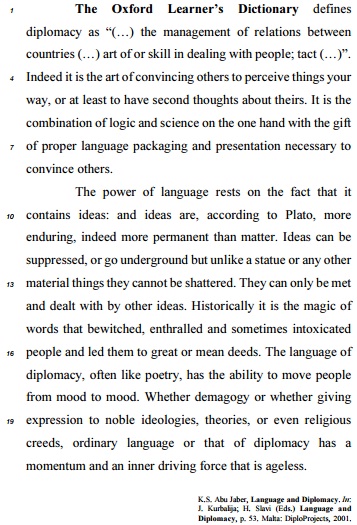
In relation to the pronouns shown in bold in the text above, judge if the items below are right (C) or wrong (E).
The pronoun “theirs” (l.5) refers to “others” (l.4).
The pronoun “theirs” (l.5) refers to “others” (l.4).
Ano: 2013
Banca:
CESPE / CEBRASPE
Órgão:
Instituto Rio Branco
Prova:
CESPE - 2013 - Instituto Rio Branco - Diplomata - Prova 2 |
Q359325
Inglês

Based on the text, judge if the items below are right (C) or wrong (E).
Amy Larkin believes the worldwide scarcity of resources is affecting the world’s economy.
Amy Larkin believes the worldwide scarcity of resources is affecting the world’s economy.
Ano: 2013
Banca:
CESPE / CEBRASPE
Órgão:
Instituto Rio Branco
Prova:
CESPE - 2013 - Instituto Rio Branco - Diplomata - Prova 2 |
Q359322
Inglês
Based on the text, judge if the items below are right (C) or wrong (E).
Wall Street and the City experts foresee a complete market breakdown
Wall Street and the City experts foresee a complete market breakdown
Ano: 2013
Banca:
CESPE / CEBRASPE
Órgão:
Instituto Rio Branco
Prova:
CESPE - 2013 - Instituto Rio Branco - Diplomata - Bolsa-prêmio de vocação para a Diplomacia - Objetiva |
Q358530
Inglês

Based on the text presented above, judge the items below.
Few signs of human life were detected in the excavation site
Few signs of human life were detected in the excavation site
Ano: 2013
Banca:
CESPE / CEBRASPE
Órgão:
Instituto Rio Branco
Prova:
CESPE - 2013 - Instituto Rio Branco - Diplomata - Bolsa-prêmio de vocação para a Diplomacia - Objetiva |
Q358529
Inglês
Based on the text presented above, judge the items below.
The site was named ‘Thing’ for lack of a better way to describe it
The site was named ‘Thing’ for lack of a better way to describe it
Ano: 2013
Banca:
CESPE / CEBRASPE
Órgão:
TCU
Prova:
CESPE - 2013 - TCU - Auditor Federal de Controle Externo |
Q353934
Inglês
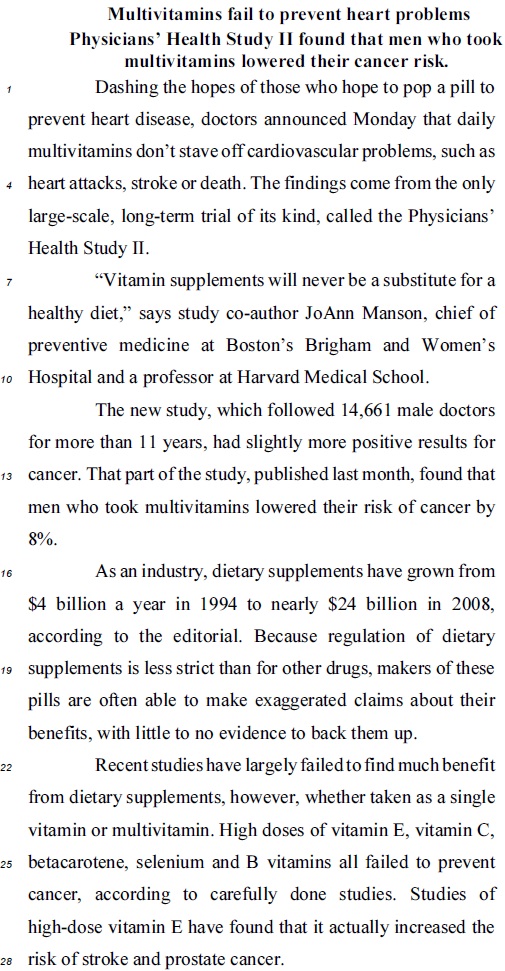
The text’s title and subtitle present conflicting information.

 Conheça nossos planos