Questões de Concurso Comentadas sobre interpretação de texto | reading comprehension em inglês

Foram encontradas 8.877 questões

Q2315656 Inglês

Read the text carefully to answer question.


It is the chosen shared language spoken between individuals with different first languages, sometimes referred to as “common languages” or “link languages”, usually pre-existing languages with a colonial history, which are learned by non-native speakers as a foreign language and then used as a way to communicate with other non-native speakers. It is typically considered a functional language used as a tool for communication, meaning it is usually independent of linguistic history and culture. For the past 20 or so years, linguists have been examining the norms and features of this language, and although there is much variety in communication, some shared characteristics, particularly in terms of word choice, grammar, and pronunciation, often appear.


(Avalaible on: https://www.studysmarter)


The above explanation matches:

Alternativas
Q2315655 Inglês

Read the text to answer question.


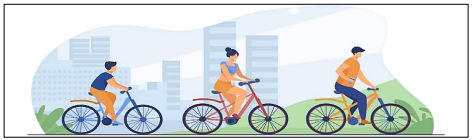
Imagem associada para resolução da questão


There are three classes of e-bikes:


Class I – assistance when you pedal which stops when you reach 20 mph.


Class II – equipped with a throttle for a boost without pedaling, which stops assisting at 20 mph. Class I and Class II e-bikes can go anywhere you’d take a traditional bike, specifically, a flat surface like a bike path.


Class III – equipped with a speedometer and assists up to 28 mph. They are a popular choice for commuters.


There are also a few common e-bike styles, any of which may be within those three classes. Common styles include:


• Cruiser.

• Commuter.

• Mountain.

• Road.


Cruisers are great for a casual cruise around town. Commuter e-bikes are made with narrow tires and an upright design so you can comfortably get to work fast. Mountain e-bikes are for off-road adventurers. Road bikes are similar to cruisers and intended for pleasure riding on paved surfaces, but they have narrow tires and drop handlebars for fast riding. An e-bike can be used for anything you would use a regular bike for, whether you’re riding to work or having a good time. Most of the time, we see riders purchase e-bikes for one of three reasons: commuting, exercise, or recreation. From regular exercise to sensory stimulation to that feel-good factor you get from a great bike ride, there’s a lot to love about commuting to work on your bike. Studies have shown that cyclists are the happiest commuters. Small wonder, given that riding your bike to work each day lowers your risk of cardiovascular disease and certain cancers while giving you a significant cognitive function boost. E-bikes add that little extra oomph, allowing you to manage even the worst hills without batting an eye.


(Available on: https://flyridesusa.com/pages/ebike-guide-for-beginners.)


Texts types, also known as genres or text forms, refer to categories of texts with different purposes, each having a different convention of style and structure. Being so, the purpose of the featured text is to:

Alternativas
Q2315654 Inglês

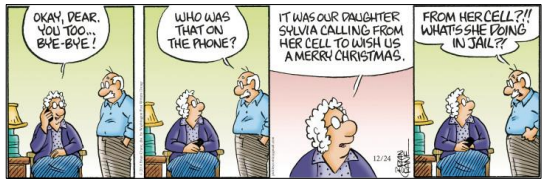
Analyse the image to answer question.


Imagem associada para resolução da questão


(Available on: https://www.englishexercises.org/makeagame/viewgame.asp?id=17405.)


Humor is the ability or situation seen, heard, or thought about causing amusement or even intended to criticize. The humor in the highlighted comic strip is built on the basis of:
Alternativas
Q2315653 Inglês

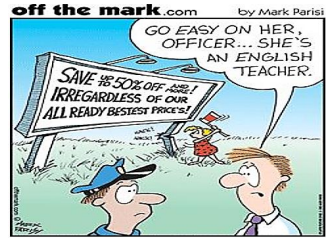
Analyse the image to answer question.


Imagem associada para resolução da questão

(Available on: https://br.pinterest.com/pin/english-teacher.)


Choose the option that answers the question: “Why is the teacher outraged?” 

Alternativas
Q2315588 Inglês

Read the Text II and answer the question that follow it.


Text II 

Global plastic treaty should address chemicals 

    In March, the global community agreed to establish a legally binding treaty to end plastic pollution. To deliver on this goal, the treaty needs to cover all issues of plastics chemicals as an inseparable part of the problem.

    Plastics are complex materials consisting of chemical mixtures, including polymers, additives, residual monomers and processing aids, and non-intentionally added substances. Such mixtures release across the plastics life cycle, from feedstock extraction, production, and use, to reuse, recycling, and disposal; they also recombine along complex, unplanned pathways. As a result, humans and environments are ubiquitously exposed to plastics chemicals, often with serious consequences.

    Out of more than 10,000 known plastics chemicals, at least 2,400 are classified as toxic, such as many phthalates and brominated flame retardants. Documented health effects span generations and include premature births, low birth weight, obesity, diabetes, cardiovascular disease, endometriosis, infertility, and cancers. In the United States alone, associated costs of endocrine-disrupting chemicals amount to USD$300 billion/year. The total burden on community, ecosystem health, and biodiversity is far greater.

    Even with material recycling, plastics chemicals ultimately proliferate in the ecosystem, whether as emissions or by entering new products, exposing waste-laborers, consumers, and frontline communities to new chemical cocktails. An effective, fair, and safe circular economy can only be achieved by phasing out toxic chemicals from plastic production. 

    As negotiations for a global treaty begin, plastics chemicals need to be front and center. However, preparatory meeting documents focus on downstream plastic waste and work from a narrow definition of chemicals as hazardous additives. To enable the treaty to fully address plastics’ ecological, health, and environmental justice problems, it is essential to redefine plastics as complex chemical mixtures and to integrate chemical issues across the life cycle within the scope and core obligations of the legal instrument.

Adapted from: https://www.science.org/doi/10.1126/science.adf5410.

From the excerpt “humans and environments are ubiquitously exposed to plastics chemicals” (2nd paragraph), one can infer that this situation is
Alternativas
Q2315587 Inglês

Read the Text II and answer the question that follow it.


Text II 

Global plastic treaty should address chemicals 

    In March, the global community agreed to establish a legally binding treaty to end plastic pollution. To deliver on this goal, the treaty needs to cover all issues of plastics chemicals as an inseparable part of the problem.

    Plastics are complex materials consisting of chemical mixtures, including polymers, additives, residual monomers and processing aids, and non-intentionally added substances. Such mixtures release across the plastics life cycle, from feedstock extraction, production, and use, to reuse, recycling, and disposal; they also recombine along complex, unplanned pathways. As a result, humans and environments are ubiquitously exposed to plastics chemicals, often with serious consequences.

    Out of more than 10,000 known plastics chemicals, at least 2,400 are classified as toxic, such as many phthalates and brominated flame retardants. Documented health effects span generations and include premature births, low birth weight, obesity, diabetes, cardiovascular disease, endometriosis, infertility, and cancers. In the United States alone, associated costs of endocrine-disrupting chemicals amount to USD$300 billion/year. The total burden on community, ecosystem health, and biodiversity is far greater.

    Even with material recycling, plastics chemicals ultimately proliferate in the ecosystem, whether as emissions or by entering new products, exposing waste-laborers, consumers, and frontline communities to new chemical cocktails. An effective, fair, and safe circular economy can only be achieved by phasing out toxic chemicals from plastic production. 

    As negotiations for a global treaty begin, plastics chemicals need to be front and center. However, preparatory meeting documents focus on downstream plastic waste and work from a narrow definition of chemicals as hazardous additives. To enable the treaty to fully address plastics’ ecological, health, and environmental justice problems, it is essential to redefine plastics as complex chemical mixtures and to integrate chemical issues across the life cycle within the scope and core obligations of the legal instrument.

Adapted from: https://www.science.org/doi/10.1126/science.adf5410.

Based on Text II, mark the statements below as true (T) or false (F).
( ) Evidence that plastics chemicals and different illnesses are closely related is scanty.
( ) Chemical mixtures in plastics may take unforeseen directions.
( ) Forthcoming documents ought to revamp earlier definitions of plastics.
The statements are, respectively,
Alternativas
Q2309608 Inglês

Read the text and answer the following question. 


Do you assess your students or do you just test them? 

[01] Assessment, evaluation, measurement, grades, tests, marks and so on. Different words to talk about the same issue. But, should they be used as synonyms? 

[02] There are some terms that we often use synonymously, but actually they are not. When you assess your students, regardless of whether you use a test or not, you evaluate all the information in order to measure it and grade them. 

[03] Let´s make it clear: 

-Assessment implies gathering information and observing progress. We can document attitudes, knowledge and skills. 

-Evaluation is the organisation of the data obtained during the assessment; for instance, using grids, checklist or diaries. 

-Measurement is the scale we decide to use in order to measure the evaluation. We measure by marks, ranks or scores, among others. 

-Grade is the number obtained in the measurement. 

-Testing is a measuring tool. We can use a test, an examination or a quiz to challenge the student´s ability or knowledge. 

[04] If you really want to assess your students and make it an active part of their own learning, promoting autonomy and metacognition, they have to know, from the very beginning, about the assessment, evaluation and grading criteria, as well as about the examinations, if there are going to be some. 

[05] Assessment should be a continuous process, gathering information in every lesson and getting to know our students more and more each day, both their personal and academic profile. In order to evaluate this data, we can use simple checklists, a classroom diary, grids or similar instruments, as well as the activities themselves. 

[06] When dealing with all of these tools you have to think carefully about how you are going to measure the information and how you are going to award the final grade. Moreover, you have to weigh up the benefits of testing your students with one or more quizzes and examinations. 

[07] As we all know, changes are possible, and in many cases necessary, in order to adapt your theory to the actual development of the lessons. Nevertheless, all these aspects should be planned and clear from the very beginning, both for you and for your students. It could also be interesting to make them clear to the families, for instance using a classroom blog in which you can publish your evaluation methods and criteria. 

[08] This could be a general example: 
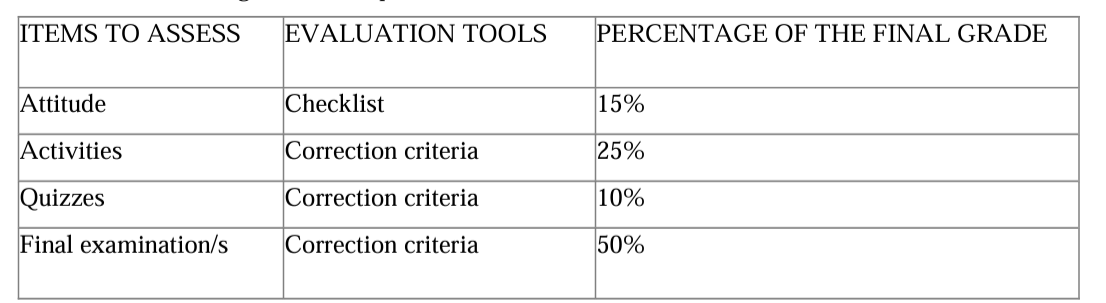

[09] From this general proposal, we would develop a checklist with items relating to attitude: participation, collaboration, deadline accomplishment, attendance, and so on. This is a progressive assessment. 

[10] The activities should be corrected using different tools, depending on their nature. For example, it is not the same correcting a writing or a speaking activity (we can create grids for those, alone or with our students) than correcting a grammar exercise or a listening one (we can correct them using more traditional measuring scales or we could use peer evaluation). We would have to make all those criteria clear to our students before using them. 

[11] Quizzes can be used in order to prepare our students for the final examination. We can use new technologies in order to introduce them, with tools such as Kahoot, Mentimeter, Socrative or Google Forms, among many others. They can create their own quizzes and games, in groups or individually in order to challenge their classmates. 

[12] The final examination could be made up of more than one paper, for instance, we could divide it in two, or even in more items, in order to give them the opportunity to practise and avoid risking their final grade on just one exam. 

[13] Apart from the possibility of dividing the final examination in two parts, another option would be to divide it according to different skills, for example, on the one hand, a test having to do with grammar, vocabulary, reading and writing and, on the other hand, another having to do with speaking and listening. Flipgrid could be a very useful tool to carry out your oral examinations in a less stressful way. 

[14] Before I finish, although we haven´t given specific solutions to the complex problem of assessment, I would like to sum up with some general tips about the issue: -Necessity of an objective and continuous assessment. 

-Necessity of an objective and continuous assessment. 

-Use a variety of evaluation tools, not only for the exams, but also for the process: different types of activities, exams and corrections, to respond to every single student. That will make it less subjective. 

-Make the evaluation and marking criteria clear to your students. You can make them part of the process, for example creating grids or checklists together. 

-Introduce peer evaluation and self-asessment. 

-Be prepared to adapt your planning when necessary. 

[15] And remember, try to point out the positive aspects of your students´ achievements, don´t give them only feedback about their weak points, tell them about their strong points too and try to be quick in giving them back their exercises or exams results, otherwise they will have completely forgotten what they have written. 

[16] The more you get to know your students, the more accurate your assessments will be, enabling them to obtain higher marks in your evaluations, tests, activities or examinations. 


(Available at: https://www.teachingenglish.org.uk/professional-development/teachers/assessinglearners/magazine/do-you-assess-your-students-or-do-you Access on September 08, 2023) 

Paragraph 04.  Which statement is incorrect according to the passage below?  “If you really want to assess your students and make it an active part of their own learning, promoting autonomy and metacognition, they have to know, from the very beginning, about the assessment, evaluation and grading criteria, as well as about the examinations, if there are going to be some.” 
Alternativas
Q2309606 Inglês
Mark the incorrect sentence.  
Alternativas
Q2309603 Inglês

Read the text and answer the following question. 


Cultural behaviour in business 

Much of today's business is conducted across international borders, and while the majority of the global business community might _______ the use of English as a common language, the nuances and expectations of business communication might differ greatly from culture to culture. A lack of understanding of the cultural norms and practices of our business acquaintances can result in unfair judgments, misunderstandings and breakdowns in communication. Here are three basic areas of differences in business etiquette around the world that could help stand you in good stead when you next find yourself working with someone from a different culture. 

Addressing someone 

When discussing this topic in a training course, a German trainee and a British trainee got into a hot debate about _______ it was appropriate for someone with a doctorate to use the corresponding title on their business card. The British trainee maintained that anyone who wasn't a medical doctor expecting to be addressed as 'Dr' was disgustingly pompous and full of themselves. The German trainee, however, argued that the hard work and years of education put into earning that PhD should give them full rights to expect to be addressed as 'Dr'. 

This stark difference in opinion over something that could be conceived as minor and thus easily _______ goes to show that we often attach meaning to even the most mundane practices. When things that we are used to are done differently, it could spark the strongest reactions in us. While many Continental Europeans and Latin Americans prefer to be addressed with a title, for example Mr or Ms and their surname when meeting someone in a business context for the first time, Americans, and increasingly the British, now tend to prefer using their first names. The best thing to do is to listen and observe how your conversation partner addresses you and, if you are still unsure, do not be afraid to ask them how they would like to be addressed. 

Smiling 

A famous Russian proverb states that 'a smile without reason is a sign of idiocy' and a so-called 'smile of respect' is seen as insincere and often regarded with suspicion in Russia. Yet in countries like the United States, Australia and Britain, smiling is often interpreted as a sign of openness, friendship and respect, and is frequently used to break the ice. 

In a piece of research done on smiles across cultures, the researchers found that smiling individuals were considered more intelligent than non-smiling people in countries such as Germany, Switzerland, China and Malaysia. However, in countries like Russia, Japan, South Korea and Iran, pictures of smiling faces were rated as less intelligent than the non-smiling ones. Meanwhile, in countries like India, Argentina and the Maldives, smiling was associated with dishonesty. 

Eye contact 

An American or British person might be looking their client in the eye to show that they are paying full attention to what is being said, but if that client is from Japan or Korea, they might find the direct eye contact awkward or even disrespectful. In parts of South America and Africa, _______ eye contact could also be seen as challenging authority. In the Middle East, eye contact across genders is considered inappropriate, although eye contact within a gender could signify honesty and truthfulness. 

Having an increased awareness of the possible differences in expectations and _______ can help us avoid cases of miscommunication, but it is vital that we also remember that cultural stereotypes can be detrimental to building good business relationships. Although national cultures could play a part in shaping the way we behave and think, we are also largely influenced by the region we come from, the communities we associate with, our age and gender, our corporate culture and our individual experiences of the world. The knowledge of the potential differences should therefore be something we keep at the back of our minds, rather than something that we use to pigeonhole the individuals of an entire nation. 

(Available at: https://learnenglish.britishcouncil.org/skills/reading/c1-reading/cultural-behaviour-business, Accessed September, 2023) 

Choose the option that best fits the blanks. 
Alternativas
Q2309602 Inglês

Read the sentences below.  


I. I’m ready to paint the town red with my best friends.

II. Being always busy is part and parcel of my occupation.

III. Don’t you call me a liar - that’s the pot calling the kettle black.

IV. I shouldn’t have trusted you my secret. You’ve let the cat out of the bag again!

V. He never wears his heart on his sleeve so it’s hard to tell what he’s feeling.


Now mark the option that contains the accordingly definition:  
Alternativas
Q2306190 Inglês


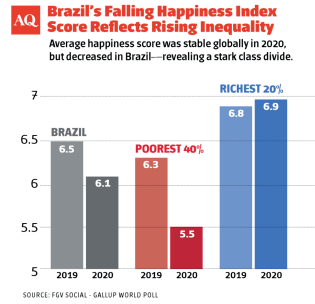
Disponível em: www.americasquarterly.org/article/inequality-is-

-brazils-achilles-heel/. Acesso em: 07 nov. 2023. (Adaptado)

The poll presented in the chart shows
Alternativas
Q2306185 Inglês

Book review:


Why We Fight: The Roots of War

and the Paths to Peace



    ‘Why We Fight’ describes how despite sensationalist headlines, conflict is rare. The author is a field economist, so, much of the writing is based on examples in the real world. The concepts are all easy to understand and the analysis is framed within the context of non cooperative game theory. For those familiar with the subject there is little new in this book, but the examples given highlight in the real world how calculations get made. Most of the analysis is on subjects like gangs and territorial conflicts but it can be viewed in a larger context.


Disponível em: www.amazon.com.br/Why-We-Fight-Roots-Paths/

dp/0241444519. Acesso em: 07 nov. 2023. (Adaptado)

Choose the correct alternative.
Alternativas
Q2302236 Inglês
O texto III refere-se a questão 

A Forced Kiss, and a Reckoning With Sexism in Spain1


    In the wake of a nonconsensual kiss pressed on Jennifer Hermoso, a star player of the Spanish women's soccer team, by the president of Spain’s soccer federation, Luis Rubiales, a significant national conversation has been sparked in Spain about feminism, equality, and abuse. The incident highlights the clash between deeply ingrained traditions of machismo and Spain's more recent progressivism on genderrelated matters.

    The unwarranted kiss by Rubiales on Hermoso's lips has become symbolic of the generational and cultural divide between traditional machismo and the more modern push for gender equality. The incident has led to widespread condemnation, even within conservative circles. This event has been referred to by some as Spain’s version of the #MeToo movement.

    Spanish prosecutors have initiated a preliminary investigation into whether Rubiales could be charged with a sexual aggression crime. The Royal Spanish Football Federation, led by Rubiales, has faced calls for his resignation due to the controversy.

    In a politically charged environment, where the far-right's anti-gender identity stance was rejected in recent elections, Spain's feminist movement has gained momentum. Leading politicians, cultural figures, and voices within soccer culture have expressed support for Hermoso and condemned Rubiales, highlighting Spain's shift towards gender equality. 

    The incident has triggered a broader reflection on the country's entrenched soccer culture and sexism, prompting discussions about the need for change. Many see this moment as an opportunity for Spain to address and transform the deeply ingrained sexism within maledominated institutions. 

(Adapted from "A Forced Kiss, and a Reckoning With Sexism in Spain" by Jason Horowitz and Rachel Chaundler, Aug. 28, 2023)
De acordo com o texto, qual é o significado simbólico da frase “It’s over” usada por Alexia Putellas e estampada nas camisetas das jogadoras?
Alternativas
Q2302235 Inglês
O texto III refere-se a questão 

A Forced Kiss, and a Reckoning With Sexism in Spain1


    In the wake of a nonconsensual kiss pressed on Jennifer Hermoso, a star player of the Spanish women's soccer team, by the president of Spain’s soccer federation, Luis Rubiales, a significant national conversation has been sparked in Spain about feminism, equality, and abuse. The incident highlights the clash between deeply ingrained traditions of machismo and Spain's more recent progressivism on genderrelated matters.

    The unwarranted kiss by Rubiales on Hermoso's lips has become symbolic of the generational and cultural divide between traditional machismo and the more modern push for gender equality. The incident has led to widespread condemnation, even within conservative circles. This event has been referred to by some as Spain’s version of the #MeToo movement.

    Spanish prosecutors have initiated a preliminary investigation into whether Rubiales could be charged with a sexual aggression crime. The Royal Spanish Football Federation, led by Rubiales, has faced calls for his resignation due to the controversy.

    In a politically charged environment, where the far-right's anti-gender identity stance was rejected in recent elections, Spain's feminist movement has gained momentum. Leading politicians, cultural figures, and voices within soccer culture have expressed support for Hermoso and condemned Rubiales, highlighting Spain's shift towards gender equality. 

    The incident has triggered a broader reflection on the country's entrenched soccer culture and sexism, prompting discussions about the need for change. Many see this moment as an opportunity for Spain to address and transform the deeply ingrained sexism within maledominated institutions. 

(Adapted from "A Forced Kiss, and a Reckoning With Sexism in Spain" by Jason Horowitz and Rachel Chaundler, Aug. 28, 2023)
How has Spanish society reacted to the incident and its repercussions?
Alternativas
Q2302234 Inglês
O texto III refere-se a questão 

A Forced Kiss, and a Reckoning With Sexism in Spain1


    In the wake of a nonconsensual kiss pressed on Jennifer Hermoso, a star player of the Spanish women's soccer team, by the president of Spain’s soccer federation, Luis Rubiales, a significant national conversation has been sparked in Spain about feminism, equality, and abuse. The incident highlights the clash between deeply ingrained traditions of machismo and Spain's more recent progressivism on genderrelated matters.

    The unwarranted kiss by Rubiales on Hermoso's lips has become symbolic of the generational and cultural divide between traditional machismo and the more modern push for gender equality. The incident has led to widespread condemnation, even within conservative circles. This event has been referred to by some as Spain’s version of the #MeToo movement.

    Spanish prosecutors have initiated a preliminary investigation into whether Rubiales could be charged with a sexual aggression crime. The Royal Spanish Football Federation, led by Rubiales, has faced calls for his resignation due to the controversy.

    In a politically charged environment, where the far-right's anti-gender identity stance was rejected in recent elections, Spain's feminist movement has gained momentum. Leading politicians, cultural figures, and voices within soccer culture have expressed support for Hermoso and condemned Rubiales, highlighting Spain's shift towards gender equality. 

    The incident has triggered a broader reflection on the country's entrenched soccer culture and sexism, prompting discussions about the need for change. Many see this moment as an opportunity for Spain to address and transform the deeply ingrained sexism within maledominated institutions. 

(Adapted from "A Forced Kiss, and a Reckoning With Sexism in Spain" by Jason Horowitz and Rachel Chaundler, Aug. 28, 2023)
O que os líderes políticos e figuras culturais da Espanha têm em comum em relação ao incidente?
Alternativas
Q2302233 Inglês
O texto III refere-se a questão 

A Forced Kiss, and a Reckoning With Sexism in Spain1


    In the wake of a nonconsensual kiss pressed on Jennifer Hermoso, a star player of the Spanish women's soccer team, by the president of Spain’s soccer federation, Luis Rubiales, a significant national conversation has been sparked in Spain about feminism, equality, and abuse. The incident highlights the clash between deeply ingrained traditions of machismo and Spain's more recent progressivism on genderrelated matters.

    The unwarranted kiss by Rubiales on Hermoso's lips has become symbolic of the generational and cultural divide between traditional machismo and the more modern push for gender equality. The incident has led to widespread condemnation, even within conservative circles. This event has been referred to by some as Spain’s version of the #MeToo movement.

    Spanish prosecutors have initiated a preliminary investigation into whether Rubiales could be charged with a sexual aggression crime. The Royal Spanish Football Federation, led by Rubiales, has faced calls for his resignation due to the controversy.

    In a politically charged environment, where the far-right's anti-gender identity stance was rejected in recent elections, Spain's feminist movement has gained momentum. Leading politicians, cultural figures, and voices within soccer culture have expressed support for Hermoso and condemned Rubiales, highlighting Spain's shift towards gender equality. 

    The incident has triggered a broader reflection on the country's entrenched soccer culture and sexism, prompting discussions about the need for change. Many see this moment as an opportunity for Spain to address and transform the deeply ingrained sexism within maledominated institutions. 

(Adapted from "A Forced Kiss, and a Reckoning With Sexism in Spain" by Jason Horowitz and Rachel Chaundler, Aug. 28, 2023)
Por que o incidente do beijo não consensual é considerado uma representação de um conflito geracional e cultural?
Alternativas
Q2302231 Inglês
O texto III refere-se a questão 

A Forced Kiss, and a Reckoning With Sexism in Spain1


    In the wake of a nonconsensual kiss pressed on Jennifer Hermoso, a star player of the Spanish women's soccer team, by the president of Spain’s soccer federation, Luis Rubiales, a significant national conversation has been sparked in Spain about feminism, equality, and abuse. The incident highlights the clash between deeply ingrained traditions of machismo and Spain's more recent progressivism on genderrelated matters.

    The unwarranted kiss by Rubiales on Hermoso's lips has become symbolic of the generational and cultural divide between traditional machismo and the more modern push for gender equality. The incident has led to widespread condemnation, even within conservative circles. This event has been referred to by some as Spain’s version of the #MeToo movement.

    Spanish prosecutors have initiated a preliminary investigation into whether Rubiales could be charged with a sexual aggression crime. The Royal Spanish Football Federation, led by Rubiales, has faced calls for his resignation due to the controversy.

    In a politically charged environment, where the far-right's anti-gender identity stance was rejected in recent elections, Spain's feminist movement has gained momentum. Leading politicians, cultural figures, and voices within soccer culture have expressed support for Hermoso and condemned Rubiales, highlighting Spain's shift towards gender equality. 

    The incident has triggered a broader reflection on the country's entrenched soccer culture and sexism, prompting discussions about the need for change. Many see this moment as an opportunity for Spain to address and transform the deeply ingrained sexism within maledominated institutions. 

(Adapted from "A Forced Kiss, and a Reckoning With Sexism in Spain" by Jason Horowitz and Rachel Chaundler, Aug. 28, 2023)
De acordo com o texto, qual foi o evento específico que desencadeou um debate nacional sobre feminismo, igualdade e abuso na Espanha?
Alternativas
Q2302230 Inglês
O texto II refere-se a questão

TEXTO II 

Shape of You"
Ed Sheeran

The club isn't the best place to find a lover
So the bar is where I go
Me and my friends at the table doing shots
Drinking fast and then we talk slow
Come over and start up a conversation with just
me
And trust me I'll give it a chance now
Take my hand, stop, put Van the Man on the
jukebox
And then we start to dance, and now I'm singing
like

Girl, you know I want your love
Your love was handmade for somebody like me
Come on now, follow my lead
I may be crazy, don't mind me
Say, boy, let's not talk too much
Grab on my waist and put that body on me
Come on now, follow my lead
Come, come on now, follow my lead

I'm in love with the shape of you
We push and pull like a magnet do
Although my heart is falling too
I'm in love with your body
Last night you were in my room
And now my bedsheets smell like you
Every day discovering something brand new
I'm in love with your body (4x)
Every day discovering something brand new
I'm in love with the shape of you
Qual é a principal razão pela qual a pessoa mencionada na música "Shape of You" de Ed Sheeran atrai a atenção do cantor?
Alternativas
Q2302229 Inglês
O texto II refere-se a questão

TEXTO II 

Shape of You"
Ed Sheeran

The club isn't the best place to find a lover
So the bar is where I go
Me and my friends at the table doing shots
Drinking fast and then we talk slow
Come over and start up a conversation with just
me
And trust me I'll give it a chance now
Take my hand, stop, put Van the Man on the
jukebox
And then we start to dance, and now I'm singing
like

Girl, you know I want your love
Your love was handmade for somebody like me
Come on now, follow my lead
I may be crazy, don't mind me
Say, boy, let's not talk too much
Grab on my waist and put that body on me
Come on now, follow my lead
Come, come on now, follow my lead

I'm in love with the shape of you
We push and pull like a magnet do
Although my heart is falling too
I'm in love with your body
Last night you were in my room
And now my bedsheets smell like you
Every day discovering something brand new
I'm in love with your body (4x)
Every day discovering something brand new
I'm in love with the shape of you
Na canção "Shape of You", de Ed Sheeran, qual é a sensação que o cantor descreve ao se encontrar com uma pessoa especial?
Alternativas
Q2302228 Inglês

O texto I refere-se a questão

TEXTO I


    The study of language acquisition is fundamentally the process by which humans, and some believe even certain higher animals, acquire the capacity to perceive, produce and use words to understand and communicate. This is a central topic in the disciplines of linguistics, cognitive science, and psychology. Moreover, it holds considerable interest in educational science, anthropology, neuroscience, and artificial intelligence, reflecting the breadth of its implications and impact.

    The language learning process is multifaceted, influenced by a multitude of factors. Among these are the learner's cognitive abilities, encompassing memory, attention, perceptual and reasoning skills. Equally important is the learner's social environment – family, peers, teachers and the broader cultural context, which can provide opportunities for exposure to the language, affect the learner's attitudes and motivation, and determine the nature of the language input.

    Exposure to the language, both in terms of quality and quantity, is also a critical factor. This involves interaction with proficient users of the language and access to diverse linguistic contexts. The role of motivation cannot be overstated. It can greatly enhance the learner's engagement, persistence and performance.

    The complex interplay of these factors shapes the trajectory of language learning, with every individual's path being unique. Nevertheless, there are patterns and regularities in the process that researchers strive to identify and understand. These insights not only enrich our understanding of human cognition and social interaction but also have practical implications for language teaching and learning.

Como a tecnologia tem impactado a aprendizagem de idiomas no mundo contemporâneo?
Alternativas
Respostas
3361: B
3362: B
3363: A
3364: B
3365: E
3366: A
3367: E
3368: A
3369: E
3370: B
3371: A
3372: C
3373: D
3374: C
3375: C
3376: D
3377: C
3378: B
3379: A
3380: D