Questões de Concurso
Comentadas sobre interpretação de texto | reading comprehension em inglês
Foram encontradas 8.877 questões


Concerning the lyrics introduced below, the assertions bring true information, EXCEPT for:
La Isla Bonita (Madonna, 1986)
¿Cómo puede ser verdad?
Last night I dreamt of San Pedro
Just like I'd never gone, I knew the song
A young girl with eyes like the desert
It all seems like yesterday, not far away
Tropical the island breeze
All of nature wild and free
This is where I long to be
La isla bonita
And when the samba played
The sun would set so high
Ring through my ears and sting my eyes
Your Spanish lullaby
I fell in love with San Pedro
Warm wind carried on the sea, he called to me
Te dijo te amo
I prayed that the days would last
They went so fast
Tropical the island breeze
All of nature wild and free
This is where I long to be
La isla bonita
I want to be where the sun warms the sky
When it's time for siesta you can watch them go by
Beautiful faces, no cares in this world
Where a girl loves a boy, and a boy loves a girl
Te dijo te amo
El dijo que te ama
La isla bonita
Your Spanish lullaby
(Available in: https://www.azlyrics.com/lyrics/madonna/laislabonita.html. Adapted. Acessed: July, 2024)Mark the item displaying suitable data, having verbal and nonverbal language as reference:
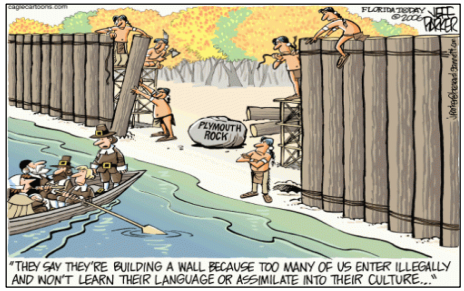
(Available in: https://lingualog.wordpress.com/2009/12/14/english-as-the-official-language. Acessed: July, 2024)
Depending upon the purpose, different texts have specific styles and structure. The communicative purpose and genre
conventions present in the text that follows make it a:
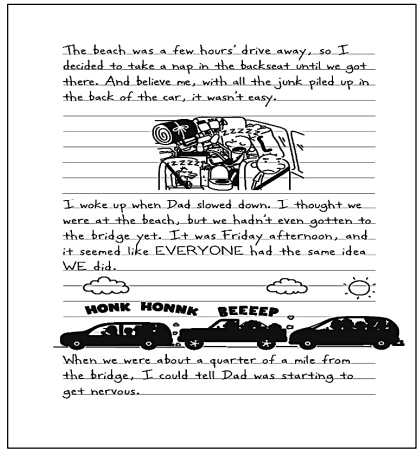
(Available in: https://www.theguardian.com/childrens-books-site. Acessed: July, 2024)
After carrying out text reading, it is possible to infer the featured words highlight.
The announcement of pandemic-related lockdown measures in March 2020 in the UK led to a wide-ranging series of measures in education as a whole to deal with the sudden changes in the learning environment. These included top-down policy directives and centralised toolkits, but arguably in language education the most effective responses were often bottom-up community initiatives. Language education was well placed to deal with some of the challenges in responding to the rapid move to online teaching through historical work in areas such as computer-assisted language learning (CALL) (Levy) dating back to the 1960s and more recent variants such as mobile-assisted language learning (MALL). There has been undeniably community-driven work in the school sector in particular in recent years, with the use of the #MFLTwitterati hashtag in part driving debate around the use of technology in language education on Twitter long before COVID-19 struck, and the TiLT (Technology in Language Teaching) webinar series, which began soon afterwards in March 2020. During the COVID-19 crisis, in a drive to support language teachers in moving to online teaching, experts at the Open University developed a free toolkit that could be downloaded, used, adapted and modified by ML practitioners which indeed made a difference. Social media was often a useful platform to provide help with teaching online (Rosell-Aguilar). Other examples include interdisciplinary discussions, such as the AMLUK Symposium on Modern Languages, Area Studies and Linguistics in 2021, which provided examples of the relationship and possible interdisciplinary links between research and pedagogy in Modern Languages, Area Studies and Linguistics. This symposium assuredly opened up constructive discussions about which teaching methodologies and strategies could support the internationalisation and decolonisation of our discipline.
(Reflections on Post-Pandemic Pedagogical Trends in Language Education. In: Dec, 2023.)
Read the text and point out the option that matches content.
A Way Back From Campus Chaos
Protesting the world’s wrongs has been a rite of passage for generations of American youth, buoyed by our strong laws protecting free speech and free assembly. Yet the students and other demonstrators disrupting college campuses this spring are being taught the wrong lesson – for as admirable as it can be to stand up for your beliefs, there are no guarantees that doing so will be without consequence. The highest calling of a university is to craft a culture of open inquiry, one where both free speech and academic freedom are held as ideals. Protest is part of that culture, and the issue on which so many of the current demonstrations are centered – U.S. involvement in the Israel-Hamas conflict – ought to be fiercely and regularly debated on college campuses.
The constitutional right to free speech is the protection against government interference restricting speech. In the real world, though, this can get messy, and nuance is required when free speech comes into tension with protecting academic freedom. The earliest universities to adopt the principle of academic freedom did so to thwart interference and influence from totalitarian states and religious zealotry. Student codes of conduct and other guidelines are meant to relieve some of the tension between free speech and academic freedom, as well as to ensure that schools are in compliance with government regulations and laws. During the current demonstrations, a lack of accountability has helped produce a crisis. It has left some Jewish students feeling systematically harassed. It has deprived many students of access to parts of campus life.
For years, right-wing Republicans, at the federal and state level, have found opportunities to crusade against academic freedom, with charges of antisemitism on campus serving as the latest vehicle. The House of Representatives used this moment of chaos as cover to begin a legislative effort to crack down on elite universities, and lawmakers in the House recently passed a proposal that would impose egregious government restrictions on free speech.
Schools ought to be teaching their students that there is as much courage in listening as there is in speaking up. It has not gone unnoticed – on campuses but also by members of Congress and by the public writ large – that many of those who are now demanding the right to protest have previously sought to curtail the speech of those whom they declared hateful. Establishing a culture of openness and free expression is crucial to the mission of educational institutions. That includes clear guardrails on conduct and enforcement of those guardrails, regardless of the speaker or the topic. Doing so would not only help restore order on college campuses today but would also strengthen the cultural bedrock of higher education for generations to come.
(Available in: https://www.nytimes.com. Acessed: July 2024.)
Based on the text CB1A2-II, judge the following item.
Lack of satisfactory Internet access results in exclusion of
people from benefits related to digital technology.
According to the text CB1A2-I, judge the following item.
According to the text, Jxa’h Wejxia Casil is a rural
communications network that aims to promote the spread of
content in Nasa Yuwe.
According to the text CB1A2-I, judge the following item.
According to the text, the disappearance of indigenous
languages is a worrying fact because they represent almost
43% of the world’s spoken languages.
Responsible state fiscal policy requires more than just balancing the current year’s budget. It must also include ensuring that the budget is on a sustainable path. Otherwise, policymakers cannot have the lasting impact they hope for. This risk is especially high in the aftermath of the COVID-19 pandemic. Record budget surpluses, driven largely by federal pandemic aid, empowered states to adopt historically large tax cuts and spending increases from 2021 to 2023.
State leaders must be able to assess whether their decisions will be affordable over the long term or will jeopardize their ability to solve state problems or even sustain programs and services in the future. Unfortunately, the nature of state budget processes discourages such long-term thinking. State policymakers devote much of their time to developing, enacting, and implementing annual or biennial budgets, a prime opportunity to achieve immediate policy goals.
One key strategy for changing this short-term focus is for states to use long-term budget assessments and budget stress tests to regularly measure risks, anticipate potential shortfalls, and identify ways to address impending challenges. Long-term budget assessments project revenue and spending several years into the future, and stress tests estimate the size of temporary budget shortfalls that would result from recessions or other economic events and gauge whether states are prepared for these events.
Internet: <https://www.pewtrusts.org> (adapted).
Considering the ideas conveyed in the previous text, as well as its linguistic aspects, judge the following item.
It is correct to conclude from the text that long-term budget
assessments and stress tests are two crucial tools for states
that seek to establish more than a short-term approach to
their budgets.
Iowa, a small midwestern state, finds itself in the national economic spotlight. For conservative commentators, Iowa has emerged as America’s tax-cutting champion, a paragon of fiscal responsibility. To critics it looks more like an example of economic recklessness.
Either way, Iowa is playing an outsized role in a bigger debate about how American states ought to manage their revenues and spending. Until a few years ago it had one of the highest income-tax rates in America. By 2026 it will be down to a flat tax of 3.9%. Iowa is far from alone. Some 25 states have cut individual income taxes over the past years. A handful, including Georgia and Idaho, are shifting to a flat tax. And a few others want to eliminate their income taxes altogether.
Virtually all states, regardless of political make-up, have lowered their citizens’ tax bills since 2021. Overall, this has been a rough decline in states’ tax revenues during this time, the steepest such reduction in at least four decades. But the most aggressive moves have been cuts to income taxes, and Iowa has been at the forefront of these efforts.
The Economist. A tax-cutting wave is sweeping over America’s states.
Internet:
Based on the ideas of the preceding text and on its linguistic aspects, judge the following item.
Iowa is going to cut down its taxes by a rate of 3.9% in the
next two years.

 Conheça nossos planos