Questões de Concurso
Comentadas sobre análise sintática | syntax parsing em inglês
Foram encontradas 481 questões


Text I
Trust and audit
Trust is what auditors sell. They review the accuracy, adequacy or propriety of other people’s work. Financial statement audits are prepared for the owners of a company and presented publically to provide assurance to the market and the wider public. Public service audits are presented to governing bodies and, in some cases, directly to parliament.
It is the independent scepticism of the auditor that allows shareholders and the public to be confident that they are being given a true and fair account of the organisation in question. The auditor’s signature pledges his or her reputational capital so that the audited body’s public statements can be trusted. […]
Given the fundamental importance of trust, should auditors not then feel immensely valuable in the context of declining trust? Not so. Among our interviewees, a consensus emerged that the audit profession is under-producing trust at a critical time. One aspect of the problem is the quietness of audit: it is a profession that literally goes about its work behind the scenes. The face and processes of the auditor are rarely seen in the organisations they scrutinise, and relatively rarely in the outside world. Yet, if we listen to the mounting evidence of the importance of social capital, we know that frequent and reliable contacts between groups are important to strengthening and expanding trust.
So what can be done? Our research suggests that more frequent dialogue with audit committees and a more ambitious outward facing role for the sector’s leadership would be welcome. But we think more is needed. Audit for the 21st century should be understood and designed as primarily a confidence building process within the audited organisation and across its stakeholders. If the audit is a way of ensuring the client’s accountability, much more needs to be done to make the audit itself exemplary in its openness and inclusiveness.
Instead of an audit report being a trust-producing product, the audit process could become a trust-producing practice in which the auditor uses his or her position as a trusted intermediary to broker rigorous learning across all dimensions of the organisation and its stakeholders. The views of investors, staff, suppliers and customers could routinely be considered, as could questions from the general public; online technologies offer numerous opportunities to inform, involve and invite.
From being a service that consists almost exclusively of external investigation by a warranted professional, auditing needs to become more co-productive, with the auditor’s role expanding to include that of an expert convenor who is willing to share the tools of enquiry. Audit could move from ‘black box’ to ‘glass box’.
But the profession will still struggle to secure trust unless it can stake a stronger claim to supporting improvement. Does it increase the economic, social or environmental value of the organisations it reviews? It is one thing to believe in the accuracy of a financial statement audit, but it is another thing to believe in its utility.
Adapted from: https://auditfutures.net/pdf/AuditFutures-RSA-EnlighteningProfessions.pdf
Sign the object in the sentence below.
Your uncle left a message.
Grupo nominal: “the alternating-current electric system”
I. o núcleo do grupo nominal é a palavra “system”. II. o grupo nominal tem dois núcleos “alternating” e “current” III. o fragmento em análise não é um grupo nominal, pois não há verbo.
Leia o texto 1 para responder a questão que se segue.
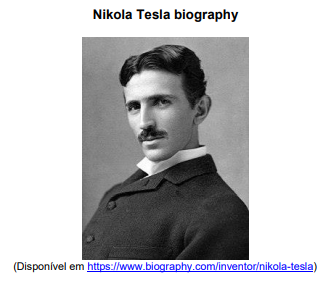
I. explicativo, pois constata onde ele nasceu. II. argumentativo, pois discute o lugar de nascimento dele. III. temporal, pois marca o tempo cronológico em que ele nasceu.
➢The American Academy of Poets, ___ the 1930’s, provides financial assistance to support working poets.
Why women make way less than men do in more religious places
By Stephanie Pappas
Why is there a persistent wage gap between men and women? Turns out, religion may play a big role in the disparity.
New research finds that the wage gap is 8 percentage points wider in the five most religious states than in the five most secular, with women making 18% less than men in the least religious states and 26% less in the most religious. What's more, the gender gap is projected to vanish in 28 years in the most secular states, compared with a stunning 109 years in the most religious. "If they're in a religious community, our children are not going to know a world in which they're paid equitably," said Traci Sitzmann, an associate professor of management at the University of Colorado, Denver. "It's a little bit scary."
Religion and wages
Sitzmann and her colleague Elizabeth Campbell, an assistant professor of work and organizations at the University of Minnesota, were interested in exploring the impacts of religiosity on workforce issues. They started with a global view. Using data from 140 countries, they compared the likelihood of citizens answering "yes" to the question, "Is religion important in your daily life?" with the gender wage gap in those countries as of 2013, the most recent global data available. They found a striking association: The more religious a country, the greater the wage gap. In nations where more than 95% or more people said religion was important in their daily lives, such as Pakistan and the Philippines, women earned around 46% as much as men.
In countries where fewer than 20% of people said religion was important to them in daily life, such as Sweden and Estonia, women averaged around 75% of men's wages. The United States had moderately high religiosity and women in the U.S. earned 66 cents for every dollar men earned, Sitzmann told Live Science.
The effect held true for all major world religions, Sitzmann said. It didn't matter if most believers in a country were Jewish, Christian, Muslim, Buddhist, Hindu or adherants to a folk religion. The wage gap was still greater in countries where religion played a major role in daily life.
The researchers then turned to Gallup survey data on religious service attendance and the importance of religion in daily life in the 50 U.S. states. In the U.S. data, the researchers looked only at full-time wages so as not to skew the results due to women working fewer hours.
They again found that the more religious the state, the greater the wage gap. (Mississippi, Alabama, Utah, South Dakota and South Carolina were the most religious states; Vermont, Maine, Massachusetts, Rhode Island and Nevada were the least.) The researchers found that religiosity explained 17% of the variability in the gender wage gap between states. To ensure that the wider economy or levels of conservatism weren’t responsible for the difference, the researchers then looked at year-over-year data between 2008 and 2018 and found that the association between religion and wages still held. The gender gap is shrinking over time in the U.S., they found, but it is shrinking faster in secular states compared with religious ones. At current rates, it will take more than a century for the gap to close in the most religious states.
According to the workplace data analysis company PayScale, women make 81 cents for every dollar men make as of 2020. This analysis compares median salaries for men and women, and does not control for factors like seniority, years experience and education, all of which can be impacted by gender discrimination and gender role expectations.
The pathway to a wage gap
Sitzmann and Campbell found three reasons for this difference in wages between secular and religious regions. The more religious a country or state, the more that society differentiated the roles of men and women. In other words, women in more religious societies are expected to put family first. The researchers measured this by looking at how many babies women have, how many women work at all, access to abortion and family-friendly work policies. In more religious societies, women have more children, participate less in the workforce, have less access both to abortion and to policies that help balance work with family.
Religious societies are also more likely to sexually objectify women, the researchers found. They measured this by looking at regional Google Trends for the search terms "pornography" and "rape." Both were correlated with religiosity, and both were correlated with the gender wage gap.
Finally, religious societies are also less likely to promote or accept women in leadership positions. "We've got the Pope saying, 'the door is closed, women are not allowed to be leaders in the church,'" Sitzmann said, referring to Pope Francis' 2013 statement on female priests in the Catholic Church. "That sets the stage for a very strong norm."
She and Campbell found that in more religious societies, women have less representation in politics and in organizational leadership. They also have lower educational attainment and less legal equality.
Closing the gap
Finally, the researchers conducted experiments to confirm that it was indeed religion, and not some closely related concept like conservatism, that explained the results. They set up an online game in which 91 participants, about half women and half men, acted as managers who had to allocate wages to employees based on performance reviews. All of the participants saw the same performance reviews, but in some cases the employee was named Patricia Anderson and in others was called Michael Taylor.
Before seeing the performance reviews, some participants saw a description of the mock company they were working for that described it as faith-based. Others saw a description that focused on the company's dedication to communication and community.
Those who were primed to believe they were working for a religious company allocated 3% more to the male employee compared with the female employee. In contrast, those who thought the organization was secular allocated 6% more to the female employee.
But there was a way to reverse the inequality. When the researchers told people in the mock religious company that one of the company values was that women needed to be involved, and that the company had a strict anti-sexual-harassment policy, it wiped out the gender wage gap, according to their research paper published Oct. 27 in the Academy of Management Journal.
This was a heartening result, Sitzmann said, because it suggests that simply being aware of expectations for gender equality will help make people behave more equitably.
Adapted from: https://www.livescience.com/religious-states-wider-gender-pay-gap.html
(CARSTAIRS-MCCARTHY, Andrew. An Introduction to English Morphology: Words and Their Structure. Edinburgh: Edinburgh, 2018. p. 28.)
Analise as asserções a seguir e a relação proposta entre elas.
I - Sentences: “This pianist perform in the local hall every week” and “These pianists performs in the local hall every week” are grammatically unacceptable
BECAUSE
II - they violate a grammatical rule of English concerning agreement between a verb and its subject.
Sobre as asserções, é correto afirmar que
Avalie as afirmações a seguir tendo o inglês padrão, da língua culta e formal, correct, formal, standard, prescriptive English como base.
I - He was shot in the leg. II - He fell unconsciously on the floor. III - You to ask Joe would be a big mistake. IV - What’s the name of the tall man which just came in?
Está correto apenas o que se afirma em
would - where - dinner - find - I - a - restaurant - tonight good - for ?
Choose the alternative that presents the words correctly organized in the sentence:
show - can - tickets - please - , - could - where - you - me - I - buy - the - ?
Choose the alternative that presents the words and punctuations correctly organized in the sentence.
Consider the words and punctuation below.
you - could - today - ? - please - my - airport - the - aunt - my - pick up - from
Choose the alternative that presents the words and punctuations correctly organized in the sentence.
is - in - possible - marriage - distance - maintain - despite - happy - your - it - opinion - , - to - a - the - ?
Choose the alternative that presents the words and punctuations correctly organized in the sentence.
Identify the sentences as NOMINAL or VERBAL.
I.What a great day!
II.The children are playing in the park.
III.Some fossils exist for thousands of years.
Choose the correct alternative:
Instruction: Answer to questions 38 to 47 based on the text below. The Highlights throughout the text are cited in the questions.
Caribou
01 ____Large hoofed animals belonging to the deer family, caribou and reindeer are actually the
02 same species — Rangifer tarandus. There are differences between caribou and reindeer though.
03 Caribou are native to North America, whereas reindeer are native to northern Europe and Asia.
04 Alaska does have some reindeer, however, imported from Siberia in the late 19th and early 20th
05 centuries.
06 ____Some people use the term "reindeer" to refer to domesticated work animals, such as those
07 pulling Santa's sleigh, but there are both wild and domestic herds of reindeer. Caribou, on the
08 other hand, are wild-living and long-migrating. Indigenous groups herd reindeer and use them for
09 their meat. That's also likely why reindeer evolved to be stockier than caribou.
10 ____Caribou make one of the world's great large-animal migrations. As summer approaches,
11 they head north along well-trod annual routes. Some herds may travel more than 600 miles to
12 get to their summer grazing grounds. They'll spend the summer months feeding on the abundant
13 grasses and plants of the tundra. This is also when they give birth. When the first snows fall each
14 year, the caribou turn back south. Herds of female caribou, called cows, leave several weeks
15 before the males, which follow with yearling calves from the previous birthing season.
16 ____They are taller and lankier than reindeer, likely because they evolved to make these long
17 migrations. They are the only deer in which males and females both have antlers—though only
18 some females have them. Cows have one calf each year, which can stand after only a few minutes
19 and move on with its mother by the next day.
20 ____Caribou are classified as vulnerable to extinction, one step above endangered. Because
21 they're migratory, changes in the landscape, such as the appearance of new fences or other
22 human development on their migration routes, can be especially disruptive. Climate change is
23 also a threat. As the Arctic warms, they become more susceptible to diseases and parasites,
24 which could quickly spread through a herd.
(Available in: https://www.nationalgeographic.com/animals/mammals/facts/caribou – text adapted especially
for this test).
Why is there a hyphen in “large-animal migrations” (l. 10)?

 Conheça nossos planos