Questões de Concurso
Comentadas sobre adjetivos | adjectives em inglês
Foram encontradas 612 questões


Like most young people of my generation, I started using drugs as an adolescent. By the time I was 16, I was taking cannabis, hallucinogens and injecting drugs. Soon, my addiction led me to drug trafficking. Between 1985 and 1993, I was imprisoned in the city of São Paulo, Brazil, where I was diagnosed HIV-positive.
Initially, I was shocked. But I didn't really know what HIV or AIDS were, which is why I continued using drugs and sharing needles with other inmates. We received no guidance or preventive care.
In prison, AIDS first manifested itself through tuberculosis, an illness I suffered from three times. Although I was eventually given anti-retroviral medicines, I continued taking drugs and only restarted the treatment in earnest after abandoning drugs for good in 1999.
At that time, I was a member of a support group in my hometown, the coastal city of São Vicente, and was close to other HIV-positive people. We soon decided to establish the Hipupiara NGO to promote a sense of unity among people living with HIV and to improve their quality of life.
Unfortunately, I suffered a lot of prejudice for being HIV-positive, including from members of my family. I was also denied jobs. Then, in 2001, I started working as a fisherman, a job I retired from in 2005, at 50, due to poor health.
Today, I am free of drugs and am sticking to the treatment. I work as a volunteer for Hipupiara, contacting drug users in the city and referring them to treatment and assistance services.
Thanks to all the information I have accumulated about HIV/AIDS, I can now face and beat prejudice. People infected with HIV and drug users should not close up or avoid talking about their problems; we should help each other so that we can all lead a better life.

According to the text,
Reducing the dependence on oil
Ildo Sauer, Gas and Energy Director, Petrobras.
Brazil's energy sector is following the worldwide
tendency towards greater diversification of primary energy
sources and the increased use of natural gas and
biofuels. There are several reasons for this change. The
most important are the environmental restrictions that
are gradually being adopted in the world's principal
energy-consuming markets and the need to reduce the
dependence on oil, set against a scenario of accelerated
depletion in oil reserves and escalating prices.
The share of gas in Brazilian primary energy
consumption has more than doubled in a short period,
increasing from 4.1% in 1999 to 8.9% in 2004, and this
share is forecast to rise to 12% by 2010.
Over the past two decades, the world gas industry
has experienced a structural and regulatory
transformation. These changes have altered the strategic
behaviour of gas firms, with an intensification of
competition, the search for diversification (especially in
the case of power generation) and the internationalisation
of industry activities. Together, these changes have
radically changed the economic environment and the level
of competition in the industry.
Brazil's gas industry is characterised by its late
development, although in recent years, internal supply
imports and demand have grown significantly - the
growth trajectory of recent years exceeds that of countries
with more mature markets, such as Spain, Argentina,
the UK and the US. And the outlook is positive for
continued growth over the next few years, particularly
when set against the investment plans already
announced in Brazil.
The country has a small transportation network
concentrated near the coast. The distribution network is
concentrated in the major consumption centres.
Domestic gas sources are largely offshore in the Campos
basin and Bolivia provides imports. Given the degree
of gas penetration in the country's primary energy
consumption, the industry is poorly developed when
compared with other countries. The industry requires
heavy investment in expanding the transport and
distribution (T&D) networks, as well as in diversifying and
increasing its supplies. Such investments are necessary
for realising the industry's enormous potential.
Another key industry highlight is the changing profile
of gas supply. A large part of the gas produced
domestically to date has been associated with oil
production. The latter diluting or even totally absorbing
the costs of exploiting the gas. In most cases, gas
production was feasible only in conjunction with oil
production activities. However, the country's latest gas
finds are non-associated. Thus, an exclusively dedicated
structure must be developed to produce this gas -
translating into a significant rise in production costs. This
is more significant when analysed against the high costs
associated with the market for exploration and production
(E&P) sector equipment. In recent years, the leasing costs
of drilling rigs and E&P equipment have been climbing in
parallel with escalating oil prices. This directly affects endconsumer
prices.
In a world of primary energy consumption
diversification, of greater environmental restrictions and
the reduced dependence on oil, Brazil has been seeking
to develop alternative energy sources - principally natural
gas and biofuels. The gas industry holds enormous
potential for Brazil, although there is still a long way to go
before it reaches maturity and major investment is
required.
p.29-31 (adapted)
By Jonathan Weisman Washington Post Staff Writer Friday, November 4, 2005; A01
The Senate approved sweeping deficit-reduction legislation last night that would save about $35 billion over the next five years by cutting federal spending on prescription drugs, agriculture supports and student loans, while clamping down on fraud in the Medicaid program. The measure would also open Alaska's Arctic National Wildlife Refuge to oil drilling, a long-sought goal of the oil industry that took a major step forward after years of political struggle. A bipartisan effort to strip the drilling provision narrowly failed. The Senate bill, which passed 52 to 47, is the first in nearly a decade to tackle the growth of entitlement spending, the part of the federal budget that rises automatically based on set formulas and population changes. It would shave payments to some farmers by 2.5 percent, while eliminating a major cotton support program and trimming agriculture conservation spending. A proposal to limit payments to rich farmers failed yesterday. The measure passed largely along party lines, with only two Democrats voting for it and five Republicans voting against it. Yesterday's action is part of an effort by congressional Republicans to demonstrate fiscal discipline after widespread complaints of profligate spending on Capitol Hill. many Democrats and some moderate Republicans are concerned that the effort may go too far, prominent Republicans in the Senate and House said the cuts were necessary to slow the rate of spending and control a deficit projected to total $314 billion by the end of the fiscal year. During a speech yesterday, former House majority leader Tom Delay (R-Tex) repeatedly apologized for excessive spending by Congress, including recent highway legislation that was _______ with lawmakers’ pet projects. After noting that House Republicans have voted to cut taxes every year since winning the majority in 1994, DeLay acknowledged, “Our record on spending has not been as consistent, .”
(Adapted from washingtonpost.com) Na questão, a palavra que preenche corretamente a lacuna é

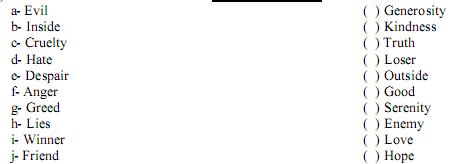


The bigger the project, the fewer people are demanded.

Virus writers know more about computers than hackers.
honest-to-goodness android, so lifelike that it seems like
a real person. It has moist lips, glossy hair and vivid
eyes that blink slowly. Seated on a stool with hands
5 folded primly on its lap at the 2005 World Exposition in
Japan's Aichi prefecture, it wore a bright pink blazer and
gray slacks. For a mesmerizing few seconds from several
meters away, Repliee was virtually indistinguishable from
an ordinary woman in her 30s. In fact, it was a copy of
10 one.
Japan is proud of the most advanced humanoids in
the world, which are expected to eventually be used as
the workforce diminishes among the decreasing and aging
population. But why build a robot with pigmented silicone
15 skin, smooth gestures and even makeup? To Repliee's
creator, Hiroshi Ishiguro, Director of Osaka University's
Intelligent Robotics Laboratory, the answer is simple:
"Android science."
Besides the justification for making robots
20 anthropomorphic and bipedal so they can work in human
environments with architectural features such as stairs,
Ishiguro believes that people respond better to very
humanlike automatons. Androids can thus elicit the most
natural communication. "Appearance is very important
25 to have better interpersonal relationships with a robot,"
says the 42-year-old Ishiguro. "Robots are information
media, especially humanoid robots. Their main role in
our future is to interact naturally with people."
Mild colorblindness forced Ishiguro to abandon his
30 aspirations of a career as an oil painter. Drawn to
computer and robot vision instead, he built a guide robot
for the blind as an undergraduate at the University of
Yamanashi. A fan of the android character Data from the
Star Trek franchise, he sees robots as the ideal vehicle
35 to understand more about ourselves.
To imitate human looks and behavior successfully,
Ishiguro combines robotics with cognitive science. In turn,
cognitive science research can use the robot to study
human perception, communication and other faculties.
40 This novel cross-fertilization is what Ishiguro describes
as android science. In a 2005 paper, he and his
collaborators explained it thus: "To make the android
humanlike, we must investigate human activity from the
standpoint of cognitive science, behavioral science and
45 neuroscience, and to evaluate human activity, we need
to implement processes that support it in the android."
One key strategy in Ishiguro's approach is to model
his artificial creations on real people. He began research
four years ago with his then four-year-old daughter,
50 casting a rudimentary android from her body, but its
mechanisms resulted in strange, unnatural motion.
Humanlike robots run the risk of compromising
people's comfort zones. Because the android's
appearance is very similar to that of a human, any subtle
55 differences in motion and responses will make it seem
strange. Repliee, though, is so lifelike that it has
overcome the creepiness factor, partly because of the
natural way it moves.
Ishiguro wants his next android, a male, to be as
60 authentic as possible. The model? Himself. The scientist
thinks having a robot clone could ease his busy schedule:
he could dispatch it to classes and meetings and then
teleconference through it. "My question has always been,
Why are we living, and what is human?" he says. An
65 Ishiguro made of circuitry and silicone might soon be
answering his own questions.
adapted from www.scientificamerican.com - May 2006
on many factors - how the energy is being used, where
it is being used, what energy sources are available,
which sources are most convenient and reliable, which
5 are easiest to use, what each costs, and the effects on
public safety, health, and the environment. Making smart
energy choices means understanding resources and their
relative costs and benefits.
Some energy sources have advantages for specific
10 uses or locations. For example, fuels from petroleum
are well suited for transportation because they pack a
lot of energy in a small space and are easily transported
and stored. Small hydroelectric installations are a good
solution for supplying power or mechanical energy close
15 to where it is used. Coal is widely used for power
generation in many fast-developing countries - including
China, India, and many others - because domestic
supplies are readily available.
Efficiency is an important factor in energy costs.
20 How efficiently can the energy be produced, delivered,
and used? How much energy value is lost in that process,
and how much ends up being transformed into useful
work? Industries that produce or use energy continually
look for ways to improve efficiency, since this is a key to
25 making their products more competitive.
The ideal energy source - cheap, plentiful, and
pollution-free - may prove unattainable in our lifetime,
but that is the ultimate goal. The energy industry is
continuing to improve its technologies and practices, to
30 produce and use energy more efficiently and cleanly.
Energy resources are often categorized as
renewable or nonrenewable.
Renewable energy resources are those that can be
replenished quickly - examples are solar power,
35 biomass, geothermal, hydroelectric, wind power, and
fast-reaction nuclear power. They supply about seven
percent of energy needs in the United States; the other
93 percent comes from nonrenewables. The two largest
categories of renewable energy now in use in the U.S.
40 are biomass - primarily wood wastes that are used by
the forest products industry to generate electricity and
heat - and hydroelectricity.
Nonrenewable energy resources include coal, oil,
natural gas, and uranium-235, which is used to fuel
45 slow-reaction nuclear power. Projections of how long a
nonrenewable energy resource will last depend on many
changeable factors. These include the growth rate of
consumption, and estimates of how much of the remaining
resources can be economically recovered. New exploration
50 and production technologies often increase the ability of
producers to locate and recover resources. World
reserves of fossil energy are projected to last for many
more decades - and, in the case of coal, for centuries.
In: http://www.classroom-energy.org/teachers/energy_tour/pg5.html
1 Japan and Korea are outstanding markets in terms
of the world's advances in cellular telephony, where
multimedia applications have surged into feverish
4 popularity. Users in these countries have demanded
velocity and high quality data transmission - such as
images, videos and sounds - as the principal distinctive
7 features for the cellular telephone. Although the industry in
Brazil is not yet experiencing the same phase as in the
Asian countries, innovative third generation services,
10 aligned with world-class technology, are already present,
with data transmission speeds of up to 2.4 Mbps.
In fact, in some cases, Brazil has held multimedia
13 application launches simultaneously with the United States,
tremendously increasing the economic and digital inclusion
that cellular telephony has fomented in recent years. The
16 heavy impact of mobile communication on Brazilian
society can be measured by the expansion of the customer
base, which has been growing at historic rates of 30% a
19 year and now serves over 50 million customers. In other
words, four out of every ten Brazilians have a cellular
telephone.
22 The importance of mobile telephony has already
surpassed that of the traditional fixed telephone system,
because the cell phone actually fulfills the function of
25 taking communication to all levels of the population. Its
widespread network has opened gateways to regions that
formerly had not been benefited by the implementation of
28 a fixed telephone system, such as, for example, many rural
areas that are now mobile telephone customers.
The responsibility that cellular telephony carries
31 as an instrument for transforming people's lives tends to
increase enormously in the short term. In Brazil, third
generation CDMA 3G EVDO service is already offered and
34 is able to provide handheld resources, similar to CD, DVD
and TV, anywhere and at any time, based on Qualcomm's
cutting edge CDMA technology.
Internet: (with adaptations).
Based on the text above, judge the following items.
World Bank Brazil – country brief
1 With an estimated 167 million inhabitants, Brazil has the
largest population in Latin America and ranks sixth in the world. The
majority live in the south-central area, which includes industrial cities
4 such as São Paulo, Rio de Janeiro and Belo Horizonte. 80% of the
population now lives in urban areas. Rapid growth in the urban
population has aided economic development but also created serious
7 problems for major cities.
Brazil’s “miracle years” were in the late 1960s and early 1970s
when double digit-annual growth rates were recorded and the structure
10 of the economy underwent rapid change.
In the 1980s, however, Brazil’s economic performance was
poor in comparison with its potential. Annual Gross Domestic Product
13 (GDP) growth only averaged 1.5 percent over the period from 1980
to 1993. This reflected the economy’s inability to respond to
international events in the late 1970s and the 1980s: the second oil
16 shock; increase in international real interest rates; the Latin American
external debt crisis and the ensuing cutoff of foreign credit and foreign
direct investment. This lack of responsiveness reflected the largely
19 inward-looking policy orientation that had been in place since the
1960s.
Economic flexibility was further impaired by provisions of the
22 1988 Constitution, which introduced significant rigidities in budgeting
and public expenditure. An outcome of these pressures was a steady
rise in the rate of inflation, which reached monthly rates of 50% by the
25 middle of 1994.
Internet: <http://lnweb18.worldbank.org/Exter…/
abe36259ca656c4985256914005207e3?OpenDocumen> (with adaptations).
The sentence "Rapid growth in the urban population has aided economic development but also created serious problems for major cities" (R.5-7) means the same as

 Conheça nossos planos