Questões de Concurso
Comentadas sobre adjetivos | adjectives em inglês
Foram encontradas 612 questões


Ano: 2011
Banca:
CESGRANRIO
Órgão:
Transpetro
Provas:
CESGRANRIO - 2011 - Transpetro - Administrador Júnior
|
CESGRANRIO - 2011 - Transpetro - Analista de Sistemas Júnior |
CESGRANRIO - 2011 - Transpetro - Contador Júnior - Contábil |
CESGRANRIO - 2011 - Transpetro - Contador Júnior - Auditoria Interna |
CESGRANRIO - 2011 - Transpetro - Economista Júnior |
CESGRANRIO - 2011 - Transpetro - Engenheiro Júnior - Engenharia de Produção |
CESGRANRIO - 2011 - Transpetro - Médico do trabalho |
CESGRANRIO - 2011 - Transpetro - Engenheiro Júnior - Análise de Projetos de Inverstimentos |
CESGRANRIO - 2011 - Transpetro - Engenheiro Júnior - Geotécnica |
CESGRANRIO - 2011 - Transpetro - Engenheiro Júnior - Elétrica |
CESGRANRIO - 2011 - Transpetro - Engenheiro Júnior - Mecânica |
CESGRANRIO - 2011 - Transpetro - Profissional de Meio Ambiente Júnior |
CESGRANRIO - 2011 - Transpetro - Engenheiro Júnior - Processamento |
CESGRANRIO - 2011 - Transpetro - Engenheiro Júnior - Segurança |
CESGRANRIO - 2011 - Transpetro - Engenheiro Júnior - Naval |
CESGRANRIO - 2011 - Transpetro - Químico de Petróleo Júnior |
CESGRANRIO - 2011 - Transpetro - Engenheiro Júnior - Automação |
Q154634
Inglês
Texto associado
Model copes with chaos to deliver relief
Computer program helps responders transport
supplies in tough conditions
By Rachel Ehrenberg Science News, Web edition: Monday, February 21st, 2011
WASHINGTON — Getting blood or other perishable supplies to an area that’s been struck by an earthquake or hurricane isn’t as simple as asking what brown can do for you. But a new model quickly determines the best routes and means for delivering humanitarian aid, even in situations where bridges are out or airport tarmacs are clogged with planes.
The research, presented February 18 at the annual meeting of the American Association for the Advancement of Science, could help get supplies to areas which have experienced natural disasters or help prepare for efficient distribution of vaccines when the flu hits.
Efficient supply chains have long been a goal of manufacturers, but transport in fragile networks — where supply, demand and delivery routes may be in extremely rapid flux — requires a different approach, said Anna Nagurney of the University of Massachusetts Amherst, who presented the new work. Rather than considering the shortest path from one place to another to maximize profit, her system aims for the cleanest path at minimum cost, while capturing factors such as the perishability of the product and the uncertainty of supply routes. ‘You don’t know where demand is, so it’s tricky,’ said Nagurney. ‘It’s a multicriteria decision-making problem.’
By calculating the total cost associated with each link in a network, accounting for congestion and incorporating penalties for time and products that are lost, the computer model calculates the best supply chain in situations where standard routes may be disrupted.
‘Mathematical tools are essential to develop formal means to predict, and to respond to, such critical perturbations,’ said Iain Couzin of Princeton University, who uses similar computational tools to study collective animal behavior. ‘This is particularly important where response must be rapid and effective, such as during disaster scenarios … or during epidemics or breaches of national security.
’ The work can be applied to immediate, pressing situations, such as getting blood, food or medication to a disaster site, or to longer-term problems such as determining the best locations for manufacturing flu vaccines. . Retrieved April 7th, 2011.
By Rachel Ehrenberg Science News, Web edition: Monday, February 21st, 2011
WASHINGTON — Getting blood or other perishable supplies to an area that’s been struck by an earthquake or hurricane isn’t as simple as asking what brown can do for you. But a new model quickly determines the best routes and means for delivering humanitarian aid, even in situations where bridges are out or airport tarmacs are clogged with planes.
The research, presented February 18 at the annual meeting of the American Association for the Advancement of Science, could help get supplies to areas which have experienced natural disasters or help prepare for efficient distribution of vaccines when the flu hits.
Efficient supply chains have long been a goal of manufacturers, but transport in fragile networks — where supply, demand and delivery routes may be in extremely rapid flux — requires a different approach, said Anna Nagurney of the University of Massachusetts Amherst, who presented the new work. Rather than considering the shortest path from one place to another to maximize profit, her system aims for the cleanest path at minimum cost, while capturing factors such as the perishability of the product and the uncertainty of supply routes. ‘You don’t know where demand is, so it’s tricky,’ said Nagurney. ‘It’s a multicriteria decision-making problem.’
By calculating the total cost associated with each link in a network, accounting for congestion and incorporating penalties for time and products that are lost, the computer model calculates the best supply chain in situations where standard routes may be disrupted.
‘Mathematical tools are essential to develop formal means to predict, and to respond to, such critical perturbations,’ said Iain Couzin of Princeton University, who uses similar computational tools to study collective animal behavior. ‘This is particularly important where response must be rapid and effective, such as during disaster scenarios … or during epidemics or breaches of national security.
’ The work can be applied to immediate, pressing situations, such as getting blood, food or medication to a disaster site, or to longer-term problems such as determining the best locations for manufacturing flu vaccines. . Retrieved April 7th, 2011.
Based on the meanings in the text, the two items are antonymous in
Ano: 2011
Banca:
CESGRANRIO
Órgão:
Transpetro
Provas:
CESGRANRIO - 2011 - Transpetro - Administrador Júnior
|
CESGRANRIO - 2011 - Transpetro - Analista de Sistemas Júnior |
CESGRANRIO - 2011 - Transpetro - Contador Júnior - Contábil |
CESGRANRIO - 2011 - Transpetro - Contador Júnior - Auditoria Interna |
CESGRANRIO - 2011 - Transpetro - Economista Júnior |
CESGRANRIO - 2011 - Transpetro - Engenheiro Júnior - Engenharia de Produção |
CESGRANRIO - 2011 - Transpetro - Médico do trabalho |
CESGRANRIO - 2011 - Transpetro - Engenheiro Júnior - Análise de Projetos de Inverstimentos |
CESGRANRIO - 2011 - Transpetro - Engenheiro Júnior - Geotécnica |
CESGRANRIO - 2011 - Transpetro - Engenheiro Júnior - Elétrica |
CESGRANRIO - 2011 - Transpetro - Engenheiro Júnior - Mecânica |
CESGRANRIO - 2011 - Transpetro - Profissional de Meio Ambiente Júnior |
CESGRANRIO - 2011 - Transpetro - Engenheiro Júnior - Processamento |
CESGRANRIO - 2011 - Transpetro - Engenheiro Júnior - Segurança |
CESGRANRIO - 2011 - Transpetro - Engenheiro Júnior - Naval |
CESGRANRIO - 2011 - Transpetro - Químico de Petróleo Júnior |
CESGRANRIO - 2011 - Transpetro - Engenheiro Júnior - Automação |
Q154628
Inglês
Texto associado
Model copes with chaos to deliver relief
Computer program helps responders transport
supplies in tough conditions
By Rachel Ehrenberg Science News, Web edition: Monday, February 21st, 2011
WASHINGTON — Getting blood or other perishable supplies to an area that’s been struck by an earthquake or hurricane isn’t as simple as asking what brown can do for you. But a new model quickly determines the best routes and means for delivering humanitarian aid, even in situations where bridges are out or airport tarmacs are clogged with planes.
The research, presented February 18 at the annual meeting of the American Association for the Advancement of Science, could help get supplies to areas which have experienced natural disasters or help prepare for efficient distribution of vaccines when the flu hits.
Efficient supply chains have long been a goal of manufacturers, but transport in fragile networks — where supply, demand and delivery routes may be in extremely rapid flux — requires a different approach, said Anna Nagurney of the University of Massachusetts Amherst, who presented the new work. Rather than considering the shortest path from one place to another to maximize profit, her system aims for the cleanest path at minimum cost, while capturing factors such as the perishability of the product and the uncertainty of supply routes. ‘You don’t know where demand is, so it’s tricky,’ said Nagurney. ‘It’s a multicriteria decision-making problem.’
By calculating the total cost associated with each link in a network, accounting for congestion and incorporating penalties for time and products that are lost, the computer model calculates the best supply chain in situations where standard routes may be disrupted.
‘Mathematical tools are essential to develop formal means to predict, and to respond to, such critical perturbations,’ said Iain Couzin of Princeton University, who uses similar computational tools to study collective animal behavior. ‘This is particularly important where response must be rapid and effective, such as during disaster scenarios … or during epidemics or breaches of national security.
’ The work can be applied to immediate, pressing situations, such as getting blood, food or medication to a disaster site, or to longer-term problems such as determining the best locations for manufacturing flu vaccines. . Retrieved April 7th, 2011.
By Rachel Ehrenberg Science News, Web edition: Monday, February 21st, 2011
WASHINGTON — Getting blood or other perishable supplies to an area that’s been struck by an earthquake or hurricane isn’t as simple as asking what brown can do for you. But a new model quickly determines the best routes and means for delivering humanitarian aid, even in situations where bridges are out or airport tarmacs are clogged with planes.
The research, presented February 18 at the annual meeting of the American Association for the Advancement of Science, could help get supplies to areas which have experienced natural disasters or help prepare for efficient distribution of vaccines when the flu hits.
Efficient supply chains have long been a goal of manufacturers, but transport in fragile networks — where supply, demand and delivery routes may be in extremely rapid flux — requires a different approach, said Anna Nagurney of the University of Massachusetts Amherst, who presented the new work. Rather than considering the shortest path from one place to another to maximize profit, her system aims for the cleanest path at minimum cost, while capturing factors such as the perishability of the product and the uncertainty of supply routes. ‘You don’t know where demand is, so it’s tricky,’ said Nagurney. ‘It’s a multicriteria decision-making problem.’
By calculating the total cost associated with each link in a network, accounting for congestion and incorporating penalties for time and products that are lost, the computer model calculates the best supply chain in situations where standard routes may be disrupted.
‘Mathematical tools are essential to develop formal means to predict, and to respond to, such critical perturbations,’ said Iain Couzin of Princeton University, who uses similar computational tools to study collective animal behavior. ‘This is particularly important where response must be rapid and effective, such as during disaster scenarios … or during epidemics or breaches of national security.
’ The work can be applied to immediate, pressing situations, such as getting blood, food or medication to a disaster site, or to longer-term problems such as determining the best locations for manufacturing flu vaccines. . Retrieved April 7th, 2011.
According to Anna Nagurney, in paragraph 3 (lines 14-26), an efficient logistics system must consider the
Ano: 2011
Banca:
FCC
Órgão:
TRE-RN
Prova:
FCC - 2011 - TRE-RN - Analista Judiciário - Análise de Sistemas |
Q105199
Inglês


A alternativa que preenche corretamente a lacuna  é
é
é
Ano: 2011
Banca:
CESGRANRIO
Órgão:
Petrobras
Provas:
CESGRANRIO - 2011 - Petrobras - Administrador Júnior
|
CESGRANRIO - 2011 - Petrobrás - Auditor Júnior |
CESGRANRIO - 2011 - Petrobrás - Contador Júnior |
CESGRANRIO - 2011 - Petrobrás - Químico de Petróleo Júnior |
CESGRANRIO - 2011 - Petrobrás - Engenheiro Civil Júnior |
CESGRANRIO - 2011 - Petrobrás - Enfermeiro do Trabalho Júnior |
CESGRANRIO - 2011 - Petrobras - Engenheiro de Equipamento Júnior - Mecânica |
CESGRANRIO - 2011 - Petrobras - Engenheiro de Equipamento Júnior - Inspeção |
CESGRANRIO - 2011 - Petrobras - Engenheiro de Equipamento Júnior - Elétrica |
CESGRANRIO - 2011 - Petrobras - Engenheiro de Equipamento Júnior - Terminais e Dutos |
CESGRANRIO - 2011 - Petrobras - Engenheiro de Equipamento Júnior - Eletrônica |
CESGRANRIO - 2011 - Petrobras - Engenheiro de Produção Júnior |
CESGRANRIO - 2011 - Petrobras - Engenheiro de Meio Ambiente Júnior |
CESGRANRIO - 2011 - Petrobras - Engenheiro de Telecomunicações Júnior |
CESGRANRIO - 2011 - Petrobrás - Engenheiro de Segurança do Trabalho |
CESGRANRIO - 2011 - Petrobras - Engenheiro Naval Júnior |
CESGRANRIO - 2011 - Petrobras - Engenheiro de Petróleo Júnior |
CESGRANRIO - 2011 - Petrobras - Geólogo Júnior |
CESGRANRIO - 2011 - Petrobras - Médico do trabalho |
CESGRANRIO - 2011 - Petrobras - Profissional de Comunicação Júnior - Publicidade e Propaganda |
CESGRANRIO - 2011 - Petrobrás - Profissional de Comunicação Júnior - Jornalismo |
CESGRANRIO - 2011 - Petrobras - Geofísico Júnior - Geologia |
CESGRANRIO - 2011 - Petrobrás - Engenheiro de Processamento Júnior |
CESGRANRIO - 2011 - Petrobrás - Geofísico Júnior - Física |
Q87925
Inglês
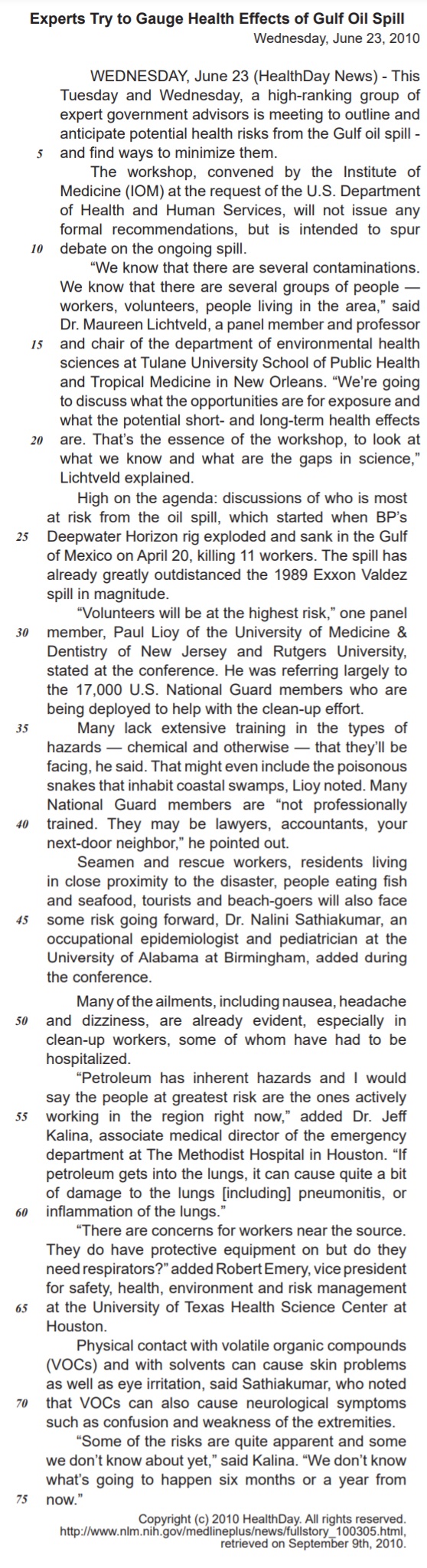
Based on the meanings in the text,
Ano: 2010
Banca:
CESPE / CEBRASPE
Órgão:
SEDU-ES
Prova:
CESPE - 2010 - SEDU-ES - Professor B — Ensino Fundamental e Médio — Inglês |
Q544907
Inglês
Texto associado

Internet: <www.scielo.br> (adapted).
Based on the text, judge the item below.
The adjective “compliant” ( L.15) can be replaced by submissive.
Ano: 2010
Banca:
CESGRANRIO
Órgão:
Prefeitura de Salvador - BA
Prova:
CESGRANRIO - 2010 - Prefeitura de Salvador - BA - Professor - Inglês |
Q186865
Inglês


In terms of meaning,
Ano: 2010
Banca:
CESGRANRIO
Órgão:
Petrobras
Prova:
CESGRANRIO - 2010 - Petrobras - Todos os Cargos - Nível Superior - Conhecimentos Básicos |
Q81320
Inglês


Based on the meanings in Text II, the words reveal opposite ideas in
Ano: 2010
Banca:
CESGRANRIO
Órgão:
BNDES
Provas:
CESGRANRIO - 2010 - BNDES - Analista de Sistemas - Suporte
|
CESGRANRIO - 2010 - BNDES - Arquiteto |
CESGRANRIO - 2010 - BNDES - Arquivista |
CESGRANRIO - 2010 - BNDES - Advogado |
Q71386
Inglês


The pair of expressions that express opposing ideas is
Ano: 2010
Banca:
CESGRANRIO
Órgão:
Petrobras
Provas:
CESGRANRIO - 2010 - Petrobras - Advogado - Júnior
|
CESGRANRIO - 2010 - Petrobras - Economista - Biocombustível |
CESGRANRIO - 2010 - Petrobras - Contador - Biocombustível |
CESGRANRIO - 2010 - Petrobras - Administrador - Biocombustível |
CESGRANRIO - 2010 - Petrobras - Assistente Social Júnior - Biocombustível |
CESGRANRIO - 2010 - Petrobras - Analista Ambiental - Biocombustível |
CESGRANRIO - 2010 - Petrobras - Enfermeiro do Trabalho Júnior - Biocombustível |
CESGRANRIO - 2010 - Petrobras - Analista de Comercialização e Logística Júnior - Biocombustível |
CESGRANRIO - 2010 - Petrobras - Engenheiro Agrônomo - Biocombustível |
CESGRANRIO - 2010 - Petrobras - Engenheiro Agrícola - Júnior - Biocombustível |
CESGRANRIO - 2010 - Petrobras - Engenheiro de Produção - Biocombustível |
CESGRANRIO - 2010 - Petrobras - Engenheiro de Segurança - Biocombustível |
CESGRANRIO - 2010 - Petrobras - Médico do Trabalho - Biocombustível |
CESGRANRIO - 2010 - Petrobras - Comunicação Social (Bacharelado) - Jornalismo |
CESGRANRIO - 2010 - Petrobras - Engenheiro de Equipamento Júnior - Mecânica - Biocombustível |
CESGRANRIO - 2010 - Petrobras - Engenheiro de Processamento Júnior - Biocombustível |
Q60948
Inglês

Based on the meanings of the words in the text, it can be said tha
Q55460
Inglês
Choose the only correct alternative to fill in the blanks:
I. Brazil is ________ Argentina.
II. Japan is _________ Bolivia.
III. The Everest is _________mountain in the world.
IV. France is not __________ Canada.
I. Brazil is ________ Argentina.
II. Japan is _________ Bolivia.
III. The Everest is _________mountain in the world.
IV. France is not __________ Canada.
Ano: 2010
Banca:
CESGRANRIO
Órgão:
BACEN
Prova:
CESGRANRIO - 2010 - BACEN - Analista do Banco Central - Conhecimentos Gerais - Todos os Cargos |
Q25600
Inglês


. In terms of meaning, it is correct to affirm that
Q77845
Inglês
Texto associado
Para responder às questões de números 26 a 31, considere o texto abaixo.

A palavra que preenche corretamente a lacuna A, no texto, é
Ano: 2009
Banca:
FCC
Órgão:
MPE-SE
Prova:
FCC - 2009 - MPE-SE - Analista do Ministério Público – Especialidade Análise de Sistemas |
Q42857
Inglês
Texto associado
January 23, 2009
Worm Infects Millions of Computers Worldwide
By JOHN MARKOFF
A new digital plague has hit the Internet, infecting millions of personal and usiness computers in what seems to be the first step of a multistage attack. The world's eading computer security experts do not yet know who programmed the infection, or what the next stage will be.
In recent weeks a worm, a malicious software program, has swept through corporate, educational and public computer networks around the world. Known as Conficker or Downandup, it is spread by a recently discovered Microsoft Windows vulnerability, by guessing network passwords and by hand-carried consumer gadgets like USB keys.
Experts say it is the infection since the Slammer worm exploded through the Internet in January 2003, and it may have infected as many as nine million personal computers around the world.
Worms like Conficker not only ricochet around the Internet at lightning speed, they harness infected computers into unified systems called botnets, which can then accept programming instructions from their clandestine masters.
Many computer users may not notice that their machines have been infected, and computer security researchers said they were waiting for the instructions to materialize, to determine what impact the botnet will have on PC users. It might operate in the background, using the infected computer to send spam or infect other computers, or it might steal the PC user's personal information.
Microsoft rushed an emergency patch to defend the Windows operating systems against this vulnerability in October, yet the worm has continued to spread even as the level of warnings has grown in recent weeks.
Earlier this week, security researchers at Qualys, a Silicon Valley security firm, estimated that about 30 percent of Windows-based computers attached to the Internet remain vulnerable to infection because they have not been updated with the patch, despite the fact that it was made available in October.
Unraveling the program has been particularly challenging because it comes with encryption mechanisms that hide its internal workings from those seeking to disable it.
The program uses an elaborate shell-game-style technique to permit someone to command it remotely. Each day it generates a new list of 250 domain names. Instructions from any one of these domain names would be obeyed. To control the botnet, an attacker would need only to register a single domain to send instructions to the botnet globally, greatly complicating the task of law enforcement and security companies trying to intervene and block the activation of the botnet.
Several computer security firms said that although Conficker appeared to have been written from scratch, it had parallels to the work of a suspected Eastern European criminal gang that has profited by sending programs known as "scareware" to personal computers that seem to warn users of an infection and ask for credit card numbers to pay for bogus antivirus software that actually further infects their computer.
One intriguing clue left by the malware authors is that the first version of the program checked to see if the computer had a Ukrainian keyboard layout. If it found it had such a keyboard, it would not infect the machine, according to Phillip Porras, a security investigator at SRI International who has disassembled the program to determine how it functioned.
(Adapted from The New York Times)
Worm Infects Millions of Computers Worldwide
By JOHN MARKOFF
A new digital plague has hit the Internet, infecting millions of personal and usiness computers in what seems to be the first step of a multistage attack. The world's eading computer security experts do not yet know who programmed the infection, or what the next stage will be.
In recent weeks a worm, a malicious software program, has swept through corporate, educational and public computer networks around the world. Known as Conficker or Downandup, it is spread by a recently discovered Microsoft Windows vulnerability, by guessing network passwords and by hand-carried consumer gadgets like USB keys.
Experts say it is the
infection since the Slammer worm exploded through the Internet in January 2003, and it may have infected as many as nine million personal computers around the world.Worms like Conficker not only ricochet around the Internet at lightning speed, they harness infected computers into unified systems called botnets, which can then accept programming instructions from their clandestine masters.
Many computer users may not notice that their machines have been infected, and computer security researchers said they were waiting for the instructions to materialize, to determine what impact the botnet will have on PC users. It might operate in the background, using the infected computer to send spam or infect other computers, or it might steal the PC user's personal information.
Microsoft rushed an emergency patch to defend the Windows operating systems against this vulnerability in October, yet the worm has continued to spread even as the level of warnings has grown in recent weeks.
Earlier this week, security researchers at Qualys, a Silicon Valley security firm, estimated that about 30 percent of Windows-based computers attached to the Internet remain vulnerable to infection because they have not been updated with the patch, despite the fact that it was made available in October.
Unraveling the program has been particularly challenging because it comes with encryption mechanisms that hide its internal workings from those seeking to disable it.
The program uses an elaborate shell-game-style technique to permit someone to command it remotely. Each day it generates a new list of 250 domain names. Instructions from any one of these domain names would be obeyed. To control the botnet, an attacker would need only to register a single domain to send instructions to the botnet globally, greatly complicating the task of law enforcement and security companies trying to intervene and block the activation of the botnet.
Several computer security firms said that although Conficker appeared to have been written from scratch, it had parallels to the work of a suspected Eastern European criminal gang that has profited by sending programs known as "scareware" to personal computers that seem to warn users of an infection and ask for credit card numbers to pay for bogus antivirus software that actually further infects their computer.
One intriguing clue left by the malware authors is that the first version of the program checked to see if the computer had a Ukrainian keyboard layout. If it found it had such a keyboard, it would not infect the machine, according to Phillip Porras, a security investigator at SRI International who has disassembled the program to determine how it functioned.
(Adapted from The New York Times)
A palavra que preenche corretamente a lacuna é
Ano: 2008
Banca:
CESPE / CEBRASPE
Órgão:
SERPRO
Provas:
CESPE - 2008 - SERPRO - Técnico - Operação de Redes
|
CESPE - 2008 - SERPRO - Programador de computador |
CESPE - 2008 - SERPRO - Técnico de enfermagem |
Q152301
Inglês
Texto associado

Based on the text above, judge the items below.
Based on the text above, judge the items below.
It’s much better to have trustworthy workers than very clever ones.
Ano: 2008
Banca:
FGV
Órgão:
Senado Federal
Provas:
FGV - 2008 - Senado Federal - Operador de TV
|
FGV - 2008 - Senado Federal - Produtor de Infografia Jornalística |
FGV - 2008 - Senado Federal - Produtor de Desenvolvimento de Conteúdos Jornalísticos para Internet |
Q97639
Inglês
Texto associado
Read text I and answer questions 31 to 36.
TEXT I
Beware the power of the blog
Companies may not like blogs, but if they ignore them
they may be inviting some PR disasters
The number of blogs on the internet is doubling every five
months, according to blog-tracking site Technorati. The total is
now around 20 million, with around 1.3 million posts made each
day. Most are no more interesting than overhearing another
person's telephone call, but there are exceptions that can have a
remarkable impact.
(from http://www.computing.co.uk/itweek/comment/ 2145491/beware-power-blog, retrieved on September 24th, 2008)
TEXT I
Beware the power of the blog
Companies may not like blogs, but if they ignore them
they may be inviting some PR disasters
The number of blogs on the internet is doubling every five
months, according to blog-tracking site Technorati. The total is
now around 20 million, with around 1.3 million posts made each
day. Most are no more interesting than overhearing another
person's telephone call, but there are exceptions that can have a
remarkable impact.
(from http://www.computing.co.uk/itweek/comment/ 2145491/beware-power-blog, retrieved on September 24th, 2008)
The opposite of the underlined word in “more interesting than” is
Ano: 2008
Banca:
FGV
Órgão:
Senado Federal
Prova:
FGV - 2008 - Senado Federal - Técnico Legislativo - Administração |
Q97512
Inglês

The underlined word in “Often combining….” (lines 5-6) is the opposite of
Ano: 2008
Banca:
CESPE / CEBRASPE
Órgão:
TJ-DFT
Prova:
CESPE - 2008 - TJ-DFT - Analista Judiciário - Tecnologia da Informação |
Q51079
Inglês
Texto associado

Based on the text above, judge the items below.
Based on the text above, judge the items below.
The word "fastest" (L.21) shows a comparison among the three means of connection.
Ano: 2008
Banca:
FGV
Órgão:
Senado Federal
Provas:
FGV - 2008 - Senado Federal - Analista de Sistemas
|
FGV - 2008 - Senado Federal - Analista de Suporte de Sistemas |
Q45668
Inglês

If a fact "outweighs" (line 21) another one, it is
Ano: 2008
Banca:
CESGRANRIO
Órgão:
CAPES
Provas:
CESGRANRIO - 2008 - CAPES - Analista de Sistemas
|
CESGRANRIO - 2008 - CAPES - Engenheiro Civil |
CESGRANRIO - 2008 - CAPES - Contador |
CESGRANRIO - 2008 - CAPES - Comunicação Social (Bacharelado) |
Q9617
Inglês
Texto associado
How to dig out from the information avalanche
Majority of workers feel overwhelmed by deluge of data,
survey finds
By Eve Tahmincioglu
updated 8:18 p.m. ET March 16, 2008
Don't expect Shaun Osher, the CEO of Core Group
Marketing in New York, to answer your e-mail right away.
He has stopped responding to e-mails every minute and
only checks his e-mail account twice a day. He also started
turning off his BlackBerry during meetings.
This tactic has made him so much more productive
that earlier this year he held a meeting with his staff of 50
and "strongly suggested" that they stop relying so heavily
on e-mail and actually start calling clients on the phone.
And, he requested his employees put cell phones and
PDAs on silent mode during meetings, as well as curtail
the common practice of cc-ing everybody when sending
out an e-mail. "There was so much redundancy, so much
unnecessary work," he explains. "One person could handle
an issue that should take two minutes, but when an email
goes out and five people get cc-ed, then everybody
responds to it and there's a snowball effect."
It's not that Osher has anything against technology. In
fact, he loves it. The problem is, last year he realized he
was inundated with so many e-mails and so much
information in general that he began to experience data
overload. "In the beginning, e-mail and all this data was a
great phenomenon, revolutionizing what we do. But the
pendulum has swung way too much to the other side," he
maintains. "We're less productive."
Osher isn't the only one out there under a data
avalanche. Thanks to technological innovations, you can
be talking to a customer on your cell phone, answering a
LinkedIn invitation on your laptop, and responding to email
on your PDA all at the same time. Besides, during
tough economic times, who will want to miss any
information when your job could be on the line if you indulge
in the luxury of being offline? Turns out, seven out of 10
office workers in the United States feel overwhelmed by
information in the workplace, and more than two in five
say they are headed for a data "breaking point," according
to a recently released Workplace Productivity Survey.
Mike Walsh, CEO of LexisNexis U.S. Legal Markets,
says there are a host of reasons we're all on the information
brink: "exponential growth of the size of the information
'haystack,' the immensity and immediacy of digital
communications, and the fact that professionals are not
being provided with sufficient tools and training to help
them keep pace with the growing information burden."
Ellen Kossek, a professor from Michigan State, believes
we are less productive in this age of 24-7 technology, and
our multitasking mentality has spawned a "not-mentallypresent"
society. "We're becoming an attention-deficit
disorder society switching back and forth like crazy,"
Kossek says. "We're connected all the time. We're
working on planes, in coffee shops, working on the
weekends. Work is very seductive, but yet we're actually
less effective."
The key to getting your head above the data flood,
according to workplace experts, is managing and reducing
the information you're bombarded with.
© 2008 MSNBC Interactive - (slightly adapted)
http://www.msnbc.msn.com/id/23636252/
Majority of workers feel overwhelmed by deluge of data,
survey finds
By Eve Tahmincioglu
updated 8:18 p.m. ET March 16, 2008
Don't expect Shaun Osher, the CEO of Core Group
Marketing in New York, to answer your e-mail right away.
He has stopped responding to e-mails every minute and
only checks his e-mail account twice a day. He also started
turning off his BlackBerry during meetings.
This tactic has made him so much more productive
that earlier this year he held a meeting with his staff of 50
and "strongly suggested" that they stop relying so heavily
on e-mail and actually start calling clients on the phone.
And, he requested his employees put cell phones and
PDAs on silent mode during meetings, as well as curtail
the common practice of cc-ing everybody when sending
out an e-mail. "There was so much redundancy, so much
unnecessary work," he explains. "One person could handle
an issue that should take two minutes, but when an email
goes out and five people get cc-ed, then everybody
responds to it and there's a snowball effect."
It's not that Osher has anything against technology. In
fact, he loves it. The problem is, last year he realized he
was inundated with so many e-mails and so much
information in general that he began to experience data
overload. "In the beginning, e-mail and all this data was a
great phenomenon, revolutionizing what we do. But the
pendulum has swung way too much to the other side," he
maintains. "We're less productive."
Osher isn't the only one out there under a data
avalanche. Thanks to technological innovations, you can
be talking to a customer on your cell phone, answering a
LinkedIn invitation on your laptop, and responding to email
on your PDA all at the same time. Besides, during
tough economic times, who will want to miss any
information when your job could be on the line if you indulge
in the luxury of being offline? Turns out, seven out of 10
office workers in the United States feel overwhelmed by
information in the workplace, and more than two in five
say they are headed for a data "breaking point," according
to a recently released Workplace Productivity Survey.
Mike Walsh, CEO of LexisNexis U.S. Legal Markets,
says there are a host of reasons we're all on the information
brink: "exponential growth of the size of the information
'haystack,' the immensity and immediacy of digital
communications, and the fact that professionals are not
being provided with sufficient tools and training to help
them keep pace with the growing information burden."
Ellen Kossek, a professor from Michigan State, believes
we are less productive in this age of 24-7 technology, and
our multitasking mentality has spawned a "not-mentallypresent"
society. "We're becoming an attention-deficit
disorder society switching back and forth like crazy,"
Kossek says. "We're connected all the time. We're
working on planes, in coffee shops, working on the
weekends. Work is very seductive, but yet we're actually
less effective."
The key to getting your head above the data flood,
according to workplace experts, is managing and reducing
the information you're bombarded with.
© 2008 MSNBC Interactive - (slightly adapted)
http://www.msnbc.msn.com/id/23636252/
Which option describes accurately the meaning relationship between the pairs of words?
Ano: 2008
Banca:
CESGRANRIO
Órgão:
BNDES
Provas:
CESGRANRIO - 2008 - BNDES - Profissional Básico - Análise de Sistemas - Desenvolvimento
|
CESGRANRIO - 2008 - BNDES - Profissional Básico - Análise de Sistemas - Suporte - Janeiro |
CESGRANRIO - 2008 - BNDES - Profissional Básico - Economia |
CESGRANRIO - 2008 - BNDES - Profissional Básico - Administração |
CESGRANRIO - 2008 - BNDES - Profissional Básico - Arquitetura - Janeiro |
CESGRANRIO - 2008 - BNDES - Profissional Básico - Ciências Contábeis |
CESGRANRIO - 2008 - BNDES - Profissional Básico - Comunicação Social |
Q5907
Inglês
Texto associado
Green is the hot topic these days, and the concept
is having an impact on the way people think about
datacenters. Companies around the world are
announcing ways to save energy and reduce costs by
5 buying new hardware and services. Yet, there is little
guidance on how you can take action to control energy
costs. In the past, electricity has been treated as an
overhead expense, like the cost of space. But with rising
power costs and issues regarding reliability, supply, and
10 capacity, electricity requires its own specific strategy.
Projects regarding performance optimization and
cost reduction are a part of everyday best practices in
nearly every area of business. So why not treat energy
cost in the same way?
15 As Information Technologies (IT) pros, many of us
make decisions about the configuration and setup of
servers, the specifications on the equipment our
organizations purchase, and the requirements for
datacenter upgrades and construction. We even provide
20 early design input during application development. When
it comes to these projects, we obviously have a golden
opportunity to be green and influence the energy
efficiency of any datacenter.
The first part of any strategy is to know your current
25 energy usage. You need to know where your energy is
used and by what specific equipment, as well as what
usage is efficient and what is wasteful in the datacenter.
Unfortunately, it's rare to find power-consumption
metering in place that can break down usage to a level
30 where people can see the results of their actions. Most
organizations typically only see a monthly power bill
that rolls up consumption into an overall bottom line.
This offers little incentive for saving energy since
individuals never see the impact of their decisions, and
35 there is no way for them to prove that their changes
have actually saved energy.
One of the first issues people confront when
considering a green datacenter initiative is whether they
have executive support. For the purpose of the article, I
40 am going to assume the answer is "not yet." Executive
support requires a serious commitment that provides
resources and budget for your initiative. And while there
is a lot of talk about green datacenters, the reality is
that there is still often a lack of serious support at the
45 executive level. If you did already have such executive
support, you would probably be running a green
datacenter right now.
Still, even assuming you are not getting the support
you need, there is a great deal you can do to push your
50 green datacenter initiative forward. So how do you
determine effective actions to take in achieving your
goals? Fortunately, energy efficiency is not a new
concept and there is a lot that IT pros can learn from
other industries. [.]
55 Anyway, for whichever direction you choose,
planning an energy efficiency program for your datacenter
will require collaboration across groups in IT. Until
recently, the typical approach to planning IT solutions
has been to ignore power costs early on during the design
60 phase, focusing on the hardware and software being
purchased, along with the labor and hosting costs of
the solution. When power is buried in the overhead cost
of running solutions in a datacenter, energy efficiency
is a low priority. Exposing the actual power being
65 consumed by solutions is the first critical step in changing
the behavior of your organization.
By Dave Ohara
TechNet Magazine, October 2007
is having an impact on the way people think about
datacenters. Companies around the world are
announcing ways to save energy and reduce costs by
5 buying new hardware and services. Yet, there is little
guidance on how you can take action to control energy
costs. In the past, electricity has been treated as an
overhead expense, like the cost of space. But with rising
power costs and issues regarding reliability, supply, and
10 capacity, electricity requires its own specific strategy.
Projects regarding performance optimization and
cost reduction are a part of everyday best practices in
nearly every area of business. So why not treat energy
cost in the same way?
15 As Information Technologies (IT) pros, many of us
make decisions about the configuration and setup of
servers, the specifications on the equipment our
organizations purchase, and the requirements for
datacenter upgrades and construction. We even provide
20 early design input during application development. When
it comes to these projects, we obviously have a golden
opportunity to be green and influence the energy
efficiency of any datacenter.
The first part of any strategy is to know your current
25 energy usage. You need to know where your energy is
used and by what specific equipment, as well as what
usage is efficient and what is wasteful in the datacenter.
Unfortunately, it's rare to find power-consumption
metering in place that can break down usage to a level
30 where people can see the results of their actions. Most
organizations typically only see a monthly power bill
that rolls up consumption into an overall bottom line.
This offers little incentive for saving energy since
individuals never see the impact of their decisions, and
35 there is no way for them to prove that their changes
have actually saved energy.
One of the first issues people confront when
considering a green datacenter initiative is whether they
have executive support. For the purpose of the article, I
40 am going to assume the answer is "not yet." Executive
support requires a serious commitment that provides
resources and budget for your initiative. And while there
is a lot of talk about green datacenters, the reality is
that there is still often a lack of serious support at the
45 executive level. If you did already have such executive
support, you would probably be running a green
datacenter right now.
Still, even assuming you are not getting the support
you need, there is a great deal you can do to push your
50 green datacenter initiative forward. So how do you
determine effective actions to take in achieving your
goals? Fortunately, energy efficiency is not a new
concept and there is a lot that IT pros can learn from
other industries. [.]
55 Anyway, for whichever direction you choose,
planning an energy efficiency program for your datacenter
will require collaboration across groups in IT. Until
recently, the typical approach to planning IT solutions
has been to ignore power costs early on during the design
60 phase, focusing on the hardware and software being
purchased, along with the labor and hosting costs of
the solution. When power is buried in the overhead cost
of running solutions in a datacenter, energy efficiency
is a low priority. Exposing the actual power being
65 consumed by solutions is the first critical step in changing
the behavior of your organization.
By Dave Ohara
TechNet Magazine, October 2007
The correct opposites for the words "hot" (line 1) and "wasteful" (line 27) as they are used in the text are, respectively:

 Conheça nossos planos