Questões Militares
Múltipla-escolha
Foram encontradas 135.752 questões
Resolva questões gratuitamente!
Junte-se a mais de 4 milhões de concurseiros!


Ano: 2025
Banca:
Aeronáutica
Órgão:
AFA
Prova:
Aeronáutica - 2025 - AFA - Aspirante da Aeronáutica (Oficial Aviador, Oficial Intendente e Oficial de Infantaria) |
Q3479466
Física
Texto associado
Na questão de Física, quando necessário, utilize:
• Densidade da água = 1,0 kg/L
• Velocidade da luz no vácuo: c = 3,0 ∙ 108 m/s
• Índice de refração do ar: nar = 1,0
• Índice de refração da glicerina: nglicerina = 1,4
• π = 3,0
• Calor específico molar a volume constante do gás ideal monoatômico: Cv =3/2 R
Um bloco A está apoiado sobre uma balança B fixada em uma
plataforma P, plana e horizontal, que oscila na vertical, em
movimento harmônico simples (MHS), com uma amplitude
igual a 20 cm, conforme ilustrado na figura 1.
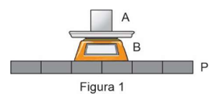
A cada instante, um sensor envia para um computador a leitura da balança em função da posição x da plataforma, obtendo-se o gráfico ilustrado na figura 2.
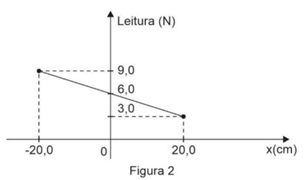
Nessas condições, o período de oscilação da plataforma é, em segundo(s), igual a
A cada instante, um sensor envia para um computador a leitura da balança em função da posição x da plataforma, obtendo-se o gráfico ilustrado na figura 2.
Nessas condições, o período de oscilação da plataforma é, em segundo(s), igual a
Ano: 2025
Banca:
Aeronáutica
Órgão:
AFA
Prova:
Aeronáutica - 2025 - AFA - Aspirante da Aeronáutica (Oficial Aviador, Oficial Intendente e Oficial de Infantaria) |
Q3479465
Física
Texto associado
Na questão de Física, quando necessário, utilize:
• Densidade da água = 1,0 kg/L
• Velocidade da luz no vácuo: c = 3,0 ∙ 108 m/s
• Índice de refração do ar: nar = 1,0
• Índice de refração da glicerina: nglicerina = 1,4
• π = 3,0
• Calor específico molar a volume constante do gás ideal monoatômico: Cv =3/2 R
Uma lente cilíndrica pode ser obtida enchendo-se uma taça de
vidro com água pura e límpida. O seu comportamento óptico
no ar pode ser caracterizado observando-se a palavra FAB,
impressa em uma folha, através da lente, por um observador
O, como mostrado nas figuras 1, 2 e 3 a seguir.
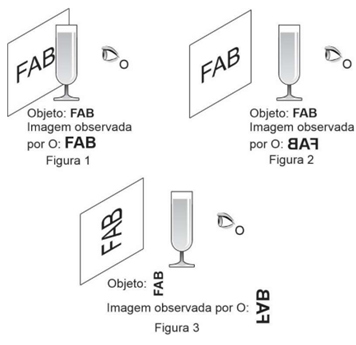
Pode-se realizar um outro experimento óptico com essa lente, utilizando-se a palavra impressa ACADEMIA, como objeto, para ser visualizado pelo observador O, como mostra a figura 4, na mesma configuração utilizada na figura 2.
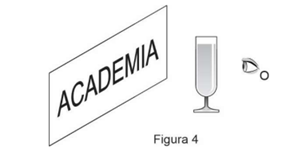
Considere que a água permaneça em repouso em relação à taça durante as observações, que as distorções ópticas nas imagens devido à curvatura da superfície da lente sejam desconsideradas e que as palavras sejam observadas com as folhas, nas quais estão impressas, sempre paralelas ao eixo de simetria do cilindro que compõe a taça.
Nessas condições, são feitas as seguintes afirmativas.
I - A lente se comporta opticamente como uma lente côncavo-convexa.
II - A lente se comporta opticamente como uma lente plano-convexa.
III - A imagem observada da palavra ACADEMIA é, como um todo, enantiomorfa.
IV - As imagens observadas das letras C, D e E, na palavra ACADEMIA, são não enantiomorfas.
V - As imagens observadas das letras A, M e I, na palavra ACADEMIA, são todas enantiomorfas.
São corretas apenas as afirmativas
Pode-se realizar um outro experimento óptico com essa lente, utilizando-se a palavra impressa ACADEMIA, como objeto, para ser visualizado pelo observador O, como mostra a figura 4, na mesma configuração utilizada na figura 2.
Considere que a água permaneça em repouso em relação à taça durante as observações, que as distorções ópticas nas imagens devido à curvatura da superfície da lente sejam desconsideradas e que as palavras sejam observadas com as folhas, nas quais estão impressas, sempre paralelas ao eixo de simetria do cilindro que compõe a taça.
Nessas condições, são feitas as seguintes afirmativas.
I - A lente se comporta opticamente como uma lente côncavo-convexa.
II - A lente se comporta opticamente como uma lente plano-convexa.
III - A imagem observada da palavra ACADEMIA é, como um todo, enantiomorfa.
IV - As imagens observadas das letras C, D e E, na palavra ACADEMIA, são não enantiomorfas.
V - As imagens observadas das letras A, M e I, na palavra ACADEMIA, são todas enantiomorfas.
São corretas apenas as afirmativas
Ano: 2025
Banca:
Aeronáutica
Órgão:
AFA
Prova:
Aeronáutica - 2025 - AFA - Aspirante da Aeronáutica (Oficial Aviador, Oficial Intendente e Oficial de Infantaria) |
Q3479464
Física
Texto associado
Na questão de Física, quando necessário, utilize:
• Densidade da água = 1,0 kg/L
• Velocidade da luz no vácuo: c = 3,0 ∙ 108 m/s
• Índice de refração do ar: nar = 1,0
• Índice de refração da glicerina: nglicerina = 1,4
• π = 3,0
• Calor específico molar a volume constante do gás ideal monoatômico: Cv =3/2 R
Um dispositivo composto de dois sistemas massa-molaidênticos, 1 e 2, apresentados na figura a seguir, executammovimentos harmônicos simples dados pelas equações
x1(t) = A cos[ωt]
e
x2(t) = A cos[ωt + π]
em que A é a amplitude de oscilação e ω a pulsação dos sistemas.
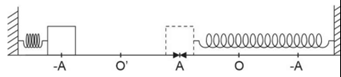
Iluminando-se o dispositivo com uma luz estroboscópica de frequência f, observa-se no ponto A apenas uma massa estacionária no tempo.
Considere que os pontos O e O’ sejam os pontos de equilíbrio dos sistemas 1 e 2, respectivamente.
Nessas condições, o valor máximo da frequência estroboscópica f é dado por
x1(t) = A cos[ωt]
e
x2(t) = A cos[ωt + π]
em que A é a amplitude de oscilação e ω a pulsação dos sistemas.
Iluminando-se o dispositivo com uma luz estroboscópica de frequência f, observa-se no ponto A apenas uma massa estacionária no tempo.
Considere que os pontos O e O’ sejam os pontos de equilíbrio dos sistemas 1 e 2, respectivamente.
Nessas condições, o valor máximo da frequência estroboscópica f é dado por
Ano: 2025
Banca:
Aeronáutica
Órgão:
AFA
Prova:
Aeronáutica - 2025 - AFA - Aspirante da Aeronáutica (Oficial Aviador, Oficial Intendente e Oficial de Infantaria) |
Q3479463
Física
Texto associado
Na questão de Física, quando necessário, utilize:
• Densidade da água = 1,0 kg/L
• Velocidade da luz no vácuo: c = 3,0 ∙ 108 m/s
• Índice de refração do ar: nar = 1,0
• Índice de refração da glicerina: nglicerina = 1,4
• π = 3,0
• Calor específico molar a volume constante do gás ideal monoatômico: Cv =3/2 R
Considere o bloco A de massa igual a 4 kg, inicialmente em
repouso, apoiado sobre uma superfície horizontal x,
perfeitamente lisa, e preso a uma mola ideal de constante
elástica 150 N/m, conforme a figura a seguir.
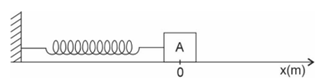
Esse bloco A é então afastado 0,50 m de sua posição inicial (x = 0) e abandonado, em t = 0, passando a oscilar em movimento harmônico simples (MHS) de período T.
No instante t = T um outro bloco B, colide inelasticamente com o bloco A. Forma-se assim um sistema AB, de dois corpos, que passa a oscilar em MHS com período T’ = 2T. Considere que, na colisão, os blocos A e B se comportem como um sistema isolado de forças externas e que imediatamente antes da colisão, a velocidade de B era de 2 m/s.
Nessas condições, a amplitude de oscilação, em metro, do sistema AB será igual a
Esse bloco A é então afastado 0,50 m de sua posição inicial (x = 0) e abandonado, em t = 0, passando a oscilar em movimento harmônico simples (MHS) de período T.
No instante t = T um outro bloco B, colide inelasticamente com o bloco A. Forma-se assim um sistema AB, de dois corpos, que passa a oscilar em MHS com período T’ = 2T. Considere que, na colisão, os blocos A e B se comportem como um sistema isolado de forças externas e que imediatamente antes da colisão, a velocidade de B era de 2 m/s.
Nessas condições, a amplitude de oscilação, em metro, do sistema AB será igual a
Ano: 2025
Banca:
Aeronáutica
Órgão:
AFA
Prova:
Aeronáutica - 2025 - AFA - Aspirante da Aeronáutica (Oficial Aviador, Oficial Intendente e Oficial de Infantaria) |
Q3479462
Física
Texto associado
Na questão de Física, quando necessário, utilize:
• Densidade da água = 1,0 kg/L
• Velocidade da luz no vácuo: c = 3,0 ∙ 108 m/s
• Índice de refração do ar: nar = 1,0
• Índice de refração da glicerina: nglicerina = 1,4
• π = 3,0
• Calor específico molar a volume constante do gás ideal monoatômico: Cv =3/2 R
As usinas nucleares se utilizam da fissão do isótopo de
urânio-235 (U-235) para a produção de energia elétrica.
O processo de fissão nuclear começa no reator e a energia liberada é utilizada para aquecer a água, cujo vapor é então conduzido à turbina do gerador.
Considere uma determinada usina nuclear que, a partir da fissão do U-235, gera 1600 MW de energia elétrica, com rendimento de 32 %.
Considerando que no processo de conversão de energia nuclear em energia térmica tem-se uma taxa de aproveitamento do U-235 igual a 0,08%, pode-se concluir que, em um dia de funcionamento, a quantidade de urânio, em kg, que sofre fissão é igual a
O processo de fissão nuclear começa no reator e a energia liberada é utilizada para aquecer a água, cujo vapor é então conduzido à turbina do gerador.
Considere uma determinada usina nuclear que, a partir da fissão do U-235, gera 1600 MW de energia elétrica, com rendimento de 32 %.
Considerando que no processo de conversão de energia nuclear em energia térmica tem-se uma taxa de aproveitamento do U-235 igual a 0,08%, pode-se concluir que, em um dia de funcionamento, a quantidade de urânio, em kg, que sofre fissão é igual a
Ano: 2025
Banca:
Aeronáutica
Órgão:
AFA
Prova:
Aeronáutica - 2025 - AFA - Aspirante da Aeronáutica (Oficial Aviador, Oficial Intendente e Oficial de Infantaria) |
Q3479461
Física
Texto associado
Na questão de Física, quando necessário, utilize:
• Densidade da água = 1,0 kg/L
• Velocidade da luz no vácuo: c = 3,0 ∙ 108 m/s
• Índice de refração do ar: nar = 1,0
• Índice de refração da glicerina: nglicerina = 1,4
• π = 3,0
• Calor específico molar a volume constante do gás ideal monoatômico: Cv =3/2 R
Um raio luminoso monocromático vermelho, que se propaga no ar em temperatura ambiente, incide sob um ângulo θ na superfície plana de separação com glicerina. Dentre as figuras a baixo, a que melhor representa uma possível descrição do comportamento desse raio de luz, após a incidência no dióptro plano, é
Ano: 2025
Banca:
Aeronáutica
Órgão:
AFA
Prova:
Aeronáutica - 2025 - AFA - Aspirante da Aeronáutica (Oficial Aviador, Oficial Intendente e Oficial de Infantaria) |
Q3479460
Física
Texto associado
Na questão de Física, quando necessário, utilize:
• Densidade da água = 1,0 kg/L
• Velocidade da luz no vácuo: c = 3,0 ∙ 108 m/s
• Índice de refração do ar: nar = 1,0
• Índice de refração da glicerina: nglicerina = 1,4
• π = 3,0
• Calor específico molar a volume constante do gás ideal monoatômico: Cv =3/2 R
Uma esfera metálica, carregada com carga – 30 mC, é
aproximada de outra esfera idêntica descarregada que está
conectada a uma lâmpada (50 W – 10 V); e essa, por sua vez,
à terra, por meio de fios ideais e capacitância desprezível.
Durante o movimento ordenado de elétrons no processo de carga, para um intervalo de tempo de 0,04 ms, a corrente é considerada constante e o brilho da lâmpada normal.
Nesse mesmo intervalo de tempo, tem-se que a carga, em mC, adquirida pela esfera neutra vale:
Durante o movimento ordenado de elétrons no processo de carga, para um intervalo de tempo de 0,04 ms, a corrente é considerada constante e o brilho da lâmpada normal.
Nesse mesmo intervalo de tempo, tem-se que a carga, em mC, adquirida pela esfera neutra vale:
Ano: 2025
Banca:
Aeronáutica
Órgão:
AFA
Prova:
Aeronáutica - 2025 - AFA - Aspirante da Aeronáutica (Oficial Aviador, Oficial Intendente e Oficial de Infantaria) |
Q3479459
Física
Texto associado
Na questão de Física, quando necessário, utilize:
• Densidade da água = 1,0 kg/L
• Velocidade da luz no vácuo: c = 3,0 ∙ 108 m/s
• Índice de refração do ar: nar = 1,0
• Índice de refração da glicerina: nglicerina = 1,4
• π = 3,0
• Calor específico molar a volume constante do gás ideal monoatômico: Cv =3/2 R
Duas barras lineares, A e B, de coeficientes de dilatação αA eαB, respectivamente, ambas de comprimento inicial igual a L0,são dispostas vertical e paralelamente. Desse modo, ficam separadas por uma distância horizontal também igual a L0,conforme a figura a seguir.
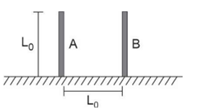
Eleva-se, então, a temperatura das duas barras em Δθ. Nesse momento, é fixada sobre as barras, nos pontos 1 e 2, uma plataforma, formando um plano inclinado, sobre o qual um bloco de dimensões desprezíveis é abandonado, a partir do repouso, no ponto 1, como ilustra a figura seguinte.
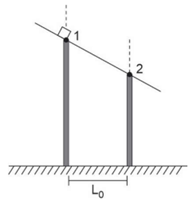
Entre o bloco e a superfície da plataforma, os coeficientes de atrito, estático e cinético são iguais a µ. Considere que a temperatura das barras permaneça constante durante todo movimento do bloco e que no local a aceleração da gravidade seja igual a g.
Nessas condições, a velocidade do bloco ao passar pelo ponto2, vale:
Eleva-se, então, a temperatura das duas barras em Δθ. Nesse momento, é fixada sobre as barras, nos pontos 1 e 2, uma plataforma, formando um plano inclinado, sobre o qual um bloco de dimensões desprezíveis é abandonado, a partir do repouso, no ponto 1, como ilustra a figura seguinte.
Entre o bloco e a superfície da plataforma, os coeficientes de atrito, estático e cinético são iguais a µ. Considere que a temperatura das barras permaneça constante durante todo movimento do bloco e que no local a aceleração da gravidade seja igual a g.
Nessas condições, a velocidade do bloco ao passar pelo ponto2, vale:
Ano: 2025
Banca:
Aeronáutica
Órgão:
AFA
Prova:
Aeronáutica - 2025 - AFA - Aspirante da Aeronáutica (Oficial Aviador, Oficial Intendente e Oficial de Infantaria) |
Q3479458
Física
Texto associado
Na questão de Física, quando necessário, utilize:
• Densidade da água = 1,0 kg/L
• Velocidade da luz no vácuo: c = 3,0 ∙ 108 m/s
• Índice de refração do ar: nar = 1,0
• Índice de refração da glicerina: nglicerina = 1,4
• π = 3,0
• Calor específico molar a volume constante do gás ideal monoatômico: Cv =3/2 R
Termômetros de resistência elétrica são amplamente
utilizados em vários tipos de aeronaves e seu princípio de
funcionamento baseia-se na variação da resistividade elétrica
de um elemento resistor acoplado ao componente que se
deseja medir a temperatura.
Utilizando um material para o elemento resistor, de coeficiente de temperatura 5∙10-3 °C-1, quando a temperatura do componente varia de 20 °C a θ, sua resistência elétrica aumenta, linearmente, para 1,6 do valor inicial.
Desprezando-se os efeitos de dilatação no elemento resistor, a temperatura θ, registrada pelo termômetro, indicada no painel da aeronave, em °F, vale
Utilizando um material para o elemento resistor, de coeficiente de temperatura 5∙10-3 °C-1, quando a temperatura do componente varia de 20 °C a θ, sua resistência elétrica aumenta, linearmente, para 1,6 do valor inicial.
Desprezando-se os efeitos de dilatação no elemento resistor, a temperatura θ, registrada pelo termômetro, indicada no painel da aeronave, em °F, vale
Ano: 2025
Banca:
Aeronáutica
Órgão:
AFA
Prova:
Aeronáutica - 2025 - AFA - Aspirante da Aeronáutica (Oficial Aviador, Oficial Intendente e Oficial de Infantaria) |
Q3479457
Física
Texto associado
Na questão de Física, quando necessário, utilize:
• Densidade da água = 1,0 kg/L
• Velocidade da luz no vácuo: c = 3,0 ∙ 108 m/s
• Índice de refração do ar: nar = 1,0
• Índice de refração da glicerina: nglicerina = 1,4
• π = 3,0
• Calor específico molar a volume constante do gás ideal monoatômico: Cv =3/2 R
Uma barra cilíndrica e homogênea, de peso P, repousa
parcialmente imersa em um tanque, com 75% de seu volume
imerso, conforme ilustrado na figura abaixo.
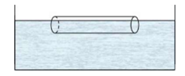
Em seguida, por meio de um fio ideal, prende-se uma das extremidades desta barra ao teto, estabelecendo-se uma nova posição de equilíbrio.
Dentre as alternativas abaixo, a figura que melhor representa essa nova posição de equilíbrio, bem como a intensidade da tensão no fio, é
Em seguida, por meio de um fio ideal, prende-se uma das extremidades desta barra ao teto, estabelecendo-se uma nova posição de equilíbrio.
Dentre as alternativas abaixo, a figura que melhor representa essa nova posição de equilíbrio, bem como a intensidade da tensão no fio, é
Ano: 2025
Banca:
Aeronáutica
Órgão:
AFA
Prova:
Aeronáutica - 2025 - AFA - Aspirante da Aeronáutica (Oficial Aviador, Oficial Intendente e Oficial de Infantaria) |
Q3479456
Física
Texto associado
Na questão de Física, quando necessário, utilize:
• Densidade da água = 1,0 kg/L
• Velocidade da luz no vácuo: c = 3,0 ∙ 108 m/s
• Índice de refração do ar: nar = 1,0
• Índice de refração da glicerina: nglicerina = 1,4
• π = 3,0
• Calor específico molar a volume constante do gás ideal monoatômico: Cv =3/2 R
Uma máquina térmica, cuja substância de trabalho é 1 mol
de um gás ideal monoatômico, opera segundo o ciclo
definido pelo diagrama pressão (p) por volume (V), conforme
mostrado no diagrama abaixo.
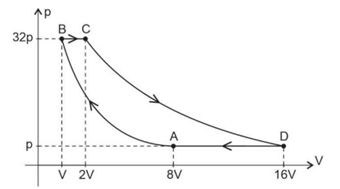
Sendo os processos AB e CD reversíveis e adiabáticos, pode-se afirmar corretamente que o rendimento dessa máquina é igual a
Sendo os processos AB e CD reversíveis e adiabáticos, pode-se afirmar corretamente que o rendimento dessa máquina é igual a
Ano: 2025
Banca:
Aeronáutica
Órgão:
AFA
Prova:
Aeronáutica - 2025 - AFA - Aspirante da Aeronáutica (Oficial Aviador, Oficial Intendente e Oficial de Infantaria) |
Q3479455
Física
Texto associado
Na questão de Física, quando necessário, utilize:
• Densidade da água = 1,0 kg/L
• Velocidade da luz no vácuo: c = 3,0 ∙ 108 m/s
• Índice de refração do ar: nar = 1,0
• Índice de refração da glicerina: nglicerina = 1,4
• π = 3,0
• Calor específico molar a volume constante do gás ideal monoatômico: Cv =3/2 R
Uma partícula, em movimento circular uniformemente
variado, descreve uma trajetória circular e mantém-se ligada
ao ponto central 0, por um fio ideal, conforme figura a seguir.
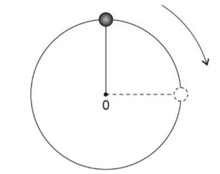
Após realizar 1/4 de volta, sua velocidade é o dobro da velocidade inicial. Já o tempo para completar 1 volta foi de 3 vezes o tempo necessário para atingir 1/4 de volta. Durante esse movimento, a tração no fio sobre a partícula foi a única força a atuar na direção radial, sendo no início seu valor T0 e após 1 volta seu valor Tf . Nessas condições, a razão, Tf /T0 , entre as trações final e inicial, vale
Após realizar 1/4 de volta, sua velocidade é o dobro da velocidade inicial. Já o tempo para completar 1 volta foi de 3 vezes o tempo necessário para atingir 1/4 de volta. Durante esse movimento, a tração no fio sobre a partícula foi a única força a atuar na direção radial, sendo no início seu valor T0 e após 1 volta seu valor Tf . Nessas condições, a razão, Tf /T0 , entre as trações final e inicial, vale
Ano: 2025
Banca:
Aeronáutica
Órgão:
AFA
Prova:
Aeronáutica - 2025 - AFA - Aspirante da Aeronáutica (Oficial Aviador, Oficial Intendente e Oficial de Infantaria) |
Q3479454
Inglês
Texto associado
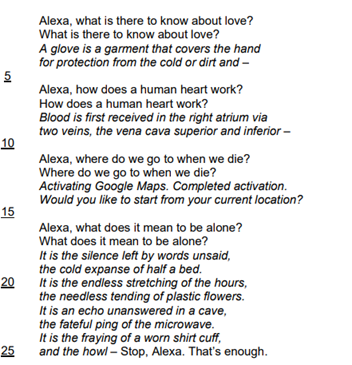
Directions: Read text I and answer question.
TEXT I
Alexa, What Is There to Know about Love?
Brian Bilston
Available on: https://brianbilston.com/2018/07/23/alexa-what-is-there-toknow-about-love/. Accessed on February 24th, 2025.
TEXT II
AI won’t take your job if you know about IA
Intelligence augmentation shows that human + AI is an ideal partnership – and the future of white-collar work
The less exciting but more likely reality is that the changes AI brings to the workplace will entail upskilling — when workers learn new skills — not reskilling or complete replacement. And upskilling is not about surrendering to AI but instead about mastering intelligence augmentation, or IA, which is what happens when humans and AI work together to accomplish more as a team than either could flying solo. That collaboration is based on the distinction between two concepts: reckoning and judgment. Reckoning vs. Judgment A critical difference between AI and humans is our primary mode of operation. AI operates through what is often referred to as “reckoning,” such as calculative prediction. By that, we mean AI’s true capabilities are grounded in facts and historical knowledge - data that can be calculated, memorized, and repeated. It makes predictions based on what it knows. By contrast, humans operate through judgment or practical wisdom. We understand things AI can’t possibly know. That’s because we humans have lived experiences that continually inform how we see the world. It’s the intangible factors, like ethical considerations and empathetic responses, that make humans better equipped than AI to make complex decisions about human affairs. This practical wisdom is one reason humans must keep creating new things for IA to advance. Imagine what would happen if humans stopped writing original content. The current model of AI could never pass a certain point because it would never encounter new, innovative ideas. Eventually, AI would run out of new ideas to share, and our collective knowledge would stagnate. AI is like moonlight; its ideas come from the reflected sunlight of human insights. Now, it’s essential to recognize that this contrast between AI and humans is nothing to fear. Instead, it shows us why “human + AI” is an ideal work partnership. AI can perform massive calculations in the blink of an eye at a pace far superior to even the most intelligent human on the planet. When paired with a human capable of making quick decisions based on lived experience, judgment, and practical wisdom, it’s an immensely more powerful tool than it is on its own. Adapted from MCCOOL, Chris Dede and David. AI Won’t Take Your Job if You Know About IA. Harvard Graduate School of Education. Available on: https://www.gse.harvard.edu/ideas/news/24/02/ai-wont-take-your-job-ifyou-know-about-ai. Accessed on March 10 th, 2025.
TEXT III
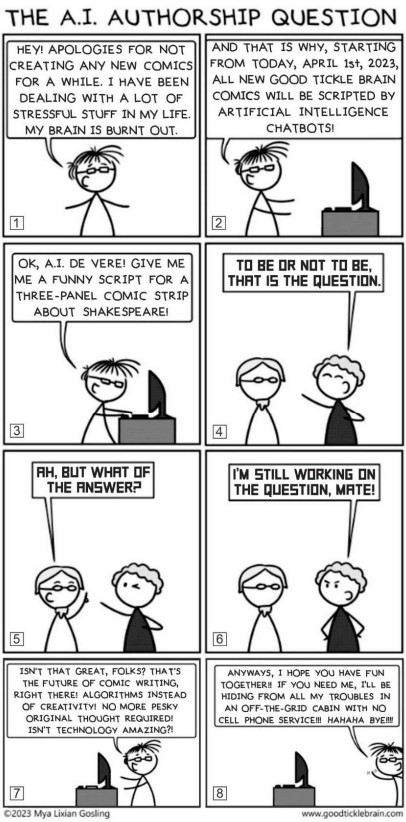
TEXT IV
Algorithmic Romance: The Bittersweet ‘Love Affair’ Between Humanity and AI
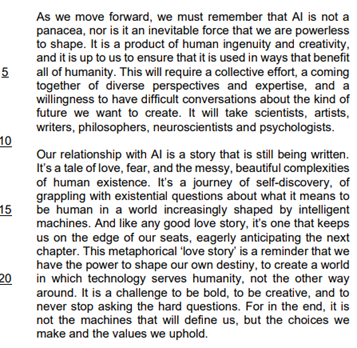
Adapted from HUTCHINS, Bob. Algorithmic Romance: The Bittersweet 'Love Affair' Between Humanity and AI. The human voice bridgin silicon and soul. Available on: https://bobhutchins.substack.com/p/algorithmicromance-the-bittersweet?utm_campaign=post&utm_medium=web. Accessed on March 10th, 202
AI won’t take your job if you know about IA
Intelligence augmentation shows that human + AI is an ideal partnership – and the future of white-collar work
The less exciting but more likely reality is that the changes AI brings to the workplace will entail upskilling — when workers learn new skills — not reskilling or complete replacement. And upskilling is not about surrendering to AI but instead about mastering intelligence augmentation, or IA, which is what happens when humans and AI work together to accomplish more as a team than either could flying solo. That collaboration is based on the distinction between two concepts: reckoning and judgment. Reckoning vs. Judgment A critical difference between AI and humans is our primary mode of operation. AI operates through what is often referred to as “reckoning,” such as calculative prediction. By that, we mean AI’s true capabilities are grounded in facts and historical knowledge - data that can be calculated, memorized, and repeated. It makes predictions based on what it knows. By contrast, humans operate through judgment or practical wisdom. We understand things AI can’t possibly know. That’s because we humans have lived experiences that continually inform how we see the world. It’s the intangible factors, like ethical considerations and empathetic responses, that make humans better equipped than AI to make complex decisions about human affairs. This practical wisdom is one reason humans must keep creating new things for IA to advance. Imagine what would happen if humans stopped writing original content. The current model of AI could never pass a certain point because it would never encounter new, innovative ideas. Eventually, AI would run out of new ideas to share, and our collective knowledge would stagnate. AI is like moonlight; its ideas come from the reflected sunlight of human insights. Now, it’s essential to recognize that this contrast between AI and humans is nothing to fear. Instead, it shows us why “human + AI” is an ideal work partnership. AI can perform massive calculations in the blink of an eye at a pace far superior to even the most intelligent human on the planet. When paired with a human capable of making quick decisions based on lived experience, judgment, and practical wisdom, it’s an immensely more powerful tool than it is on its own. Adapted from MCCOOL, Chris Dede and David. AI Won’t Take Your Job if You Know About IA. Harvard Graduate School of Education. Available on: https://www.gse.harvard.edu/ideas/news/24/02/ai-wont-take-your-job-ifyou-know-about-ai. Accessed on March 10 th, 2025.
TEXT III
TEXT IV
Algorithmic Romance: The Bittersweet ‘Love Affair’ Between Humanity and AI
Adapted from HUTCHINS, Bob. Algorithmic Romance: The Bittersweet 'Love Affair' Between Humanity and AI. The human voice bridgin silicon and soul. Available on: https://bobhutchins.substack.com/p/algorithmicromance-the-bittersweet?utm_campaign=post&utm_medium=web. Accessed on March 10th, 202
Directions: Read texts I to IV and answer question.
Decide if the sentences are true (T) or false (F).
I. All four of them are sarcastic and critical. ( )
II. All of them acclaimed the use of AI at work. ( )
III. The texts explore AI´s role in replacing human relationships. ( )
IV. Texts III and IV depict consequences of Human-AI collaboration. ( )
V. Texts II and IV have overlapping ideas when it comes to responsible use of AI. ( )
Now, mark the right alternative.
Ano: 2025
Banca:
Aeronáutica
Órgão:
AFA
Prova:
Aeronáutica - 2025 - AFA - Aspirante da Aeronáutica (Oficial Aviador, Oficial Intendente e Oficial de Infantaria) |
Q3479453
Inglês
Texto associado
Directions: Read text IV and answer question.
TEXT IV
Algorithmic Romance: The Bittersweet ‘Love Affair’
Between Humanity and AI
Adapted from HUTCHINS, Bob. Algorithmic Romance: The Bittersweet
'Love Affair' Between Humanity and AI. The human voice bridgin silicon
and soul. Available on: https://bobhutchins.substack.com/p/algorithmicromance-the-bittersweet?utm_campaign=post&utm_medium=web.
Accessed on March 10th, 202
The “love story” metaphor ( l. 18) is primarily used to illustrate
Ano: 2025
Banca:
Aeronáutica
Órgão:
AFA
Prova:
Aeronáutica - 2025 - AFA - Aspirante da Aeronáutica (Oficial Aviador, Oficial Intendente e Oficial de Infantaria) |
Q3479452
Inglês
Texto associado
Directions: Read text IV and answer question.
TEXT IV
Algorithmic Romance: The Bittersweet ‘Love Affair’
Between Humanity and AI
Adapted from HUTCHINS, Bob. Algorithmic Romance: The Bittersweet
'Love Affair' Between Humanity and AI. The human voice bridgin silicon
and soul. Available on: https://bobhutchins.substack.com/p/algorithmicromance-the-bittersweet?utm_campaign=post&utm_medium=web.
Accessed on March 10th, 202
The call for a “collective effort” ( l. 5) implies that the challenges
posed by AI require
Ano: 2025
Banca:
Aeronáutica
Órgão:
AFA
Prova:
Aeronáutica - 2025 - AFA - Aspirante da Aeronáutica (Oficial Aviador, Oficial Intendente e Oficial de Infantaria) |
Q3479451
Inglês
Texto associado
Directions: Read text IV and answer question.
TEXT IV
Algorithmic Romance: The Bittersweet ‘Love Affair’
Between Humanity and AI
Adapted from HUTCHINS, Bob. Algorithmic Romance: The Bittersweet
'Love Affair' Between Humanity and AI. The human voice bridgin silicon
and soul. Available on: https://bobhutchins.substack.com/p/algorithmicromance-the-bittersweet?utm_campaign=post&utm_medium=web.
Accessed on March 10th, 202
The author’s assertion that AI is not a “panacea” serves to
emphasize that
Ano: 2025
Banca:
Aeronáutica
Órgão:
AFA
Prova:
Aeronáutica - 2025 - AFA - Aspirante da Aeronáutica (Oficial Aviador, Oficial Intendente e Oficial de Infantaria) |
Q3479450
Inglês
Directions: Read texts I, II and III and answer question
TEXT I
Alexa, What Is There to Know about Love? Brian Bilston Alexa, what is there to know about love? What is there to know about love? A glove is a garment that covers the hand for protection from the cold or dirt and – Alexa, how does a human heart work? How does a human heart work? Blood is first received in the right atrium via two veins, the vena cava superior and inferior – Alexa, where do we go to when we die? Where do we go to when we die? Activating Google Maps. Completed activation. Would you like to start from your current location? Alexa, what does it mean to be alone? What does it mean to be alone? It is the silence left by words unsaid, the cold expanse of half a bed. It is the endless stretching of the hours, the needless tending of plastic flowers. It is an echo unanswered in a cave, the fateful ping of the microwave. It is the fraying of a worn shirt cuff, and the howl – Stop, Alexa. That’s enough.
Available on: https://brianbilston.com/2018/07/23/alexa-what-is-there-toknow-about-love/. Accessed on February 24th, 2025
TEXT II
AI won’t take your job if you know about IA Intelligence augmentation shows that human + AI is an ideal partnership – and the future of white-collar work The less exciting but more likely reality is that the changes AI brings to the workplace will entail upskilling — when workers learn new skills — not reskilling or complete replacement. And upskilling is not about surrendering to AI but instead about mastering intelligence augmentation, or IA, which is what happens when humans and AI work together to accomplish more as a team than either could flying solo. That collaboration is based on the distinction between two concepts: reckoning and judgment. Reckoning vs. Judgment A critical difference between AI and humans is our primary mode of operation. AI operates through what is often referred to as “reckoning,” such as calculative prediction. By that, we mean AI’s true capabilities are grounded in facts and historical knowledge - data that can be calculated, memorized, and repeated. It makes predictions based on what it knows. By contrast, humans operate through judgment or practical wisdom. We understand things AI can’t possibly know. That’s because we humans have lived experiences that continually inform how we see the world. It’s the intangible factors, like ethical considerations and empathetic responses, that make humans better equipped than AI to make complex decisions about human affairs. This practical wisdom is one reason humans must keep creating new things for IA to advance. Imagine what would happen if humans stopped writing original content. The current model of AI could never pass a certain point because it would never encounter new, innovative ideas. Eventually, AI would run out of new ideas to share, and our collective knowledge would stagnate. AI is like moonlight; its ideas come from the reflected sunlight of human insights. Now, it’s essential to recognize that this contrast between AI and humans is nothing to fear. Instead, it shows us why “human + AI” is an ideal work partnership. AI can perform massive calculations in the blink of an eye at a pace far superior to even the most intelligent human on the planet. When paired with a human capable of making quick decisions based on lived experience, judgment, and practical wisdom, it’s an immensely more powerful tool than it is on its own. Adapted from MCCOOL, Chris Dede and David. AI Won’t Take Your Job if You Know About IA. Harvard Graduate School of Education. Available on: https://www.gse.harvard.edu/ideas/news/24/02/ai-wont-take-your-job-ifyou-know-about-ai. Accessed on March 10 th, 2025.
TEXT III
It is possible to say that
TEXT I
Alexa, What Is There to Know about Love? Brian Bilston Alexa, what is there to know about love? What is there to know about love? A glove is a garment that covers the hand for protection from the cold or dirt and – Alexa, how does a human heart work? How does a human heart work? Blood is first received in the right atrium via two veins, the vena cava superior and inferior – Alexa, where do we go to when we die? Where do we go to when we die? Activating Google Maps. Completed activation. Would you like to start from your current location? Alexa, what does it mean to be alone? What does it mean to be alone? It is the silence left by words unsaid, the cold expanse of half a bed. It is the endless stretching of the hours, the needless tending of plastic flowers. It is an echo unanswered in a cave, the fateful ping of the microwave. It is the fraying of a worn shirt cuff, and the howl – Stop, Alexa. That’s enough.
Available on: https://brianbilston.com/2018/07/23/alexa-what-is-there-toknow-about-love/. Accessed on February 24th, 2025
TEXT II
AI won’t take your job if you know about IA Intelligence augmentation shows that human + AI is an ideal partnership – and the future of white-collar work The less exciting but more likely reality is that the changes AI brings to the workplace will entail upskilling — when workers learn new skills — not reskilling or complete replacement. And upskilling is not about surrendering to AI but instead about mastering intelligence augmentation, or IA, which is what happens when humans and AI work together to accomplish more as a team than either could flying solo. That collaboration is based on the distinction between two concepts: reckoning and judgment. Reckoning vs. Judgment A critical difference between AI and humans is our primary mode of operation. AI operates through what is often referred to as “reckoning,” such as calculative prediction. By that, we mean AI’s true capabilities are grounded in facts and historical knowledge - data that can be calculated, memorized, and repeated. It makes predictions based on what it knows. By contrast, humans operate through judgment or practical wisdom. We understand things AI can’t possibly know. That’s because we humans have lived experiences that continually inform how we see the world. It’s the intangible factors, like ethical considerations and empathetic responses, that make humans better equipped than AI to make complex decisions about human affairs. This practical wisdom is one reason humans must keep creating new things for IA to advance. Imagine what would happen if humans stopped writing original content. The current model of AI could never pass a certain point because it would never encounter new, innovative ideas. Eventually, AI would run out of new ideas to share, and our collective knowledge would stagnate. AI is like moonlight; its ideas come from the reflected sunlight of human insights. Now, it’s essential to recognize that this contrast between AI and humans is nothing to fear. Instead, it shows us why “human + AI” is an ideal work partnership. AI can perform massive calculations in the blink of an eye at a pace far superior to even the most intelligent human on the planet. When paired with a human capable of making quick decisions based on lived experience, judgment, and practical wisdom, it’s an immensely more powerful tool than it is on its own. Adapted from MCCOOL, Chris Dede and David. AI Won’t Take Your Job if You Know About IA. Harvard Graduate School of Education. Available on: https://www.gse.harvard.edu/ideas/news/24/02/ai-wont-take-your-job-ifyou-know-about-ai. Accessed on March 10 th, 2025.
TEXT III
It is possible to say that
Ano: 2025
Banca:
Aeronáutica
Órgão:
AFA
Prova:
Aeronáutica - 2025 - AFA - Aspirante da Aeronáutica (Oficial Aviador, Oficial Intendente e Oficial de Infantaria) |
Q3479449
Inglês
Texto associado

Directions: Read text III and answer question.
TEXT III
Good Tickle Brain. The A.I. Authorship Question. Available on: https://goodticklebrain.
com/home/2023/3/31/the-ai-authorship-question. Accessed on March 20th, 2025.
Regarding the implied future of creativity portrayed in the
comics, it is possible to conclude that
Ano: 2025
Banca:
Aeronáutica
Órgão:
AFA
Prova:
Aeronáutica - 2025 - AFA - Aspirante da Aeronáutica (Oficial Aviador, Oficial Intendente e Oficial de Infantaria) |
Q3479448
Inglês
Texto associado
Directions: Read text III and answer question.
TEXT III
Good Tickle Brain. The A.I. Authorship Question. Available on: https://goodticklebrain.
com/home/2023/3/31/the-ai-authorship-question. Accessed on March 20th, 2025.
The phrase “No more pesky original thought required!” (box 7)
is used to
Ano: 2025
Banca:
Aeronáutica
Órgão:
AFA
Prova:
Aeronáutica - 2025 - AFA - Aspirante da Aeronáutica (Oficial Aviador, Oficial Intendente e Oficial de Infantaria) |
Q3479447
Inglês
Texto associado
Directions: Read text III and answer question.
TEXT III
Good Tickle Brain. The A.I. Authorship Question. Available on: https://goodticklebrain.
com/home/2023/3/31/the-ai-authorship-question. Accessed on March 20th, 2025.
The verb tense in “I have been dealing with a lot of stressful
stuff in my life.” (box 1)
 Conheça nossos planos