Questões Militares Múltipla-escolha

Foram encontradas 135.752 questões

Resolva questões gratuitamente!

Junte-se a mais de 4 milhões de concurseiros!

Q3503348 Matemática
Um indivíduo está de pé sobre uma rua horizontal olhando fixamente para o topo de um poste vertical de 6 metros de altura. Quando o indivíduo estava em uma posição em que o ângulo de elevação do seu olhar era 30o, ele caminhou 5 metros na direção do poste, se aproximando deste, até parar no ponto em que o ângulo de elevação do olhar passou a ser de 60o.
Considerando-se 1,7 como aproximação para a √3, é correto afirmar que a altura dos olhos do indivíduo, em metros, é
Alternativas
Q3503347 Raciocínio Lógico
Uma cafeteria gourmet recebeu, de seus fornecedores, 8 tipos diferentes de cafés especiais numerados de 1 a 8.
Para um evento exclusivo, o gerente deseja escolher 3 desses tipos de café para uma degustação. No entanto, ele sabe que os cafés nº 2 e nº 7 têm sabores muito parecidos. Por isso, ele decide que, se um desses for escolhido, o outro não poderá ser.
Nessas condições, o número de opções distintas de que o gerente dispõe para oferecer nessa degustação é 
Alternativas
Q3503346 Matemática

Diariamente, a altura H (em metros) da maré em certo cais pode ser modelada por


Imagem associada para resolução da questão


em que t é o tempo decorrido, em horas, desde a meia-noite.

Nesse local, a altura máxima atingida pela maré, em metros, ao longo de um dia é 

Alternativas
Q3503345 Raciocínio Lógico
Para definir uma senha de 5 dígitos para o seu cofre, Aluísio escolheu, inicialmente, os dois dígitos do dia e os dois dígitos do mês de seu aniversário. De posse desses 4 dígitos, ele os distribuiu nas quatro posições de uma matriz 2 x 2 de modo que o determinante dessa matriz fosse o maior possível.
A senha foi então formada pela ordenação decrescente desses 5 dígitos: os 4 da data e o determinante máximo.
Sabendo-se que Aluísio nasceu no penúltimo dia do ano, é correto afirmar que a senha do seu cofre é
Alternativas
Q3503344 Matemática
A média aritmética de 4 números inteiros positivos é 9. A mediana da lista formada por eles vale 8.
Se a diferença entre o maior e o menor desses números é igual a 10, então o maior deles é
Alternativas
Q3503343 Matemática

A soma dos 7 termos de certa progressão aritmética é 77.

É correto concluir que o 4º termo dessa progressão vale

Alternativas
Q3503342 Matemática
Representada sobre um plano cartesiano, uma reta r contém os pontos (1, 4) e (3, 10). Nesse mesmo sistema de coordenadas, uma reta s paralela à reta r contém o ponto (1, 0).
É correto concluir que s intersecta o eixo das ordenadas no ponto
Alternativas
Q3503341 Matemática
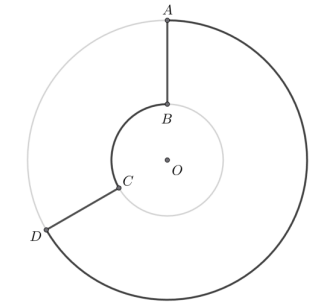
A figura ilustra duas circunferências concêntricas, de centro em O, sobre as quais se constrói um circuito fechado ABCDA, formado pelos segmentos de reta AB e CD, intercalados por dois arcos de circunferência AD e BC.

Imagem associada para resolução da questão

Os pontos A e D pertencem à circunferência de raio 5 cm e os pontos B e C, à circunferência de raio 2 cm. O arco AD mede 240o e os prolongamentos de AB e CD contêm o ponto O. Considerando-se π igual a 3, o comprimento do circuito completo é
Alternativas
Q3503340 Matemática
Em uma caixa, há exatamente 10 balas, sendo 6 delas de leite e as demais, de coco. Exatamente duas balas serão retiradas aleatoriamente da caixa, uma de cada vez, sem reposição.
A probabilidade de que se obtenha pelo menos uma bala de coco é
Alternativas
Q3503339 Matemática
Uma dada função f, ao receber qualquer valor real, subtrai desse valor três unidades, eleva essa diferença ao quadrado e, por fim, multiplica o resultado da potência por quatro.
Sejam x1 e x2 valores reais tais que f(x1 ) = f(x2 ) = 25, com x1 > x2.
O valor de x1 − x2 é
Alternativas
Q3503338 Matemática
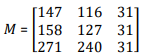
A seguinte matriz quadrada M = (mij ) 3x3 foi construída de tal maneira que mi3 = mi1 − mi2 , ∀i ∈ {1,2,3}.
Imagem associada para resolução da questão

O determinante de M vale 
Alternativas
Q3503337 Matemática
Uma hamburgueria oferece dois tipos de hambúrgueres: clássico e premium. Um hambúrguer premium é 25% mais caro quando comparado a um hambúrguer clássico. Além disso, um suco de laranja custa a metade do valor de um hambúrguer premium. Um hambúrguer clássico, um hambúrguer premium e dois sucos de laranja custam, juntos, R$ 84,00.
Com base nessas informações, é correto concluir que a diferença entre os preços de um hambúrguer premium e de um hambúrguer clássico é de
Alternativas
Q3503336 Inglês
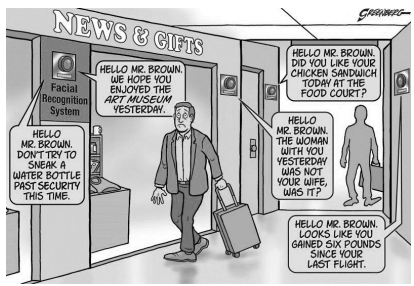
The speech “Don’t try to sneak a water bottle past security this time” implies that the character in the cartoon
Alternativas
Q3503335 Inglês

Text II 


Imagem associada para resolução da questão


From: https://www.cartoonmovement.com/cartoon/facial-recognition-0


The cartoon criticizes the fact that face recognition can be

Alternativas
Q3503334 Inglês
Text I

Understanding bias in facial recognition technologies

   Over the past couple of years, the growing debate around automated facial recognition has reached a boiling point. As developers have continued to swiftly expand the scope of these kinds of technologies into an almost unbounded range of applications, an increasingly strident chorus of critical voices has sounded concerns about the injurious effects of the proliferation of such systems on impacted individuals and communities. Critics argue that the irresponsible design and use of facial detection and recognition technologies (FDRTs) threaten to violate civil liberties, infringe on basic human rights and further entrench structural racism and systemic marginalisation. In addition, they argue that the gradual creep of face surveillance infrastructures into every domain of lived experience may eventually eradicate the modern democratic forms of life that have long provided cherished means to individual flourishing, social solidarity and human self-creation.

   Defenders, by contrast, emphasise the gains in public safety, security and efficiency that digitally streamlined capacities for facial identification, identity verification and trait characterisation may bring. These proponents point to potential real-world benefits like the added security of facial recognition enhanced border control, the increased efficacy of missing children or criminal suspect searches that are driven by the application of brute force facial analysis to largescale databases and the many added conveniences of facial verification in the business of everyday life.

   Whatever side of the debate on which one lands, it would appear that FDRTs are here to stay.


Adapted from: understanding_bias_in_facial_recognition_technology.pdf
The word “like” in “like the added security of facial recognition” (2nd paragraph) introduces a(n)
Alternativas
Q3503333 Inglês
Text I

Understanding bias in facial recognition technologies

   Over the past couple of years, the growing debate around automated facial recognition has reached a boiling point. As developers have continued to swiftly expand the scope of these kinds of technologies into an almost unbounded range of applications, an increasingly strident chorus of critical voices has sounded concerns about the injurious effects of the proliferation of such systems on impacted individuals and communities. Critics argue that the irresponsible design and use of facial detection and recognition technologies (FDRTs) threaten to violate civil liberties, infringe on basic human rights and further entrench structural racism and systemic marginalisation. In addition, they argue that the gradual creep of face surveillance infrastructures into every domain of lived experience may eventually eradicate the modern democratic forms of life that have long provided cherished means to individual flourishing, social solidarity and human self-creation.

   Defenders, by contrast, emphasise the gains in public safety, security and efficiency that digitally streamlined capacities for facial identification, identity verification and trait characterisation may bring. These proponents point to potential real-world benefits like the added security of facial recognition enhanced border control, the increased efficacy of missing children or criminal suspect searches that are driven by the application of brute force facial analysis to largescale databases and the many added conveniences of facial verification in the business of everyday life.

   Whatever side of the debate on which one lands, it would appear that FDRTs are here to stay.


Adapted from: understanding_bias_in_facial_recognition_technology.pdf
In the first sentence, when the author says that the debate “has reached a boiling point”, he means that the debate is 
Alternativas
Q3503332 Inglês
Text I

Understanding bias in facial recognition technologies

   Over the past couple of years, the growing debate around automated facial recognition has reached a boiling point. As developers have continued to swiftly expand the scope of these kinds of technologies into an almost unbounded range of applications, an increasingly strident chorus of critical voices has sounded concerns about the injurious effects of the proliferation of such systems on impacted individuals and communities. Critics argue that the irresponsible design and use of facial detection and recognition technologies (FDRTs) threaten to violate civil liberties, infringe on basic human rights and further entrench structural racism and systemic marginalisation. In addition, they argue that the gradual creep of face surveillance infrastructures into every domain of lived experience may eventually eradicate the modern democratic forms of life that have long provided cherished means to individual flourishing, social solidarity and human self-creation.

   Defenders, by contrast, emphasise the gains in public safety, security and efficiency that digitally streamlined capacities for facial identification, identity verification and trait characterisation may bring. These proponents point to potential real-world benefits like the added security of facial recognition enhanced border control, the increased efficacy of missing children or criminal suspect searches that are driven by the application of brute force facial analysis to largescale databases and the many added conveniences of facial verification in the business of everyday life.

   Whatever side of the debate on which one lands, it would appear that FDRTs are here to stay.


Adapted from: understanding_bias_in_facial_recognition_technology.pdf
In the last sentence, the author states that facial detection and recognition technologies
Alternativas
Q3503331 Inglês
Text I

Understanding bias in facial recognition technologies

   Over the past couple of years, the growing debate around automated facial recognition has reached a boiling point. As developers have continued to swiftly expand the scope of these kinds of technologies into an almost unbounded range of applications, an increasingly strident chorus of critical voices has sounded concerns about the injurious effects of the proliferation of such systems on impacted individuals and communities. Critics argue that the irresponsible design and use of facial detection and recognition technologies (FDRTs) threaten to violate civil liberties, infringe on basic human rights and further entrench structural racism and systemic marginalisation. In addition, they argue that the gradual creep of face surveillance infrastructures into every domain of lived experience may eventually eradicate the modern democratic forms of life that have long provided cherished means to individual flourishing, social solidarity and human self-creation.

   Defenders, by contrast, emphasise the gains in public safety, security and efficiency that digitally streamlined capacities for facial identification, identity verification and trait characterisation may bring. These proponents point to potential real-world benefits like the added security of facial recognition enhanced border control, the increased efficacy of missing children or criminal suspect searches that are driven by the application of brute force facial analysis to largescale databases and the many added conveniences of facial verification in the business of everyday life.

   Whatever side of the debate on which one lands, it would appear that FDRTs are here to stay.


Adapted from: understanding_bias_in_facial_recognition_technology.pdf

Based on Text I, analyze the assertions below:


I. Critics are concerned about the pervasiveness of facial recognition technology.

II. Facial recognition systems may reduce the efficiency and security of border control.

III. Some argue that the new technology could undermine the stability of modern democracy.


Choose the correct answer:

Alternativas
Q3503330 Português

Os vocábulos abaixo aparecem acentuados, mas um deles está acentuado de forma incorreta.

Assinale a opção em que esse vocábulo aparece. 

Alternativas
Q3503329 Português
As frases a seguir trazem nomes de especialidades médicas. Assinale a frase cuja especialidade tem seu objeto corretamente definido.
Alternativas
Respostas
5001: B
5002: D
5003: E
5004: C
5005: A
5006: B
5007: B
5008: D
5009: E
5010: C
5011: A
5012: C
5013: C
5014: E
5015: E
5016: A
5017: B
5018: D
5019: B
5020: B