Questões Militares Múltipla-escolha

Foram encontradas 135.752 questões

Resolva questões gratuitamente!

Junte-se a mais de 4 milhões de concurseiros!

Q3735486 Física
Em um planeta distante, um astronauta realizou o seguinte experimento utilizando um pêndulo simples de comprimento L e massa m. Quando o pêndulo é liberado a partir de um pequeno ângulo Ф0, com a vertical, põe-se a oscilar em MHS, com frequência angular ω, em torno da posição de equilíbrio, satisfazendo a seguinte equação para o deslocamento angular Ф em função do tempo t: Ф(t) = Ф0cos(ωt). Retornando à Terra, repetiu-se o experimento, observando-se que o comportamento para o deslocamento angular na Terra, Фт, em função do tempo t passa a ser dado por ФT= Ф0сos(2ωt). Sabendo-se que a massa desse planeta distante é 10% da massa da Terra, determine a razão entre o raio da Terra, RT, e o raio desse planeta, R, ou seja, RT/R.
Alternativas
Q3735485 Física

Analise as figuras abaixo.


Imagem associada para resolução da questão


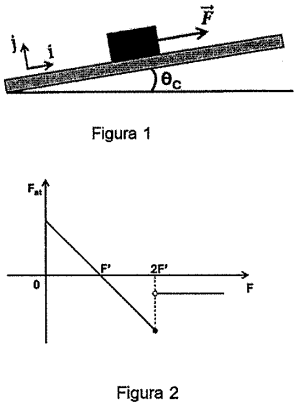
A figura 1 apresenta um bloco de massa m apoiado sobre um plano inclinado. Os coeficientes de atrito estático e cinético entre o bloco e o plano são, respectivamente, μe e Ho, de modo que uma força de atrito Fat = Fat i atuará no bloco (podendo apontar para cima ou para baixo do plano). Uma força F = F i, de intensidade variável, paralela ao plano e sentido para cima (conforme indicado na figura) atua sobre o bloco. A figura 2 apresenta o comportamento da componente escalar do vetor força de atrito (Fat) e a componente escalar da força F (F). Considerando que, para F = 0, o bloco está no limite de escorregar, para F= F', a força de atrito sobre o bloco é nula e que, para F = 3F', o bloco sobe o plano com aceleração igual а 1,2F'/m, assinale a opção que corresponde à razão uc / He.

Alternativas
Q3735484 Física
Analise a figura abaixо.

Imagem associada para resolução da questão

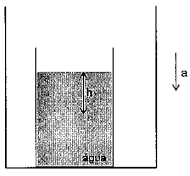
A figura acima representa um elevador acelerado verticalmente para baixo com aceleração a menor do que a aceleração da gravidade g. Sobre o piso horizontal do elevador, encontra-se um recipiente cheio de água. Com base nessas informações, assinale a opção que apresenta o gráfico que representa, para uma dada profundidade h, como varia a pressão hidrostática no recipiente em função da aceleração a do elevador.
Alternativas
Q3735483 Física
Uma partícula realiza um movimento circular uniformemente variado, com raio r e aceleração angular a constantes. Em um certo instante t0, a partícula está em repouso e o ângulo formado entre o vetor posição r da partícula e o semieixo positivo de x é θ0. Definindo amed = ΔV / Δt, onde Δv é a variação do vetor velocidade linear (instantânea) da partícula, em um certo intervalo Δt, o módulo do vetor amed após a partícula completar n voltas será igual a:
Alternativas
Q3735482 Física

Analise a figura abaixo.


Imagem associada para resolução da questão


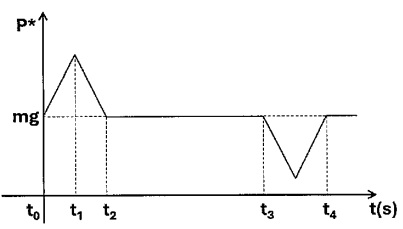
Um observador A de massa m está em cima de uma balança, dentro de um elevador. Um observador B está no solo. No instante t0, o elevador está parado em um certo andar de um edifício. Em t0 o elevador sai da sua condição de repouso e em t4 faz uma parada em um novo andar (não há paradas intermediárias entre t0 e t4). A figura acima representa o peso aparente do observador A, segundo a balança, entre t0 e t4. Admita que a aceleração é positiva quando o elevador se desloca para cima. Em relação ao observador B (que permaneceu parado no solo entre t0 e t4), é correto afirmar que:

Alternativas
Q3735481 Física

Analise a figura abaixo.


Imagem associada para resolução da questão


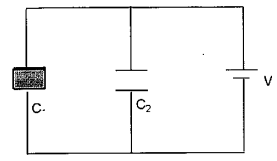
A figura mostra um esquema de dois capacitores de placas paralelas, C₁ e C2, ligados em paralelo a uma bateria ideal de ddp V. A área das placas dos capacitores é A e a distância entre as placas é d. Os dielétricos entre as placas dos capacitores C₁ e C2 são, respectivamente, um material de constante dielétrica k (k>1) e o ar. Considere que os capacitores estão completamente carregados e analise as afirmativas abaixo.


I- A presença do dielétrico de constante dielétrica k entre as placas de C1, faz com que a intensidade do campo elétrico, E₁, entre as placas de C, seja menor do que o campo elétrico, E2, entre as placas de C2 de acordo com a relação E₁ = E2/k.


II- Uma vez que a capacitância de C1 é maior do que a capacitância de C2, a densidade de cargas livres, σ1, na placa de maior potencial de C1 deve ser maior do que a densidade de cargas livres, σ2, na placa de maior potencial de C₂, de acordo com σ1 = k σ2.


III- Sendo ɛ0 a permissividade do vácuo, a energia potencial elétrica U armazenada pela associação de capacitores é dada por Q1.png (113×42)
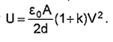


Assinale a opção correta.

Alternativas
Q3692556 Inglês

Text 2

  1. The Impact of Electric Vehicles on the Automotive Industry Looking at the environmental, economical, and political impact of electric vehicles.


By Patrick Peterson of GoodCar


Adapted from: unsustainable in [Accessed on 9th July 2025]. 

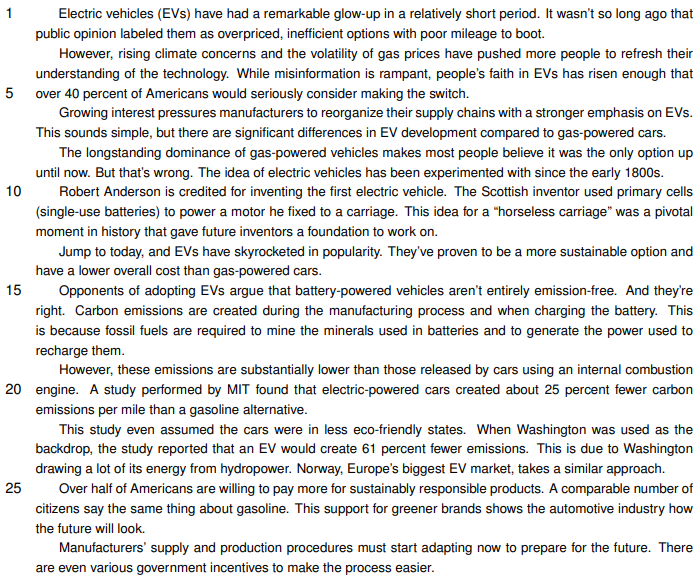
In the statement "This support for greener brands shows the automotive industry how the future will look" (lines 26 and 27), what does the term "greener" most precisely imply?
Alternativas
Q3692555 Inglês

Text 2

  1. The Impact of Electric Vehicles on the Automotive Industry Looking at the environmental, economical, and political impact of electric vehicles.


By Patrick Peterson of GoodCar


Adapted from: unsustainable in [Accessed on 9th July 2025]. 

What is the closest meaning of the word “volatile” as used in the phrase “the volatility of gas prices” (line 3)? 
Alternativas
Q3692554 Inglês

Text 2

  1. The Impact of Electric Vehicles on the Automotive Industry Looking at the environmental, economical, and political impact of electric vehicles.


By Patrick Peterson of GoodCar


Adapted from: unsustainable in [Accessed on 9th July 2025]. 

According to the text, mark the correct option about the role of geography in the environmental impact of EVs: 
Alternativas
Q3692553 Inglês

Text 2

  1. The Impact of Electric Vehicles on the Automotive Industry Looking at the environmental, economical, and political impact of electric vehicles.


By Patrick Peterson of GoodCar


Adapted from: unsustainable in [Accessed on 9th July 2025]. 

According to the text, mark the option that most accurately reflects the relationship between public perception and electric vehicle adoption:  
Alternativas
Q3692552 Inglês

Text 2

  1. The Impact of Electric Vehicles on the Automotive Industry Looking at the environmental, economical, and political impact of electric vehicles.


By Patrick Peterson of GoodCar


Adapted from: unsustainable in [Accessed on 9th July 2025]. 

In the sentence “However, rising climate concerns and the volatility of gas prices have pushed more people to refresh their understanding of the technology” (lines 3 and 4), the verb tense “have pushed” indicates: 
Alternativas
Q3692551 Inglês

Text 2

  1. The Impact of Electric Vehicles on the Automotive Industry Looking at the environmental, economical, and political impact of electric vehicles.


By Patrick Peterson of GoodCar


Adapted from: unsustainable in [Accessed on 9th July 2025]. 

Mark the option that shows the most accurate meaning of the highlighted word in the sentence below: “Electric vehicles (EVs) have had a remarkable glow-up in a relatively short period.” (line 1) 
Alternativas
Q3692550 Inglês

Text 2

  1. The Impact of Electric Vehicles on the Automotive Industry Looking at the environmental, economical, and political impact of electric vehicles.


By Patrick Peterson of GoodCar


Adapted from: unsustainable in [Accessed on 9th July 2025]. 

Mark the option that best captures the author's tone throughout the article:  
Alternativas
Q3692549 Inglês
Text 1

ChatGPT May Be Eroding Critical Thinking Skills, According to a New MIT Study

By Andrew R. Chow

    The study divided 54 subjects — 18 to 39 year-olds from the Boston area — into three groups, and asked them to write several SAT essays using OpenAl's ChatGPT, Google’s search engine, and nothing at all, respectively. Researchers used an (electroencephalogram) EEG to record the writers’ brain activity across 32 regions, and found that of the three groups, ChatGPT users had the lowest brain engagement and “consistently underperformed at neural, linguistic, and behavioral levels.” Over the course of several months, ChatGPT users got lazier with each subsequent essay, often resorting to copy-and-paste by the end of the study.

    The paper suggests that the usage of (Large Language Model) LLMs could actually harm learning, especially for younger users. The paper has not yet been peer reviewed, and its sample size is relatively small. But its paper’s main author Nataliya Kosmyna felt it was important to release the findings to elevate concerns that as society increasingly relies upon LLMs for immediate convenience, long-term brain development may be sacrificed in the process.

    The group that wrote essays using ChatGPT all delivered extremely similar essays that lacked original thought, relying on the same expressions and ideas. Two English teachers who assessed the essays called them largely “soulless” The EEGs revealed low executive control and attentional engagement. And by their third essay, many of the writers simply gave the prompt to ChatGPT and had it do almost all of the work. “It was more like, ‘just give me the essay, refine this sentence, edit it, and 'm done,” Kosmyna says.

    The brain-only group, conversely, showed the highest neural connectivity, especially in alpha, theta and delta bands, which are associated with creativity ideation, memory load, and semantic processing. Researchers found this group was more engaged and curious, and claimed ownership and expressed higher satisfaction with their essays.

    The third group, which used Google Search, also expressed high satisfaction and active brain function. The difference here is notable because many people now search for information within Al chatbots as opposed to Google Search.

    After writing the three essays, the subjects were then asked to re-write one of their previous efforts—but the ChatGPT group had to do so without the tool, while the brain-only group could now use ChatGPT. The first group remembered little of their own essays, and showed weaker alpha and theta brain waves, which likely reflected a bypassing of deep memory processes.

    The second group, in contrast, performed well, exhibiting a significant increase in brain connectivity across all EEG frequency bands. This gives rise to the hope that Al, if used properly, could enhance learning as opposed to diminishing it.

Adapted from: TIME in [Accessed on 15th July 2025]. 
Why did the researchers mention the small sample size?  
Alternativas
Q3692548 Inglês
Text 1

ChatGPT May Be Eroding Critical Thinking Skills, According to a New MIT Study

By Andrew R. Chow

    The study divided 54 subjects — 18 to 39 year-olds from the Boston area — into three groups, and asked them to write several SAT essays using OpenAl's ChatGPT, Google’s search engine, and nothing at all, respectively. Researchers used an (electroencephalogram) EEG to record the writers’ brain activity across 32 regions, and found that of the three groups, ChatGPT users had the lowest brain engagement and “consistently underperformed at neural, linguistic, and behavioral levels.” Over the course of several months, ChatGPT users got lazier with each subsequent essay, often resorting to copy-and-paste by the end of the study.

    The paper suggests that the usage of (Large Language Model) LLMs could actually harm learning, especially for younger users. The paper has not yet been peer reviewed, and its sample size is relatively small. But its paper’s main author Nataliya Kosmyna felt it was important to release the findings to elevate concerns that as society increasingly relies upon LLMs for immediate convenience, long-term brain development may be sacrificed in the process.

    The group that wrote essays using ChatGPT all delivered extremely similar essays that lacked original thought, relying on the same expressions and ideas. Two English teachers who assessed the essays called them largely “soulless” The EEGs revealed low executive control and attentional engagement. And by their third essay, many of the writers simply gave the prompt to ChatGPT and had it do almost all of the work. “It was more like, ‘just give me the essay, refine this sentence, edit it, and 'm done,” Kosmyna says.

    The brain-only group, conversely, showed the highest neural connectivity, especially in alpha, theta and delta bands, which are associated with creativity ideation, memory load, and semantic processing. Researchers found this group was more engaged and curious, and claimed ownership and expressed higher satisfaction with their essays.

    The third group, which used Google Search, also expressed high satisfaction and active brain function. The difference here is notable because many people now search for information within Al chatbots as opposed to Google Search.

    After writing the three essays, the subjects were then asked to re-write one of their previous efforts—but the ChatGPT group had to do so without the tool, while the brain-only group could now use ChatGPT. The first group remembered little of their own essays, and showed weaker alpha and theta brain waves, which likely reflected a bypassing of deep memory processes.

    The second group, in contrast, performed well, exhibiting a significant increase in brain connectivity across all EEG frequency bands. This gives rise to the hope that Al, if used properly, could enhance learning as opposed to diminishing it.

Adapted from: TIME in [Accessed on 15th July 2025]. 
Researchers highlighted the following main difference between using Google Search and Al chatbots for information gathering:  
Alternativas
Q3692547 Inglês
Text 1

ChatGPT May Be Eroding Critical Thinking Skills, According to a New MIT Study

By Andrew R. Chow

    The study divided 54 subjects — 18 to 39 year-olds from the Boston area — into three groups, and asked them to write several SAT essays using OpenAl's ChatGPT, Google’s search engine, and nothing at all, respectively. Researchers used an (electroencephalogram) EEG to record the writers’ brain activity across 32 regions, and found that of the three groups, ChatGPT users had the lowest brain engagement and “consistently underperformed at neural, linguistic, and behavioral levels.” Over the course of several months, ChatGPT users got lazier with each subsequent essay, often resorting to copy-and-paste by the end of the study.

    The paper suggests that the usage of (Large Language Model) LLMs could actually harm learning, especially for younger users. The paper has not yet been peer reviewed, and its sample size is relatively small. But its paper’s main author Nataliya Kosmyna felt it was important to release the findings to elevate concerns that as society increasingly relies upon LLMs for immediate convenience, long-term brain development may be sacrificed in the process.

    The group that wrote essays using ChatGPT all delivered extremely similar essays that lacked original thought, relying on the same expressions and ideas. Two English teachers who assessed the essays called them largely “soulless” The EEGs revealed low executive control and attentional engagement. And by their third essay, many of the writers simply gave the prompt to ChatGPT and had it do almost all of the work. “It was more like, ‘just give me the essay, refine this sentence, edit it, and 'm done,” Kosmyna says.

    The brain-only group, conversely, showed the highest neural connectivity, especially in alpha, theta and delta bands, which are associated with creativity ideation, memory load, and semantic processing. Researchers found this group was more engaged and curious, and claimed ownership and expressed higher satisfaction with their essays.

    The third group, which used Google Search, also expressed high satisfaction and active brain function. The difference here is notable because many people now search for information within Al chatbots as opposed to Google Search.

    After writing the three essays, the subjects were then asked to re-write one of their previous efforts—but the ChatGPT group had to do so without the tool, while the brain-only group could now use ChatGPT. The first group remembered little of their own essays, and showed weaker alpha and theta brain waves, which likely reflected a bypassing of deep memory processes.

    The second group, in contrast, performed well, exhibiting a significant increase in brain connectivity across all EEG frequency bands. This gives rise to the hope that Al, if used properly, could enhance learning as opposed to diminishing it.

Adapted from: TIME in [Accessed on 15th July 2025]. 
Based on the brain-only group’s later use of ChatGPT, researchers expressed the following hope:  
Alternativas
Q3692546 Inglês
Text 1

ChatGPT May Be Eroding Critical Thinking Skills, According to a New MIT Study

By Andrew R. Chow

    The study divided 54 subjects — 18 to 39 year-olds from the Boston area — into three groups, and asked them to write several SAT essays using OpenAl's ChatGPT, Google’s search engine, and nothing at all, respectively. Researchers used an (electroencephalogram) EEG to record the writers’ brain activity across 32 regions, and found that of the three groups, ChatGPT users had the lowest brain engagement and “consistently underperformed at neural, linguistic, and behavioral levels.” Over the course of several months, ChatGPT users got lazier with each subsequent essay, often resorting to copy-and-paste by the end of the study.

    The paper suggests that the usage of (Large Language Model) LLMs could actually harm learning, especially for younger users. The paper has not yet been peer reviewed, and its sample size is relatively small. But its paper’s main author Nataliya Kosmyna felt it was important to release the findings to elevate concerns that as society increasingly relies upon LLMs for immediate convenience, long-term brain development may be sacrificed in the process.

    The group that wrote essays using ChatGPT all delivered extremely similar essays that lacked original thought, relying on the same expressions and ideas. Two English teachers who assessed the essays called them largely “soulless” The EEGs revealed low executive control and attentional engagement. And by their third essay, many of the writers simply gave the prompt to ChatGPT and had it do almost all of the work. “It was more like, ‘just give me the essay, refine this sentence, edit it, and 'm done,” Kosmyna says.

    The brain-only group, conversely, showed the highest neural connectivity, especially in alpha, theta and delta bands, which are associated with creativity ideation, memory load, and semantic processing. Researchers found this group was more engaged and curious, and claimed ownership and expressed higher satisfaction with their essays.

    The third group, which used Google Search, also expressed high satisfaction and active brain function. The difference here is notable because many people now search for information within Al chatbots as opposed to Google Search.

    After writing the three essays, the subjects were then asked to re-write one of their previous efforts—but the ChatGPT group had to do so without the tool, while the brain-only group could now use ChatGPT. The first group remembered little of their own essays, and showed weaker alpha and theta brain waves, which likely reflected a bypassing of deep memory processes.

    The second group, in contrast, performed well, exhibiting a significant increase in brain connectivity across all EEG frequency bands. This gives rise to the hope that Al, if used properly, could enhance learning as opposed to diminishing it.

Adapted from: TIME in [Accessed on 15th July 2025]. 
What did the EEG data suggest about ChatGPT users' executive control during essay writing? 
Alternativas
Q3692545 Inglês
Text 1

ChatGPT May Be Eroding Critical Thinking Skills, According to a New MIT Study

By Andrew R. Chow

    The study divided 54 subjects — 18 to 39 year-olds from the Boston area — into three groups, and asked them to write several SAT essays using OpenAl's ChatGPT, Google’s search engine, and nothing at all, respectively. Researchers used an (electroencephalogram) EEG to record the writers’ brain activity across 32 regions, and found that of the three groups, ChatGPT users had the lowest brain engagement and “consistently underperformed at neural, linguistic, and behavioral levels.” Over the course of several months, ChatGPT users got lazier with each subsequent essay, often resorting to copy-and-paste by the end of the study.

    The paper suggests that the usage of (Large Language Model) LLMs could actually harm learning, especially for younger users. The paper has not yet been peer reviewed, and its sample size is relatively small. But its paper’s main author Nataliya Kosmyna felt it was important to release the findings to elevate concerns that as society increasingly relies upon LLMs for immediate convenience, long-term brain development may be sacrificed in the process.

    The group that wrote essays using ChatGPT all delivered extremely similar essays that lacked original thought, relying on the same expressions and ideas. Two English teachers who assessed the essays called them largely “soulless” The EEGs revealed low executive control and attentional engagement. And by their third essay, many of the writers simply gave the prompt to ChatGPT and had it do almost all of the work. “It was more like, ‘just give me the essay, refine this sentence, edit it, and 'm done,” Kosmyna says.

    The brain-only group, conversely, showed the highest neural connectivity, especially in alpha, theta and delta bands, which are associated with creativity ideation, memory load, and semantic processing. Researchers found this group was more engaged and curious, and claimed ownership and expressed higher satisfaction with their essays.

    The third group, which used Google Search, also expressed high satisfaction and active brain function. The difference here is notable because many people now search for information within Al chatbots as opposed to Google Search.

    After writing the three essays, the subjects were then asked to re-write one of their previous efforts—but the ChatGPT group had to do so without the tool, while the brain-only group could now use ChatGPT. The first group remembered little of their own essays, and showed weaker alpha and theta brain waves, which likely reflected a bypassing of deep memory processes.

    The second group, in contrast, performed well, exhibiting a significant increase in brain connectivity across all EEG frequency bands. This gives rise to the hope that Al, if used properly, could enhance learning as opposed to diminishing it.

Adapted from: TIME in [Accessed on 15th July 2025]. 
What distinguishes the Google Search group's results from those of the ChatGPT group? 
Alternativas
Q3692544 Inglês
Text 1

ChatGPT May Be Eroding Critical Thinking Skills, According to a New MIT Study

By Andrew R. Chow

    The study divided 54 subjects — 18 to 39 year-olds from the Boston area — into three groups, and asked them to write several SAT essays using OpenAl's ChatGPT, Google’s search engine, and nothing at all, respectively. Researchers used an (electroencephalogram) EEG to record the writers’ brain activity across 32 regions, and found that of the three groups, ChatGPT users had the lowest brain engagement and “consistently underperformed at neural, linguistic, and behavioral levels.” Over the course of several months, ChatGPT users got lazier with each subsequent essay, often resorting to copy-and-paste by the end of the study.

    The paper suggests that the usage of (Large Language Model) LLMs could actually harm learning, especially for younger users. The paper has not yet been peer reviewed, and its sample size is relatively small. But its paper’s main author Nataliya Kosmyna felt it was important to release the findings to elevate concerns that as society increasingly relies upon LLMs for immediate convenience, long-term brain development may be sacrificed in the process.

    The group that wrote essays using ChatGPT all delivered extremely similar essays that lacked original thought, relying on the same expressions and ideas. Two English teachers who assessed the essays called them largely “soulless” The EEGs revealed low executive control and attentional engagement. And by their third essay, many of the writers simply gave the prompt to ChatGPT and had it do almost all of the work. “It was more like, ‘just give me the essay, refine this sentence, edit it, and 'm done,” Kosmyna says.

    The brain-only group, conversely, showed the highest neural connectivity, especially in alpha, theta and delta bands, which are associated with creativity ideation, memory load, and semantic processing. Researchers found this group was more engaged and curious, and claimed ownership and expressed higher satisfaction with their essays.

    The third group, which used Google Search, also expressed high satisfaction and active brain function. The difference here is notable because many people now search for information within Al chatbots as opposed to Google Search.

    After writing the three essays, the subjects were then asked to re-write one of their previous efforts—but the ChatGPT group had to do so without the tool, while the brain-only group could now use ChatGPT. The first group remembered little of their own essays, and showed weaker alpha and theta brain waves, which likely reflected a bypassing of deep memory processes.

    The second group, in contrast, performed well, exhibiting a significant increase in brain connectivity across all EEG frequency bands. This gives rise to the hope that Al, if used properly, could enhance learning as opposed to diminishing it.

Adapted from: TIME in [Accessed on 15th July 2025]. 
What outcome followed when the ChatGPT group was asked to re-write an essay without using ChatGPT? 
Alternativas
Q3692543 Inglês
Text 1

ChatGPT May Be Eroding Critical Thinking Skills, According to a New MIT Study

By Andrew R. Chow

    The study divided 54 subjects — 18 to 39 year-olds from the Boston area — into three groups, and asked them to write several SAT essays using OpenAl's ChatGPT, Google’s search engine, and nothing at all, respectively. Researchers used an (electroencephalogram) EEG to record the writers’ brain activity across 32 regions, and found that of the three groups, ChatGPT users had the lowest brain engagement and “consistently underperformed at neural, linguistic, and behavioral levels.” Over the course of several months, ChatGPT users got lazier with each subsequent essay, often resorting to copy-and-paste by the end of the study.

    The paper suggests that the usage of (Large Language Model) LLMs could actually harm learning, especially for younger users. The paper has not yet been peer reviewed, and its sample size is relatively small. But its paper’s main author Nataliya Kosmyna felt it was important to release the findings to elevate concerns that as society increasingly relies upon LLMs for immediate convenience, long-term brain development may be sacrificed in the process.

    The group that wrote essays using ChatGPT all delivered extremely similar essays that lacked original thought, relying on the same expressions and ideas. Two English teachers who assessed the essays called them largely “soulless” The EEGs revealed low executive control and attentional engagement. And by their third essay, many of the writers simply gave the prompt to ChatGPT and had it do almost all of the work. “It was more like, ‘just give me the essay, refine this sentence, edit it, and 'm done,” Kosmyna says.

    The brain-only group, conversely, showed the highest neural connectivity, especially in alpha, theta and delta bands, which are associated with creativity ideation, memory load, and semantic processing. Researchers found this group was more engaged and curious, and claimed ownership and expressed higher satisfaction with their essays.

    The third group, which used Google Search, also expressed high satisfaction and active brain function. The difference here is notable because many people now search for information within Al chatbots as opposed to Google Search.

    After writing the three essays, the subjects were then asked to re-write one of their previous efforts—but the ChatGPT group had to do so without the tool, while the brain-only group could now use ChatGPT. The first group remembered little of their own essays, and showed weaker alpha and theta brain waves, which likely reflected a bypassing of deep memory processes.

    The second group, in contrast, performed well, exhibiting a significant increase in brain connectivity across all EEG frequency bands. This gives rise to the hope that Al, if used properly, could enhance learning as opposed to diminishing it.

Adapted from: TIME in [Accessed on 15th July 2025]. 
Which neural frequency bands were most active in the brain-only group, indicating cognitive engagement?  
Alternativas
Respostas
2401: D
2402: D
2403: C
2404: B
2405: C
2406: E
2407: D
2408: E
2409: B
2410: C
2411: D
2412: A
2413: B
2414: A
2415: A
2416: C
2417: B
2418: C
2419: B
2420: B